All the way back to the earliest period in American history, we used tarriffs to protect infant American industries. It is an old idea but an idea whose time has come again.
The practice of the United States to charge no tarriffs on other nations that do charge us tarriffs for our products pushes against American labor and acts as a subsidy that pays American corporations to hire cheaper labor abroad.
This helped in the earlier part of the neoliberal period to offset some of the risk courted by those who went abroad for cheaper labor resources. During the entire neoliberal period free trade has been a longterm goal. When other nations charged tarriffs on American products we promoted free trade by not charging a reciprocal trade tax and many of our U.S. corporations outsourced their production lines. This reduced the labor marketplace in the U.S.
That no tarriff policy allowed corporations to hire workers abroad, obtain supplies for supply lines located abroad, hire foreign workers and bring the finished product back to the U.S. as a cheaper product to sell to American consumers. Why is it time to change now?
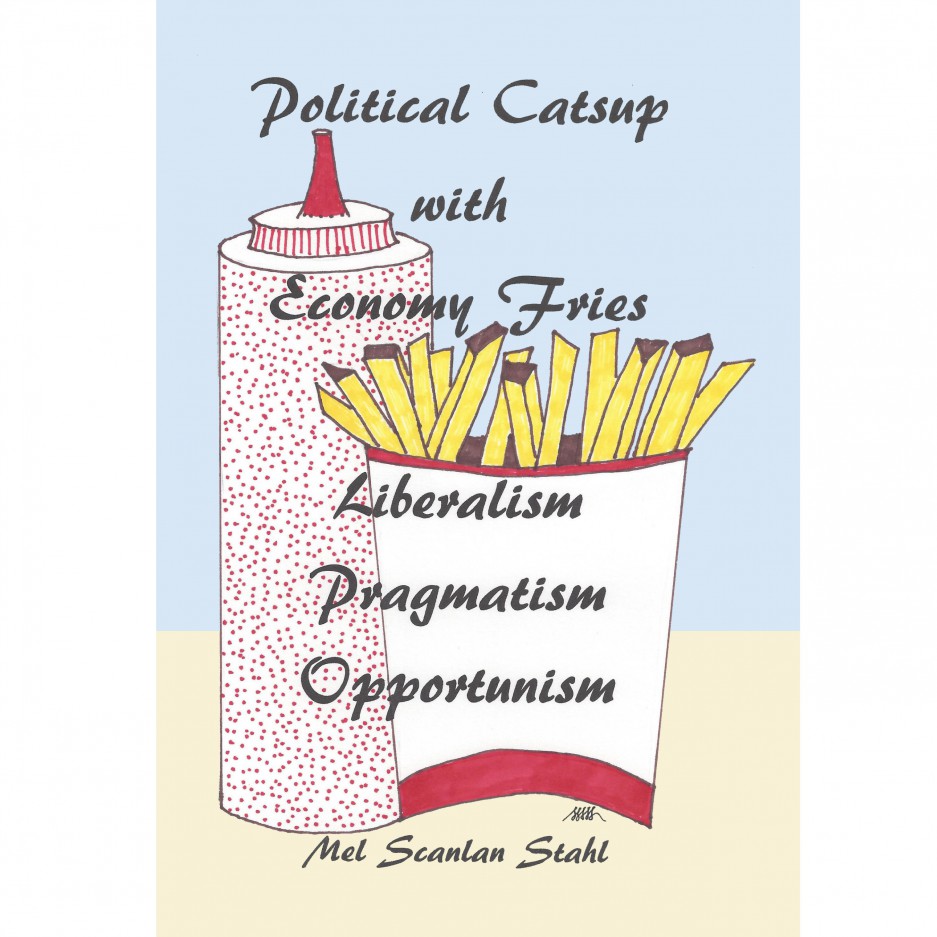
Buy a copy of Political Catsup with Economy Fries available at Amazon.com.
Economies all around the world grew when American and European companies hired and paid foreign laborers. It wasn’t great for already developed economies but it was fantastic for underdeveloped ones. However, after vast economic growth in far away places, labor prices have gone up everywhere. The reason that China sited manufacturers moved to Vietnam was because China labor became more costly because the Chinese economy grew and inflation made the Chinese laborer more costly than before. The idea that labor abroad would always remain cheap was a fallacy.
Now it’s time to charge reciprocal tarriffs again because the United States can’t afford to subsidize outsourcing labor outside of the United States. We need to promote American jobs and bring manufacturing home again. By charging a tarriff, the U.S. encourages corporations to hire American workers. Why do we need manufacturing at home?
There are many reasons to bring our labor home, for example we would have better national security with products we need to run our economy closer to home, better economic performance when laborers at home have more money to spend on American goods, better quality of those goods that are found closer to home with regulatory oversight. American products were once known as robust, easy to repair and easy to supply. Those advantages have been missing from outsourced supply lines lately. It’s time to bring those advantages back.
What about disadvantages? Higher pricing will happen but it is easier for Americans to cope with that when there are more jobs and more homebased opportunities.
People who benefitted by charging a tarriff on American products and who fear reciprocal tarriffs complain that they deserve to continue to be free riders like under the old system where they could tax us and we did not respond in kind. But all such advantages are temporary as they can now see.
Economies are large and complex and flexible. Feedback from new tarriffs will take a while to take effect. Slowly, American industry should recover from it’s long malaise. Investment in new manufacturing will cost something and will have to be paid for. American workers eventually will grow in number as homegrown industries once again employ them to make the things that we all need.
ADDENDUM: April 10th, 2025
It appears now that President Trump’s tarriff stance has changed and moderated. He has relaxed tarriffs for all nations except for China.
Also, his rhetoric regarding tarriffs is somewhat different from what he is doing. It now appears that the straight tarriff description is completely inadequate to describe Trump’s tarriff charges which are mostly aimed at restoring a trade imbalances after years of unbalanced trade. The United States has imported more than it exports for decades.
Nevertheless, the recent tarriff negotiations are aimed at providing new reasons for manufacturing to be relocated from abroad back to the United States where more jobs are desperately needed.
After globalization advanced, it became more difficult to sort out trade imbalances. American companies partially owned a lot of companies performing value added manufacturing in foreign locations but selling finished product at home.
If American companies could avoid tarriff declarations by owning companies manufacturing product abroad and then transferring finished product in-house without a declaration, then how could a straight tarriff policy address that imbalanced trade outcome?
Once banking went international and manufacturing went international, sorting out trade imbalances became perhaps somewhat of an intractable problem.
Hence very strange rhetoric. It’s somewhat hard to see what needs to be done to restore employment at home. The idea of tarriff as a policy to establish fair trade and restore American employment is a place to start but perhaps not a place to finish.
 Political Catsup with Economy Fries: Liberalism, Pragmatism, Opportunism