On the brink of 2026.

Recent stories have been coming out just this week about fake daycares owned by Somali immigrants that are taking in grants and not caring for any children. Grift and graft collection and dispersement to certain political groups are their sole known purpose. As I sit here writing to you today, I am thinking of hearing a pundit claim that Americans are unfairly paying for grift and graft with taxpayer dollars. I have to scratch my head at that taxpayer payment claim.

I suppose that taxes have been high in Minnesota. Tim Walz, governor of Minnesota, has been recently called before Congress to answer for some of this impropriety. I’m guessing that there isn’t any real taxpayer payment that can be shown at all to cover the daycare funding. Referring to the taxpayers being duped into payment is merely an allusion that has roots in a more prosperous past when the government kept a more balanced budget and accounted for its spending with more honesty. It is far from today’s reality where we see out of control spending, direct thefts from the treasury, and a lack of prosecution for same.

The United States is carrying a huge amount of debt. An end of our once observed prosperity and the death of our nation’s powerbase because of too much debt may be the goal of this ever expanding promise to pay later. Greedy insiders or external enemies may be behind it. It may be just the way that money circulates without proper oversight.

If I were illustrating a picture of the the riches in the treasury, I wouldn’t be able to claim riches are present in the form of gold. In fact it’s quite a trick to keep up an appearance of solvency when the only thing we do is pretend that eventually we can pay when we haven’t been paying off the debt for a long while now.

News reports that lamented the recent shutdown of government made it seem that we are paying. They say that certain bills can’t be paid when the government is shut down. But really, with 38.5 trillion dollars in debt, there’s a lot not being paid. Is our nation solvent at all? I have heard other news stories in the past that claim that the bills of the U.S. are being paid because they have been expenditures for things in the budget. The news story ignored the deficit. Isn’t it true that anything spent after the government is in deficit is not being paid for except with a promise to pay later?

As we continue overspending as a nation, inflation’s threat grows more serious. Certainly many of us can remember less inflation in the past. Sometimes it seems that there’s a free-for-all attitude among certain political groups that have gotten USAID money or some other grant money. Getting money outside of ordinary economic channels seems commonplace among certain political recipients. Real economic production isn’t necessary when political strings can be pulled to supply whatever funds are needed by certain annointed individuals or groups. How special that would make them feel.

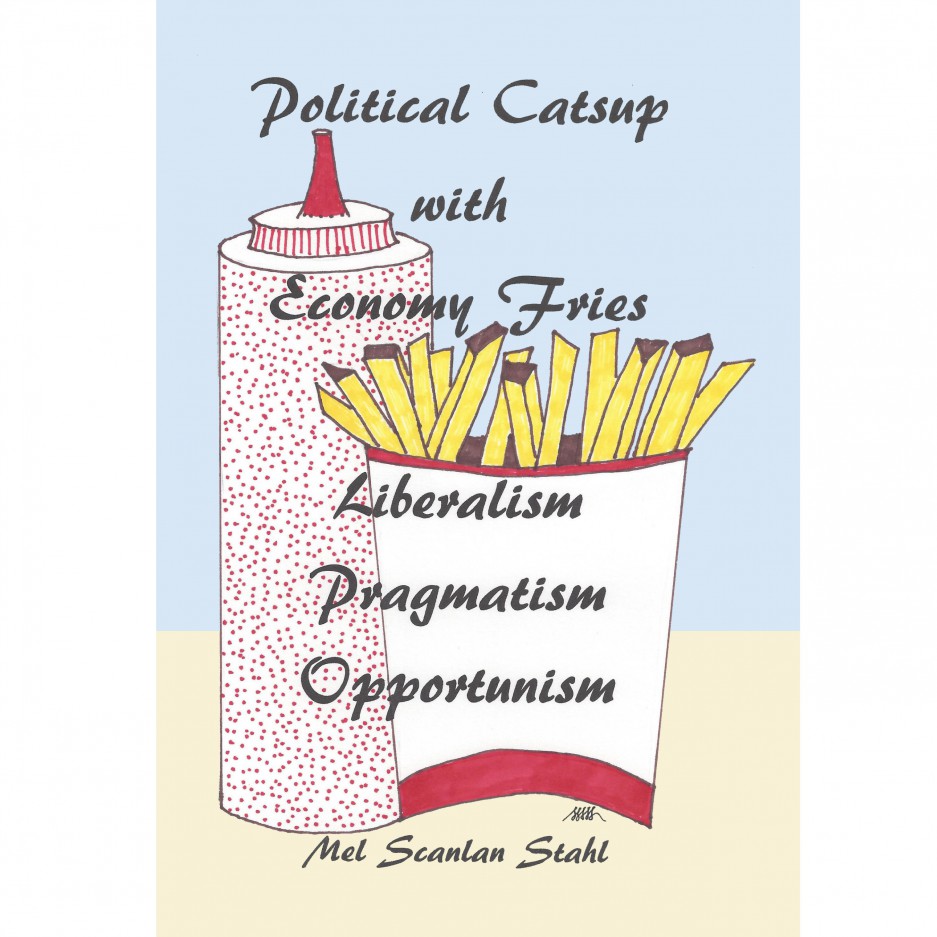
Buy a copy of Political Catsup with Economy Fries, available at Amazon.com.

More dysfunction with regard to spending by the US government includes many examples. It would be too tedious to elaborate. Suffice it to say the US federal government no longer reports its spending to Americans. And Congress refuses to balance or plan a budget. I can’t imagine good faith in government without a budget, and without a clear accounting. This is only one of many problems facing our nation.

Entry level jobs won’t accept you unless you have experience? How weird is that!

Finding a job in the U.S. has been hampered by a series of roadblocks. For years job ads asked for everything and anything that could be imagined whether a person could really do it or not. After the Great Recession, to save money, companies were sometimes merging job roles to give to a single person what three people did in the past. Later, during the covid era, there was a requirement for people to take an experimental shot of mRNA. We all saw cancel culture and race-based hiring during the Biden Era. Now we have another roadblock: the scarcity of genuine entry level jobs. Modern entry level jobs often require degrees and years of experience.

In previous times, an entry level job had a lower salary but also came with some training. A friendly face would help the new guy learn the job so that they could make a contribution as soon as they learned how to do what was needed. In the past, sometimes a person would tire of one job and in order to get a change of profession, they would learn how to do another different job. Or maybe their old job wasn’t needed anymore so they learned a new set of skills to propel them into a new career. General skills were a useful base that could be expanded into some new profession with a little retraining. You could find work in a new job where you would be retrained. You didn’t have to go back to the university and start over.

That friendly face of a helpful trainer is conspicuously absent today. If you search entry level jobs, most of the jobs that come up require years of experience doing the advertised job’s work. That makes it seem that there aren’t really any entry level jobs. New guys aren’t going to be trained and if you need training, you’re not welcome to apply. If you do apply, and you don’t have previous expert experience, you will not be considered.

Buy a copy of Political Catsup with Economy Fries available at Amazon.com.

People aren’t welcome to learn on the job and trainers won’t materialize to train the new guy and that means that you may not be able learn a new profession from another person at all. Going back to school is not economically affordable right now for a lot of people because of tuition inflation. Or if you are older, your return on investment for retraining may be doubtful which might suggest that re-education as a training option is ill advised. Should you remain stuck wherever you are because no one will retrain you? If your job goes away, do you have to find another similar job and what if you can’t find one? Even when you have some professional experience elsewhere and a good education, you aren’t welcome to change careers because there’s no budget to retrain you. And there’s no intention to train you.

For all of human history, people have learned from other people how to do a job. A worker hasn’t always kept the same job for a whole lifetime. People could grow by gradually expanding their skillset as they learned how to do new things. And an employment market that refuses to train new people is strange…an anomaly. It seems aggressively anti-labor and anti-human. Why is this happening?

One reason might be because the economy is shrinking instead of growing.

In a growing economy, there is demand for new workers. Every new worker might find a job because new jobs are opening all the time. But in a shrinking economy when a worker leaves, sometimes there’s no demand to re-fill the job space they once occupied. A new worker can’t fill a position that’s permanently closed after someone leaves. A shrinking economy is also less agile and new workers aren’t welcome. If a worker leaves, they are not there to train a replacement and no one else has time in the shrinking workplace to train a new guy. The position will either close or it can be filled with another experienced worker a lot like the guy that just left…not really entry level.

Yet people need to earn a living. High taxes and inflation keep nibling away at people’s resources. Nowadays, it’s heartbreaking to imagine that robots and AI are expected to replace people in the already shrinking job market. And somehow, someone writing policies and planning for the future thinks that that’s a great idea. I don’t think so.

I am hearing that there’s a sudden demand and need for bluecollar workers in practical kinds of jobs. An apprenticeship might be more like the old entry level job. But most whitecollar workers have been told for years that bluecollar work is dirty and low paying and represents a social step down. Why would they see this work as more acceptable now than before? An apprenticeship is an investment that doesn’t require the same indebtedness as a university education but most people aren’t so flexible as wanting to try out a new social position.

And so the world for the worker seems to be fracturing into something that is broken, can’t grow and can’t change. How strange. It feels like another workplace embargo like we saw during the Covid-era. Covid shots aren’t required for employment today, but previous experience is. If you want a job you have to do the same kind of job that you did before or go into bluecollar work.

For some of us, that means that the economy is closed to us. Older workers are expected to keep working until they are at least 67. But older workers probably are reluctant or unable to start over in bluecollar work. There’s also a lot of age discrimination. Some people don’t want to or can’t return to a previous profession because their old kind of work has disappeared.

Will some of us have to find a way to contribute economically without having a boss or by doing some sort of job that hasn’t even existed before? We may be on the cutting edge of reinvention. Because if people aren’t being retrained for new opportunities, they will have to make their own opportunities. Good luck to people who find themselves in that situation.

Since the University System is in all kinds of trouble with politics taking over where open mindedness once was, it may be time to allow people to learn on their own and test into new positions. Training materials might be made widely available at a low cost so that everyone who is willing can learn new things online or by buying a training manual without paying a huge amount. Then by passing an entry exam they could obtain new employment in a new field. The world of work might seem more friendly then because people could do something to determine a better outcome for themselves.

It seems like the emphasis on tech has led to overspecialisation in job ads and high costs for university tuition have made specialization unaffordable for people who want to retrain. Programming robots to replace people is a poor solution to this problem. It’s indicative of an imbalanced economy that is unfriendly to workers. I hope it gets better.
Back to the Future?

Are we designing a future or destroying a future? Years ago, people planned their future and a lot of structures were in place to facilitate that. Those were the years of interest bearing savings. Pensions were once commonplace. There were better schools and libraries. Jobs once were plentiful and innovation was how companies got ahead. Most people got married, bought a house and a dog and then started having kids and raising them to carry-on into next generations. People hoped to make social contributions that would improve the lives of their kids and even the lives of other people through jobs that produced goods and services used by others. Churches had big congregations and people talked about having a spiritual life. That narrative belongs to the long ago now.

Since then, a wartime economy formed. Taxes went up. Easy money came along and the derivatives markets unbalanced real estate. Most people can’t afford a home now. Family formation is flagging. Savings accounts don’t provide much interest. With inflation, a low interest or no interest saving account can’t grow a nest egg for the future. The future seems empty of promise. We hear that the disruptors in IT are winners leaving the rest of us to scramble for a future that we can’t quite reach or understand.

Buy a copy of Political Catsup with Economy Fries available at Amazon.com.

Bill Gates once said that people who don’t learn computer moderated tasks will be frustrated and shut out of the modern economy. What I noticed at the time that he said that was that investment in computers was costly and reduced the profit margin. Yet everyday all the time people kept saying that the future relied upon computer moderated success. Now IT has combined with government to be funded by tax money…no profit making required. And computers, which we all buy now to use at home and at work seem to loom over us all. Will AI soon run or ruin the world?

Before all this government funded computer tech took us into a new trajectory that was less human centered, science was really doing science. Scientists weren’t promoting ideas that got them grants and ignoring obvious and truthful information that would exclude them from grants. Science was exploring the natural world and learning about it. Universities were full of people asking questions and getting answers that had the beautiful shimmer of truth or as near to the truth as we could understand and propose. New ideas were welcome and happening. Investigating the natural world often led to improvements and new ideas. There weren’t influencers trying to make people’s minds up for them. Influencers weren’t dominators changing people’s minds in order to shape someone’s fortune by creating a fantasy centered marketplace.

I was reading somewhere yesterday that the workforce is aging and old people will just have to keep working longer. This is a fantasy narrative. Old people can’t replace younger workforce displaced by policy decisions that have made universities more expensive and less powerful at really educating people to live in the real world. As we move into Halloween, the really scary thing is how fantasy-based AI narratives are becoming and how hopeless they are at providing actionable news that helps people make good choices.

As we all face a fantasy narrative world that dupes people into hopelessness, remember that humans without computers have built most of the useful human world we see around us. And the natural world doesn’t need us to believe in it for it to continue being a miraculous network of life and wonder filled beauty. If you can’t find a way to contribute to an economy that is in trouble right now, remember that you are a valuable part of the natural world. The fake computer-moderated economy can waste energy and raise your energy bill price but it can’t even understand the natural world that you are a part of. Keep making things and doing things and thinking your own thoughts. Find your way by connecting with the real world.

At some point we will realize what we are losing and then as a society we will begin choosing what could be a better world. That would be a world that empowers us all to do something good with our efforts, our ideas and life energy. A new future can embrace more of what’s real and leave all the fakery behind.

It’s ok for Christians to pray for their enemy.

I’ve been here on Earth since 1964. My interest in politics happened before I entered elementary school. Vietnam War images on the nightly news form some of my earliest memories and they made me worry. I didn’t like warfare violence. I noticed that it hurt people in Vietnam and that it hurt our soldiers. I wondered how to stop the war. I felt sympathy for both sides in that war.

I didn’t really believe the rationalizations about the Vietnam War. Later I learned that the Gulf of Tonkin conflict was faked and that’s what got us into that war. Faked justifications for war actions have happened again since the Gulf of Tonkin. I was glad when the Vietnam War ended. The aftermath of the war continued unfortuneately with damaged soldiers returning home and damaged Vietnamese people trying to rebuild their lives in the U.S. or trying to continue and rebuild in Vietnam.

Other wars happened in other places and they carried on with new violence. In some ways it’s like the Roman or Greek God of War visited many nations after Vietnam. War fever seems important at first and then purposeless later.

Violence is hard to stop. By the time that people are engaging in violence, they are usually committed to doing it. Most people don’t like violence but after becoming adapted to doing violence it can be hard for them to stop. Motivating a return to peace happens when a person is free to find something better to do with their life energy. Having something else to do is important.

A few days ago, Charlie Kirk was gunned down when he was addressing an assembly of interested people who wanted to hear what he had to say. That was about 12 years after Mr. Kirk started going to college campuses and talking to students. He would set up a card table and talk with anyone who came along. He said he was trying to recruit young conservative students. He defined Conservatism as an effort to protect social goods and pass those social goods on to the next generation. He thought that having a home and a family are social goods that are objectively good according to Aristotelian philosophy. He used early Founding documents from the colonies (later states) and Biblical texts to undergird many of his political arguments. Even though he didn’t get a university degree, Mr. Kirk studied primary source materials for his arguments. In an era of heavy-duty 24-hour propaganda, using primary source material instead of quoting second-hand opinions allowed Mr. Kirk to get to the heart of issues better than almost anyone else. Charlie Kirk is the only modern person I have heard outside of a church say that Biblical texts are important and valuable both philosophically and politically. He was talking and listening to strangers like no one bothers to do anymore.

I never had a chance to talk to him and I wish I had. I heard about Mr. Kirk (who was about 30 years younger than me) when he first started going to universities to talk with people. I admired his bravery and openness. I just never had a chance to talk to him.

I know that people want to politicize his murder. Don’t do that. Charlie was reaching out to a generation of people in the US that has been under growing economic pressure. Generation Z, born from 1997-2012, was his biggest fangroup. I think that this generation has struggled the most as compared to earlier generations, from both economic poverty and from a poverty of people ready to talk and listen to them. Talking and listening is a great way to embrace confused and economically struggling people. It helps prevent violence.

I think shooting a speaker in an auditorium, shooting Charlie Kirk, is a crime, is an act of cowardice, an act of desperation, and a futile action that has wasted Mr. Kirk’s grand generosity as a communicator. I think to myself that after killing this good man, the shooter will now be confronted with Mr. Kirk’s philosophies and Mr. Kirk’s life’s legacy on a daily basis. This is probably the opposite of what the shooter intended. By murdering Mr. Kirk, the shooter has inextricably tied his own fate to that of someone he wanted to silence forever. I didn’t hear about Charlie Kirk recently until his death. Lots of Kirk video has been released. I have watched all of the footage that I can find.

When I consider the possibility of why the shooter chose violence, I can’t help but wonder if voting frauds in the US have caused this unexpected side effect. A side effect of desperate violence. A desire to act out as a form of terror communication. I also wonder if economic struggle and uncertainty have led some people to wander into violent activism as a way to escape other kinds of uncertainty.

Buy a copy of Political Catsup with Economy Fries available at Amazon.com.

In any case, I hope that this moment in history will help us to appreciate Charlie Kirk’s grandly generous communication gesture. I can’t imagine that he was correct in everything he said or believed anymore than anyone else is. Emotions of many kinds accompany this loss of a valuable person who was making a difference in our nation’s politics. Praying for us all would be an appropriate Christian gesture. Even among other faiths, such a generous spirit deserves admiration.

Also, remember Charlie Kirk’s family in your prayers and include them in the soft center of your heart.

Neoliberal economy performs poorly.

The idea of government picking winners and losers (under accelerationist policy) isn’t a good way to run an economy. Because when the government picks losers there are fewer winners. Also, no one is wise enough to decide who should lose. In a market economy, the market decides winners and losers based on profits and losses. When the government tries to replace the market, based on what consumers want, need and can afford, with government influence exchanges, you end up with all kinds of wasted potential. Because influence testing isn’t as good as market mechanisms. When you get carried away with picking losers and then add cancel culture for political reasons, you start eliminating whole swaths of potential economic contributors.

How did accelerationist policy come about? It has been through buying influence in government. People with more money buy influence. When influence is for sale in our government, it increases the number of factions that vie for power. In the neoliberal era, big money access has spawned some big winners that are always buying influence for a surer win, but it has led to a lot more losers than we would have had.

When you go looking for a job right now, there are a lot of websites that advertise phony positions which aren’t really available. Also, the jobs are advertised from the perspective of employers not employees. In fact from the employees’ perspective phoney job ads are really terrible and they persist because it makes employers look more prosperous than they really are. That’s very discouraging to job seekers and it makes online job ads into unattractive time wasters. I keep hearing that there are a lot of jobs that need to be filled and also that American job seekers are discouraged more now than ever. As AI screens out applicants, people who don’t get a call-back begin to wonder how they would ever know what to do to get hired.

Neoliberals like making everything into a profit-center. They want globalization and financialization. They want organizations to be dominant over individuals. They want unrestricted global capital flows and they like warfare. They like economism where everything has an economic motivator. They like big monopolies and big government and smaller-always-less-important individuals and families. They hate religious motivations and ethical behaviors. They don’t like restrictions on big power.

To make our society better, I think it helps to see neoliberalism’s shortcomings. We need strong families because the family is a great place to nurture children and grow them into society’s doers. We need ethics in society and the family is a great place to teach the difference between right and wrong. We need to be motivated by our caring hearts and our connections to each other. We need rule of law to apply equally to all: even the most powerful. Neoliberals don’t support what we need and in fact work to undermine it.

Buy a copy of Political Catsup with Economy Fries available at Amazon.com.

The neoliberal economy creates too many losers. It’s a wreck. Taxes keep going up but economic activity is down. We have numerous unfilled jobs. We have failing universities where credentials serve money interests instead of the public good. Prosperity overall is waning as the rate of economic exchanges slows and fraud increases. Investors owning real estate has led to monopoly price influence raising the prices of houses. Bigger hospitals and medicare and medicaid have led to price increases in healthcare. Government and corporate grants in our universities have led to research conclusions that are up for sale from climate change to covid drugs. Crime on our streets has grown as homeless and unemployable people become renegades and people in city government try to make political dividends out of desperation.

In a better economy, economics doesn’t overshadow our lives in the way the neoliberals are trying to do. Our healthcare has been taken over by greedy profiteers who want people to be sick. Our neoliberal money making goals don’t allow doctors to cure disease anymore the way that they should. Everyone needs a place to live that’s affordable and investors in our real estate markets keep raising prices beyond what any one person or family can afford. We need affordable food but inflation in food is making it too expensive for many to eat properly.

The neoliberal economy is a disaster that will continue to fail as long as capital is emphasized over wealth, rule of law spares the powerful and influence money is more important than markets. Neoliberalism is power for power’s sake. Unlimited partnerships between government and corporations leads to failure.

Prosecute but stop the rhetorical disection.

This week there’s lots of buzz online about people who fabricated intelligence to prove that Mr. Trump was a Russian asset in order to damage his political opportunities. This hoax can be lumped into the category of unprosecuted happenings from the last decade or longer. Many Americans are waiting to see if prosecutions will happen this time in this one category. We’re pretty tired of rehashed old news without judicious outcomes.

I have become convinced over many years now that our politics are not above board. Whatever a politician says and whatever the news coverage is about politics, it’s all false. There’s no humor and no interest left in politics because there’s no honesty. Humor makes fun of honest appraisals and interest can’t be generated without honest assessments. Without honesty, the stakes and the facts are fake and there’s no reason to listen to any of it anymore.

I would like to refocus on something entirely different. I would like all my and likewise all of our collective energy to go into making good things happen for me and likewise for all of us in the United States. Because it’s been a while since that was part of our experience.

For years, government statistics continually lie about the number of unemployed people by ignoring the longterm unemployed. Government statistics in 2015 had rosy assessments about future jobs that never came about but little acknowledgement about that failure. When less than 27% of degree holders can find a job related to their training, investing in a university education has become a waste of money and time.

If the Secret Government Agencies, like the CIA, the FBI, Homeland Security etc. have all grown out of bounds, if they are doing things that are illegal and therefore criminal, then is anything that they are trying to do worth doing at all? Probably not. Can anyone measure power by the amount of damage that can be inflicted on the other side of whatever group so consistently that there’s no room for real prosperity building?

Buy a copy of Political Catsup with Economy Fries at Amazon.com.

Isn’t government power supposed to be on the side of prosperity instead of destruction? Because it hasn’t been for a long time now. It looks like our government is full of bad guys doing stupid bad things.

I’m glad that some of the election shenanigans will be addressed. However, I will only pay attention very briefly when the people perpetrating various forms of deception and treason are in jail. Then I will merrily ignore those jailbirds completely while I try to rebuild my life by making good things happen that these political people have been doing their best to prevent me from doing.

When the government wastes our resources doing bad things instead of good things, good things don’t get done because they are crowded out by all that nonsense. Please no more political news stories on broadcast media. Just set up a website that describes charges leveled, fines levied and jail terms meted out for guilty verdicts.

Instead of talking about politics, let’s change the subject. Let’s talk about jobs. There’s been a labor blockade here in the U.S. for decades. It’s time for that to end. Internet job ads are supposedly 85% fake. Maybe that should be illegal. Hire everyone and train them. Hire old people who have a rich life experience but who can’t collect pensions until they are 67 years old. Hire young people who need experience and training. Hire people to do what needs doing. Pay them.

Stop using social media to make people crazy and disagreeable. Social media has been providing different information to different groups in order to foment discord and increase site traffic. That should be illegal. Stop that. I’m all for the first amendment but it’s not ok to constantly try to set the world on fire.

Let’s move on towards a new prosperity. Don’t make people take sides anymore. Help people work together for a better America.

The Feds ignore popular opinion and attack Iran.

Lately, whenever I write anything about American politics, I am aware that our government is ignoring my opinion. No matter what eloquence or reason I bring to my writing, no one in government is listening even when their ears should be burning. That makes it hard for me to feel motivated to write about politics. I do not want more war. Many Americans have expressed this. In my case, I don’t want people here or elsewhere to feel helpless to stop wartime violence and many of us feel this today.

One of the more persuasive arguments that I heard regarding Iranian conflict was about leaving Tehran alone. This argument was about water scarcity in that region. President Trump had started warning Iranians to leave Tehran. Telling people to leave a water available area for a water unavailable area in order to save themselves from a military attack is a heartless thing to do. Water scarcity made evacuation into an unviable proposition. Perhaps President Trump decided to attempt a bomb obliteration of Iran’s nuclear enrichment factories as an alternative to attacks against a populated city. Is there some compassion in that choice?

In any case, Israel’s preemptive strikes against Iran weren’t legal according to global treaties that oversee warfare declarations. And the U.S. jumping in is also, I suspect, not quite allowed by global rules of engagement, much less the rules stated in our Constitution.  

Buy a copy of Political Catsup with Economy Fries available at Amazon.com.

If war determination can be imagined as a scale that weighs the worth of diplomacy vs. violence, it seems that our leaders feel a need to press down hard on the
side of violence instead of diplomacy. Why is that? Why can’t our leaders use diplomacy anymore? Have they been too long planning for war so that they can’t bear to avoid dropping those bombs?

I feel frustrated today. I hope that war in Iran will shrink instead of grow. But I also hope that rules will matter in government once again as they should. The Constitution matters. Diplomacy is an important tool to prevent violence. Secret meetings full of power hungry men may always choose war engagement but this choice should be moderated by rules of engagement and diplomacy that diminish violence.

Even if you’re sure you can beat the other guy in a war contest, it is better to avoid wartime engagement. Your opponent may not be as weak as you imagine. You can lose. And war engagement only in the case of having a just cause limits the waste of resources that can easily be catastrophically wasted in unnecessary wartime struggle. Don’t we all have better investments to make in our society?

ADDENDUM: 27th June 2025

I’ve recently heard that our recent bombing of the nuclear sites in Iran was a long term plan, 15 years in the making. The bombs used were specifically desiged for their use to bomb those hardened nuclear facilities. And bombing was meant to prevent an expansion of violence from the Middle East into a nuclear catastrophe. It was well considered, planned for a long time, and may have succeeded in reducing the length of war exchange between Israel and Iraq. What’s next? Is it too optimistic to hope for peace in the Middle East?

Can we salvage anything?

Let’s say a big storm comes into town and a tornado sweeps away a whole block of houses. People will rebuild because, we hope, they have insurance to do so. Some insurance policies have loopholes that cover wind damage but not flood damage. Some of policies will have large deductibles. But even if the whole house is lost, usually it will be rebuilt even if not all the costs of the rebuild are covered. Also, people have jobs and a way to begin again by slowly paying off the costs of a catastrophe over time. That’s often true even without insurance.

Bad governance is worse than a tornado. Why? Because all the strengths that a person would bring to build up their life are diminished by taxes, regulations, and policies that undermine an individual’s chance to get ahead during life’s many challenges. The economy itself is harmed by overgrowth of government which takes money out of the economy and uses it for political influence. We have seen that government charges seem to multiply and never end.

A person’s life and their ability to work is finite. Government these days is a constant attack on people’s vitality. It’s not like a tornado that shows up and wrecks things all of a sudden. Instead, it’s a constant drain. What are we getting for those government taxes? I see a government that refuses to account for its spending, refuses to stop spending when the treasury comes up empty…so spending nonexistent money into deficit, a government that is taking tax money and passing it around to NGO’s as a way of defrauding Americans, a well published group of government fraudsters parading their frauds in an unstopping brag of what evil they can do and never be stopped by the common man.

Just look at how things have gone since 2008. The government subsidized failing banks after real estate derivatives caused insolvency. That cash write-off was supposed to save the economy. But prosperity has never returned. A small group benefitted from the 2008 Great Recession. But the new policies that saved the banking sector led to an interruption in the rule of law for bad bankers. That failure of law has proceeded and worsened since then. Derivatives themselves were experimental and even though they have multiplied everyone’s problems, they have widened consequences which has seemed beneficial to the smaller number of people that should have been harmed by the derivatives losses. In any case, derivatives probably are illegal under the Constitution because they lead to money creation. We should stop derivatives trading.

Rule of law fails continue. More negative consequence results from that. Now lawfare in the courts seeks to interrupt any kind of repair to malgovernance. People in government positions continue making one bad decision after another. How do we salvage a mismanaged economy that continues to be mismanaged? Why is the government trying to manage the economy at all? Markets are supposed to do that. What happened to those? Those went away when the government started interfering by promoting some interests over others.

Human beings have never been perfect. We sometimes want to do crazy things. We sometimes want other people to do crazy things with us. Because of that, we need limited government where the government can’t mandate a bunch of crazy. When the nation started, there was a national dedication to limited government power. That was a better way. Limited governance power can get more accomplished along a safer and wiser course than unlimited power which under fascism leads to more bickering and more malinvestements that destroy resources and diminish our national strength.

Public private partnership is a kind of fascism. It is powerful people in positions of power over the less powerful. Rule of law governance is law applied equally to all. Under fascism, powerful people seek to be above the law. This is wrong. Or the law can weaponized to attack political competitors…lawfare. We should stop our fascism. End the partnership between government and corporations. Public private partnerships should end. Government should not decide economic winners and losers.

We need a return to representative voting where real votes aren’t manipulated through digital means. We should return to paper ballots and manual ballot processing. President Trump has signed an executive order to do this, but I’m seeing little change. Electronic voting persists despite its clear threat and past damage to legitimate voting.

We need to repeal bad laws. We need to avoid new laws being written by AI. The flood of bad laws we’ve been experiencing with thousand page legislation bills signed into law by a body of Congress that doesn’t read what it signs should end. Ridiculous legislation should end and we should return to necessary and proper standards.

The idea that government can do anything and the only road to prosperity is through government partnership, government programs, government interference in everyone’s life isn’t working out for America. We should end this overreach.

Buy a copy of Political Catsup with Economy Fries available at Amazon.com.

Rebuilding American jobs now requires tarriffs.

All the way back to the earliest period in American history, we used tarriffs to protect infant American industries. It is an old idea but an idea whose time has come again.

The practice of the United States to charge no tarriffs on other nations that do charge us tarriffs for our products pushes against American labor and acts as a subsidy that pays American corporations to hire cheaper labor abroad.

This helped in the earlier part of the neoliberal period to offset some of the risk courted by those who went abroad for cheaper labor resources. During the entire neoliberal period free trade has been a longterm goal. When other nations charged tarriffs on American products we promoted free trade by not charging a reciprocal trade tax and many of our U.S. corporations outsourced their production lines. This reduced the labor marketplace in the U.S.

That no tarriff policy allowed corporations to hire workers abroad, obtain supplies for supply lines located abroad, hire foreign workers and bring the finished product back to the U.S. as a cheaper product to sell to American consumers. Why is it time to change now?

Buy a copy of Political Catsup with Economy Fries available at Amazon.com.

Economies all around the world grew when American and European companies hired and paid foreign laborers. It wasn’t great for already developed economies but it was fantastic for underdeveloped ones. However, after vast economic growth in far away places, labor prices have gone up everywhere. The reason that China sited manufacturers moved to Vietnam was because China labor became more costly because the Chinese economy grew and inflation made the Chinese laborer more costly than before. The idea that labor abroad would always remain cheap was a fallacy.

Now it’s time to charge reciprocal tarriffs again because the United States can’t afford to subsidize outsourcing labor outside of the United States. We need to promote American jobs and bring manufacturing home again. By charging a tarriff, the U.S. encourages corporations to hire American workers. Why do we need manufacturing at home?

There are many reasons to bring our labor home, for example we would have better national security with products we need to run our economy closer to home, better economic performance when laborers at home have more money to spend on American goods, better quality of those goods that are found closer to home with regulatory oversight. American products were once known as robust, easy to repair and easy to supply. Those advantages have been missing from outsourced supply lines lately. It’s time to bring those advantages back.

What about disadvantages? Higher pricing will happen but it is easier for Americans to cope with that when there are more jobs and more homebased opportunities.

People who benefitted by charging a tarriff on American products and who fear reciprocal tarriffs complain that they deserve to continue to be free riders like under the old system where they could tax us and we did not respond in kind. But all such advantages are temporary as they can now see.

Economies are large and complex and flexible. Feedback from new tarriffs will take a while to take effect. Slowly, American industry should recover from it’s long malaise. Investment in new manufacturing will cost something and will have to be paid for. American workers eventually will grow in number as homegrown industries once again employ them to make the things that we all need.

ADDENDUM: April 10th, 2025

It appears now that President Trump’s tarriff stance has changed and moderated. He has relaxed tarriffs for all nations except for China.

Also, his rhetoric regarding tarriffs is somewhat different from what he is doing. It now appears that the straight tarriff description is completely inadequate to describe Trump’s tarriff charges which are mostly aimed at restoring a trade imbalances after years of unbalanced trade. The United States has imported more than it exports for decades.

Nevertheless, the recent tarriff negotiations are aimed at providing new reasons for manufacturing to be relocated from abroad back to the United States where more jobs are desperately needed.

After globalization advanced, it became more difficult to sort out trade imbalances. American companies partially owned a lot of companies performing value added manufacturing in foreign locations but selling finished product at home.

If American companies could avoid tarriff declarations by owning companies manufacturing product abroad and then transferring finished product in-house without a declaration, then how could a straight tarriff policy address that imbalanced trade outcome?

Once banking went international and manufacturing went international, sorting out trade imbalances became perhaps somewhat of an intractable problem.

Hence very strange rhetoric. It’s somewhat hard to see what needs to be done to restore employment at home. The idea of tarriff as a policy to establish fair trade and restore American employment is a place to start but perhaps not a place to finish.

Social credit system foreshadowed by job market problems.

For years in the United States getting a good job was a matter of training to do a job that required a lot of training to do. Becoming a doctor of medicine took ten years of university and residency training. Becoming a scientist required several years of training. Getting a bachelor’s degree was the entry level requirement for a lot of good jobs and further university training was required for the best paid jobs, like engineering and pharmacy and teaching and nursing. Some jobs had their own entry level training and even if they didn’t pay well at first, you could eventually earn well after you were familiar with the job.

Buy a copy of Political Catsup with Economy Fries at Amazon.com.

That started to change with hostile takeovers that erupted in American businesses under financialization. The return on investment for an education was damaged when businesses were liquidated across the U.S. and well trained people became unemployed. That was pretty bad for a lot of otherwise employable people. The average time spent in a job went from a long time to less than four years, even in jobs that required five years of training.

The next blow to the American job market was AI screening and cancel culture and DEI and other ways of screening out job applicants instead of screening them in. When an algorithm rules out candidates who have no idea how to get past the algorithm, it becomes more and more true that getting a good education doesn’t lead to good employment anymore. Getting hands on training might not lead to long term employment either. That destroys the return of investment in training at American universities and also on-the-job.

Nowadays, the application process is contaminated, according to Kim Komando, with 40% fake job advertisements. In fact, a lot of people have no idea how to get a job these days. The job market is broken.

What I have been thinking is that the lack of legitimate job opportunities may be a gateway to aid the establishment of a social credit system. What if all you had to do to get a job in the context of a new social credit system is to get the appropriate ap on your phone for social credit credentialization? Wouldn’t that encourage you to bend the knee to a new social credit system?

As we see the American job market languishing through another year of having confusing mechanisms of application in an environment with little success in finding rewarding pay, rewarding benefits or even any position at all, it’s worth wondering what this is leading up to. Could it be a motivation to join social credit credentialing when it comes on the scene in the near future?