Responsibility lies with Congress because it is sovereign.

I have heard so much blame today being handed to our current President but it isn’t his fault if the nation is suffering right now.  It’s Congress’s fault.

Congress is the sovereign body of government in the United States.  Congress calls into being American politics by writing our legislation.  And Congress has abandoned the  goal of writing good legislation.  When Congress allows lengthy bills a thousand pages long that are full of pork to pass through the legislature it hurts the nation and it’s Congress’s fault.  When they allow think tanks to draft legislation, when they fail to even read it, and then when it hurts America, it’s Congress’s fault.  When Congress interferes with the American economy by subsidizing some industries and not others it’s Congress’s fault that we have zombie companies taking up economic space that could be better occupied.  When so many small business have gone out of business forever during and after the Great Recession, it was Congress’s fault because they harmed our economy when they deregulated banking and welcomed derivatives as an innovation that has now cost trillions of dollars and millions of jobs, not to mention damaging our real estate market.  All of that has happened without apology.  That was already bad.  But now Congress is behaving worse.

Many members of Congress have supported the Mueller investigation which isn’t a proper investigation but rather a tool to harass our President and undermine our recent 2016 election.  I hear that some members of Congress want to harass President Donald Trump even more.  When members of Congress call for more harassment they cause social strife.  When they tell people that they should harass Trump’s cabinet members or his spokespersons in public, they ratchet up violence and hysteria and it’s their fault.  We should blame them.  It’s their fault because they have failed to meet their responsibility to safeguard the nation against strife.

Congress’s job isn’t to make deals, it’s to make just laws that help everyone to have security and prosperity.  Congress has abandoned those goals as a body when they allow some members to seek strife and discord and disruption.  Where is Congressional decorum?  Where is concern for what might happen if public civility is abandoned and civil limits and boundaries aren’t respected?  We’ve already seen members of the legislature shot.  Congress members calling for discord have continued to call for even more discord and violence.  I don’t blame President Trump, I blame Congress.  Shame on Congress.  Isn’t it long past time for Congress to censure these bad actors?

When Congress members disrespect American political leaders that differ with them, it hurts America.  When they waste money on investigations that never end even without finding any fault, they hurt America.  When Congress seeks chaos instead of order, when they distract themselves from projects worthy of their attention by encouraging civil discord, they hurt America.  So much blame goes to the President but it is undeserved.  The President has only a portion of power and his portion is the smaller one.

Donald Trump has been unfairly accused and persecuted.  If any one of us was treated that way would we behave with as much patience?  You may be sure that President Trump can be rude.  He has behaved rudely because of his resistance to a lockstep press committed to politically limited discourse while the nation is already in trouble.  With our nation in trouble, we need to talk about solving problems instead of creating new phoney problems.

What about the cultural phenomenon of “virtue signaling” that has forbidden so many topics that need discussion?  What about members of the press that have acted as a chorus and an instrument of the social justice movement to shut down discourse and to distort information?  Pretending to be in favor of what might be a good thing isn’t the same thing as accomplishing something good.  Virtue signallers are a bunch of mouthy narcisists that undermine American discussions about real issues.  Turning away from honest discussions about our problems has made those problems worse.

I have listened to an unrepentant call for carbon taxes when carbon dioxide doesn’t cause global warming and global warming is a tax seeking fallacy based on computer rounding errors and false temperature readings.  I have heard demands for unlimited immigration even though that would not help our economically displaced non-participating laborers or our nation’s debt or our crime problems.  I have listened to people demanding more gun restrictions.  But there’s a failure to enforce current gun regulations, for example you may recall failures to prosecute during the Fast and Furious scandal and also the failure to prosecute felons who try to buy a gun illegally.  Notice the problem of psychotropic drug prescriptions that we find in use among mass shooters, but no public alarm or restriction of those drugs which may be to blame.  Some political groups want even more gun restrictions until they undermine the Second Amendment.  And that may be their true goal.  There’s little point in federal or state legislatures writing new legislation when there’s a failure to enforce already existing gun restrictions.  Shame on these destructive efforts that are tearing our nation apart.  So many problems are Congress’s fault because members take sides instead of reaching an accord.  Congress shouldn’t indulge in fantasy based discourse and fantasy based legislation.  It’s long past time for them to choose better leadership than the terrible and destructive kind that we see today.  Shame on Congress.

Discord has happened because political people in our nation have too much power over the American economy.  That improper power politicizes every economic opportunity and short-circuits government oversight which causes corruption and bickering between factions.  That has happened because we live in the neoliberal era which is now failing to be politically or economically healthy for America.  Do you think that rampant corruption in Congress might be helped with Congressional term limits?  What if Congress members were limited to 2 terms in the House of Representatives and 1 term in the Senate?  According to the Supreme Court it will take a Constitutional Amendment to limit Congressional terms.  Maybe the struggle to do that would help Congress get back to basics instead of trying to make deals.

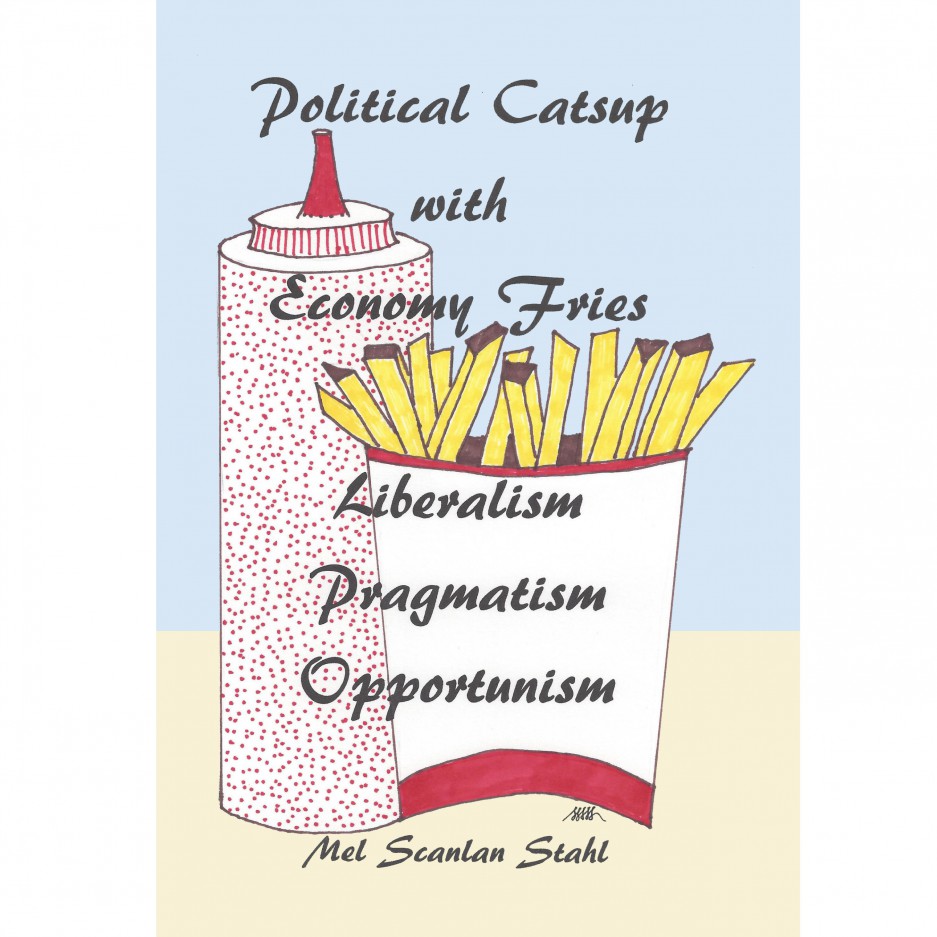
If you want to understand our historically important transition from healthy to sick that has been caused by engaging in bad politics you can find out all about it in Political Catsup with Economy Fries available at Amazon.com.


History helps us.

We live in the neoliberal period.  The neoliberal period is one where most of us ignore history and focus on short-term concerns.  The time we most often consider is the immediate present.  That’s unfortunate because history is important in its gifts.  They are many.

History can matter to us because it can provide a larger context to help us to understand the present day.  And it can provide lessons about what human societies tried in the past that either worked to the benefit of society or failed to work.  History can give us an appreciation of human culture and the beauty that has been produced by human beings over the generations in art, literature, science, architecture and music.  History gives us old accomplishments to admire and that gives whatever is new today a context for us to see and appreciate what we have now.  Accomplishments from people who lived before us are testified to us by artifacts that are a rich available resource of inspiration to all of us living today.

If you look at the human genome and consider that each of us holds only a part of the human potential in our own genes, history provides testimony about many different kinds of people who lived in the past.  Human beings can grasp only a part of the human heritage in the expression of each person’s talents but we can learn from the past to appreciate a greater whole.  As each of us struggles to achieve our own potential it can be comforting to imagine our small part in contributing to a greater historical whole.

As we try to understand what will help us all to achieve greater prosperity and security, there are many lessons and many comforts to be found in the history of the human past.  History is full of ideas that changed everything that had been before.  Ideas still have that transformative potential.  Political and economic history has much to recommend it.  The intricate dance between politics and economics has brought new opportunities into being.  History shows how cultures tried to overcome unavoidable setbacks.  Some of these setbacks were material and others were caused by human limitations.  People tried to outsmart their human limitations in a variety of ways.  We have tried religion, we’ve tried rationalism, we’ve tried humanism, we’ve tried computer technologies.  Hard times shaped by wars, disease and suffering have also shaped human outcomes.  Whatever happens, when we are at our best we try to overcome our foibles and celebrate each other’s opportunities which help human society to prosper.  We can’t really escape the influence of history even when we don’t understand it very well.

If you want to understand more about the history of political ideologies over U.S. history, if you want to understand why there is political discord in the present, if you want to see how we tried to prevent problems that have surfaced in the present and if you want to understand the role of government in solving problems and preventing corruption, Political Catsup with Economy Fries, available at Amazon.com is just the book that you need.

Elections during the neoliberal era.

Today is election day, Nov 6th, 2018.  If you compare the issues being discussed with those from the 2016 elections, some truth-telling is happening that couldn’t have happened without the Trump presidency.  Here’s an example.

I listened to a debate between Washington State’s Senator incumbent Maria Cantwell and challenger Susan Hutchison about climate change.  These two women gave us a chance to listen to candidates getting down to facts instead of fantasy.  Hutchison and Cantwell were sparring away.   Their points of debate revealed that they didn’t buy into the fantasy that climate change threatens us directly by altering our survivability.  Hutchison said that a carbon tax strategy wouldn’t make any difference to climate conditions which is true on the one hand, and Cantwell said on the other hand that carbon taxes might create new markets and new jobs.  So at last at least for a moment, two candidates were speaking about facts instead of fantasy.  Carbon taxes won’t fix the climate and would cost Americans a bundle.  Finally, two people from different parties said it.  President Trump did his best to end the global warming climate change fantasy, and we can already see dividends in getting down to issues that evade fantasy based determinism.

I keep hearing that the American economy is getting better.  I suppose that might be true but I would observe that any improvement is small.  The Trump Tax strategy will take a long time to alter the opportunities of Americans.  I would like to mention that a similar strategy was advocated but similar changes were never accomplished in the Obama Administration.  President Trump succeeded where President Obama failed.  At least this new tax structure stops some of the tax breaks that economic outsourcers have enjoyed in the past.  The subsidized outsourcing bonfire that burned up American jobs is a fire that has now been put out.  Now we wait to see if jobs will return.

In the meantime, I would like for the labor department to go back to a more honest assessment of employment in our nation.  Pretending that non-participating labor is voluntarily unemployed has led to amazing falsehoods about the health of our labor market.  If we acknowledge how many Americans lost their opportunity to work because of mergers and acquisitions, we might be encouraged to quickly end the easy money policies that led to the destruction of so many American jobs through buy-outs and closures.  This is one area where I think President Trump is wrong in advocating the Federal Reserve continue with low-interest rates in order to stimulate the economy.  Easy money has been destructive to most American job opportunities and it’s time let interest rates return to a more normal rate.  By the way, that’s about 5% if you check American history.  Ending low-interest rates will also curb malinvestments that have destroyed useful capital.

The stock market has been artificially stimulated by Federal Reserve policies and what goes up artificially must certainly come down naturally.  And probably soon.  But a phoney stock market doesn’t mean anything useful to most Americans.  What matters is economic opportunity, not stock valuations.  Real markets are more dynamic than a pretend market can ever be.  Real markets respond to what people need and to what they can afford.  A government stimulated phoney market can’t do that.

In addition, regulating banks more stringently could protect their solvency.  Banks should be smaller and they should have to keep more capital to back their investments.  Borrowing for risky investing should end.  Right now and until banks are properly regulated, Americans will suffer even more greatly than they did during the Great Recession if there’s a collapse of banking due to a shortage of liquidity.  The great era of gambling with derivatives should finally come to an end.

We’ve all watched the Mueller investigation wasting tax dollars.  It has also continually and unfairly threatened our good President who has been proceding lawfully according to his presidential power.  Any such investigation shouldn’t proceed without a crime to investigate.  Trump didn’t commit any such crime.  The Trump Presidency unexpectedly undermined corrupt people who benefitted from the Obama Administration.   Their crimes should be prosecuted instead of wasting money on a fake “Russia investigation” which was always just a smokescreen.  Trump’s election surprised the FBI and Hillary Clinton’s State Department.  It’s time to recognize that their corrupt power to evade prosecution should end.  It is time for Mueller to end his sham investigation of our President.  Mueller showed us all how corrupt Washington D.C. politics are.  Now we know.

Not all that long ago, candidate Trump called for an end of Empire military projects and for an enhanced military readiness at home.  We’ve seen little progress on this goal to reduce foreign based military operations which have been so lucrative for military insiders.  Vested interests in the Military Industrial Complex see hundreds of military bases as advantageous to making money on conflict even when that conflict is sometimes a fabrication.  There’s still a chance to reduce our global military presence and gradually close many of our military bases around the world.  The military industrial complex is motivated by profits more than by an opportunity to maintain global order.  President Trump is mostly right when he suggests that Europe can take care of their own borders without help from the U.S. military.  Perhaps a global space initiative would now be a better alliance among nations especially in view of progress in fusion technology.

In the coming days, let’s remember that we can improve.  However the elections turn out, Americans can do a better job at understanding what needs to happen to bring back prosperity.  When we look at where we have gone wrong we can make an effort to improve by changing and improving policies that don’t work.  There’s still a terrible waste happening in America.  What we are wasting is American know how and American talents and American jobs.  Capital doesn’t equal know how or talent or jobs.  Jobs are encouraged with financial stability in stable markets that are healthy and that make sense based on what people need and what they can afford.  Economic interventionism by Congress should taper off.  The economy can be better when politicians stay out of it.

This is the neoliberal era and if you want to understand how we got here, you can buy a copy of my book, Political Catsup with Economy Fries at Amazon.com.

After neoliberalism dies what will we say about it?

People remembering neoliberalism will surely remark that the drive to centralize led to social failures.  Obamacare was a huge effort to centralize healthcare, for example.  Americans were told lies to get the public’s support.  Those lies included first, the idea of free care.  Under a lackluster economy many Americans found healthcare unaffordable and some were willing to believe that they could avoid high costs under a public program.   But an economy is a whole thing.  Costs can’t be shifted outside of itself.  When a public program will pay any price, inflation adds to the public’s debt and healthcare expenses go beyond affordability.   The idea that insurance premiums wouldn’t increase was a fallacy.  So was the idea that people could keep their favorite doctors.  Many doctors weren’t included under Obamacare and others were driven out of healthcare.  Dentists were excluded altogether and some dental practices failed after the Great Recession.  Obamacare failed to provide better care and its cost drove Americans away.  It caused lifespans to diminish.  Allowing insurance companies to write Obamacare legislation led to bad laws and eventually to more fraud in healthcare.  Giving pharmaceutical companies free rein to sell opiates and psychotropic drugs also injured people and caused deaths.  Anti-monopoly laws and anti-trust laws weren’t enforced in healthcare.

Another tragic centralization was initiated by banking deregulation coupled with easy money policy (low-interest rates for loans).  That led to fewer larger banks that could borrow money to risk it in markets.  American banks under the Greenspan Put expected American taxes to backstop their losses during the Great Recession.  Banks lost sight of the importance of solvency because the Federal Reserve promised to save them.  It was like the Federal Reserve giving a subsidy for failing.  Zero interest rate policy took money from savers who couldn’t earn any interest and that hurt old people who needed that interest money to pad out their expenses after they retired.  Mergers and acquisitions led to the failure of American businesses as their assets were diverted into investor’s pockets and their employees lost out.  Short-term job security undermined markets that required long-term investments like the American education system and American real estate marketplace.  With job insecurity it became too scary to buy a house or get an education.  Inflation in real estate and at the university also drove people away.

Under a centralized economy, neoliberals had less successful innovation.  Many stories circulated about revolutionary innovations in healthcare and in energy technologies.  Stories about stem cell treatments that promised to alleviate the suffering of elderly people with damaged organs or tissues or bones never seemed to amount to anything real.  Curative stem cell treatments failed to take the place of older treatments that would never cure illness.  Neoliberals wanted sick people to stay sick so that they could buy more healthcare.  Likewise, fusion energy innovation seemed to always be slower than needed in an economy suffering under high energy costs.  Low energy nuclear reactions seemed to promise room temperature superconductivity and limitless energy but never came to market in the U.S.  Vested interests in established markets worked to slow progress rather than to speed it.  Meanwhile algorithms were substituted for human judgement and whenever a problem came up from using an algorithm, no one was blamed.  Bad algorithms led to teacher shortages when teachers were unfairly evaluated.  Bad market algorithms led to inappropriate risk and caused the Great Recession, leading to losses in real estate values and millions of foreclosures.  Algorithms inaccurately predicted catastrophic global warming that was a fantasy of inappropriate computer rounding and inaccurate temperature monitoring.  Neoliberals wanted carbon taxes to pad their budgets.

Neoliberals also lost the ability and the opportunity to change course in response to policy failures.  Bickering among competitors for economic and political power was rampant.  This bickering undermined coherency in attaining society’s goals and even undermined a coherent narrative about goals worth pursuing.  Fraud and dishonesty became the hallmark of neoliberal press.   Organizations–think tanks– that were protected from taxation and that were supposed to find and promote good policies failed to do so.  Their focus became too short-term for long-term success.  Think tank failures and corruption led the public to distrust the three branches of government.  The Legislative, Executive and Judicial branches failed to perform their primary functions.  The legislature failed to write good laws.  See Obamacare laws and banking deregulation under the Clinton Administration, for example.  The Executive failed to enforce existing law.  The Bush Administration and the Obama Administration, for example failed to enforce laws in banking.  Obama’s Attorney General, Eric Holder, failed to prosecute illegal CIA torture that led to suffering and death. Some judges failed to interpret law based on the historical past.  They opposed constitutionalism.  Congress continued to interfere in the American economy by picking winners and losers and the Executive tried to manipulate global politics in order to manipulate markets.  The Judicial Branch in the Supreme Court found a way to make Obamacare seem constitutional when it wasn’t.  Instead of prudent government, it was a time of making deals.

After a while neoliberalism died.  It killed the economy and created political strife that it couldn’t survive.  People are still amazed at its longevity considering its failures.  To understand more about our evolution of political ideologies in the United States, buy a copy of Political Catsup with Economy Fries available at Amazon.com.

United States-Mexico Canada Agreement supports higher labor standards.

On October 2nd, President Trump announced a successful renegotiation of NAFTA, the previous trade deal that President Trump called the worst deal ever for the U.S. worker.  The new USMCA which will replace NAFTA as soon as Congress signs its approval, will give workers an opportunity for more prosperity for themselves and their families under the new trade deal.  Workers involved in Mexican car manufacture, for example, under the USMCA will get a wage floor so that they will be able to earn more and this provision also supports more car manufacture sites in the U.S. by evening out wages across trade partnership nations.

Renegotiation of the trade partnership between Mexico, Canada and the U.S. also resonates well with the new tax strategies that the Trump administration passed earlier this year.  Both of these successful negotiations support better conditions for workers in the U.S. by changing our approach to trade.  When other nations are penalized for their tariffs against American products they are brought to appreciate the consequences of unfair trade.  There has been a need in America for fairer trade since NAFTA was passed. If Congress approves the USMCA they will help global trade and U.S. trade and U.S. jobs.

President Trump pointed out in his Tuesday speech which announced the success of the renegotiation that without the threat of tariffs he would not have been able to apply pressure to bring trading partners to the table.  It looks like President Trump has succeeded in the NAFTA renegotiation and hopefully, Congress will support his efforts.

How much do you need to know to hire someone?

The recent hearings in the Senate to confirm or decline the Judge Brett Kavanaugh nomination have shocked the nation.  But they haven’t shocked the nation enough.  I say that because getting a job is supposed to be about doing a job.  The filter for keeping out unqualified applicants is important.   Nowadays though, we’ve moved away from a simple evaluation of a person’s job abilities.  I keep hearing that a person’s online reputation and even their credit rating can influence employers.  I think that applying a new standard of being accusation-proof is a wrong one.  This new standard has come about because of social media.

I think that shocking the nation and creating chaos in the nomination process may have been the whole point of bringing forward accusations of inappropriate behavior that may or may not have happened 36 years ago.

In the Information Age, in a time when people are trying to know everything about everyone I think that knowing everything about everyone is a bad idea.  Scouring the shadows for a person who will gossip or make up a story without any evidence in order to undermine an accomplished career is a mistake.  Brett Kavanaugh is a person who has served in our nation’s courts for years.  He is capable and qualified for this Supreme Court position and I hope that his nomination goes forward to an approval.

As the “me too movement” has carried itself forward in a hysterical wave of hearsay, I would like to say that hearsay is not the way to understand happenings.  Evidence is.  Dr. Blasey Ford’s testimony doesn’t rise to the level of evidence for many reasons including her inability to say for sure where or when events that she described happened.  She also isn’t a credible witness to her own story because she wasn’t sober.  Her story illustrates very well why young women and young men shouldn’t go to unsupervised parties with underage drinking.  But it also serves a political purpose.  She has delayed the Kavanaugh confirmation.

Blasey Ford claims that the only certainty she holds is the certainty that she was “mashed-up” by Kavanaugh.  Although this accusation has blocked Kavanaugh’s confirmation, it doesn’t rise to the level of a criminal accusation according to legal experts.  A more appropriate accusation may be against Blasey Ford as a slanderer.  Blasey Ford as a psychologist knows that her story isn’t about trauma.  The events that Blasey Ford describes fall short of “trauma” because her life wasn’t in danger.  Although she may have been afraid of being raped, there wasn’t a threat that endangered her life.  The only clear purpose of her story has been to muddy the waters of Kavanagh’s accomplished life with her accusation.

None of us should have to live under a microscope.  If we accept that we can be scrutinized for unfounded gossip, or for accusations without proofs or witnesses, how can we retain a footing in the sensible world of work and public life?  Gossip can invade life with wild and unsupported stories.  It can sour the private and public life of an accomplished and hard-working person.  Gossip shouldn’t affect a person’s job and a good boss doesn’t invite gossip into the workplace.  A better Senate wouldn’t invite an unsupportable accusation into public hearings for Kavanaugh.

Jobs are about doing.  Evidence is also about doing.  Evidence is about what, when, who, how, where, and sometimes why an event happened.  Events happen in three-dimensional space and require a grid of supportable facts.  Without basic three-dimensional facts, a person’s suffering must remain a private suffering.  How can it deserve to occupy public space if it doesn’t occupy physical space?

Evidence of wrongdoing sometimes loses its way in the prosecution of crimes against women.  Women who have experienced a violent act against their person suffer and some choose not to accuse their attacker.  The cost to society of violence against women is high.  The cost of violence to women is high for those who have experienced that violence.  That is a problem.  But relying on hearsay in lieu of evidence is bad.  How can our justice system function without relying on evidence?  Our justice system has sometimes failed to defend the right of women to be secure in their persons.  Substituting hearsay for evidence doesn’t repair that fault.  Even though this confirmation hearing isn’t a court proceeding I think it is more reasonable to keep to evidentiary standards than not to.

Nowadays, the word “tolerance” seems so far out of our lexicon.  A live and let live attitude seems far away right now.  Can’t we all try to avoid harming others?  Can’t we try to avoid condemning a person without evidence of wrongdoing?  It is just too easy to make up a story to undermine a person’s accomplishments in order to achieve a political goal.  We as a society shouldn’t accept unsupported accusations or allow such an accusation to undermine a judge’s accomplishments or his ability to do a job that needs doing.

Give peace a chance.

I was amazed to hear the press coverage for Donald Trump’s and Vladmir Putin’s joint press conference that happened in Finland on Monday.  Unintelligent comments from the press included a journalist’s description of the kinds of responses that Americans would have to the conference even before it happened (oh no!).  A journalist actually described discord breaking out as she imagined it would between people who support the President and people who oppose him.  I was appalled that a journalist was describing effects that she wanted to happen, probably as a response to press narratives just like the ones that she was giving.

That journalist didn’t recognize the possibility of change.  She didn’t recognize that peace could be good for almost everyone.  She didn’t acknowledge that American debt already calls for a cessation of wars.  She must have been a practicing neoliberal reporter who wanted to continue with advantages to the media and to the military industrial complex that have happened under a system of constant war making.  I think that her reporting was even worse than the circus-like atmosphere that the U.S. press has exhibited in response to the President over the last two years.

This reporter and others like her have overlooked millions of American brains that can think for themselves.  Americans can be open minded enough to avoid being always either for or against President Trump.  Don’t be surprised, American press corps, when much of America turns the sound down whenever you characterize people’s responses to events even before they happen as though you are a tailor that can shape those responses to your foolish whims.

I am in favor of fewer military bases and less military adventurism.  I see war as another form of malinvestment that hurts more people than those few who profit from war making.  Neoliberalism has led to numerous kinds of malinvestments that surround us all today including car loans and house loans and student loans made to people who can’t afford to pay them off. Bad loans hurt the economy.  We’ve also seen experimentation in finance with the use of derivatives which crashed the American economy in 2008.  And of course we see full-blown risk engagement in the stock market.  Neoliberalism leads to perverted uses of money that destroy rather than build.  Neoliberalism is the ultimate example of highway robbery.

When President Trump speaks in favor of a strong military to support American defense, when he negotiates for a dismantling of North Korea’s nuclear weapon program in favor of economic development instead of war posturing, when he conducts diplomacy with Russia to improve our relationship with them, he garners increasing support from Americans who also want that.  I am one of them.

If you are puzzled by our strange American press coverage, by the discord that we see around us, if you’d like to learn about the ideology of neoliberalism and other earlier American political ideologies, grab a copy of Political Catsup with Economy Fries: Liberalism, Pragmatism, Opportunism, available at Amazon.com.

Humor in the American job hunt.

I went to Forbes this morning to read an article by Grace Totoro, from Feb 2018 entitled, “Can’t Find A Job?  Here’s Why Your Employability Strategy Isn’t Working.”(1)  I had already read a different article written by Katie Zavadski in 2014, from The New Republic, entitled “The Pharmacy School Bubble Is About to Burst.”  (2)  These two articles reflect some of the job market problems and imbalances that Americans face in their frequent job pursuits.  These articles do not support today’s often heard declarations that there’s a skills gap or there are too many jobs for the number of applicants.  I think they both show that there are new kinds of problems in the American job market.  Thank you to both of these sources.

I graduated from high school in 1982.  Several people suggested that I get a pharmacy degree because I liked chemistry and biology and because I was a good student who liked learning and didn’t mind studying.  When I went back to school for my second degree in 2001, I heard once again that pharmacy would be a good field for a lucrative career.  In fact I’ve always observed a consistent demand for pharmacists.  I guess that this long trend is now over.

According to Zavadski, the pharmacy industry in 2014 had 5 graduates for every 4 jobs.  Despite the increasing length of time and money required to get a pharmacy education (5 years specialized training plus 2 years of preparation in some programs), there weren’t enough jobs anymore to employ all recent graduates.

Educating institutions had seen a chance to make more money by educating more pharmacists.  They increased the size of their pharmacy programs.  They also lengthened the time investment required for a student to get a pharmacy degree, and the institution made more money on tuition and books.  But the institution’s profit appetite didn’t match job availability.  Institutions of learning had increased the size of their ambitious pharmacy programs beyond real market demand.  Of course, some of those pharmacy degree holders who can’t find work as a practicing pharmacist will be drawn to related professions such as pharmacy research which will require a further PhD. investment or they may teach pharmacy classes in the overstocked pharmacy education marketplace.

Still, pharmacists do better than web designers, for example.  A few months ago, I spoke to a young web design degree holder who told me that half of her fellow graduates hadn’t gotten a job in web design.  She was working as a book-seller at Barnes and Noble where I was buying books to learn about web design as a possible job skill.  I guess that web design might also be a dead-end about half of the time.

After I found out about pharmacy school employment shortcomings, I read the Forbes article.  In addition to the by-line by Grace Totoro credit is shared with the Forbes Coaches Council.

In the real world, a lot of American jobs have been outsourced to other nations with cheaper labor (or a foreign worker has gotten an H1-B Visa and replaced an American worker to earn a lower wage in a skilled profession).  The Forbes article claimed that automation has destroyed other jobs.

The author went too far however when she described outsourcing and automation as a kind of reductionism and then gave the Dictionary’s definition of reductionism.  I don’t agree that outsourcing and automation are reductionism as stated by Totoro and the Forbes Coaches Council.  When speaking about reductionism, I think that they were really talking about algorithms which have been used to automate the evaluation of potential employees.  An algorithm is a simple program that uses math to make an evaluation.

The article wasn’t supposed to be humorous.  But it was funny to imagine the advice that Forbes was giving in the context of algorithms.  Algorithms have been used in the hiring process for a long time now as I mentioned in an earlier post that looked at the effect of algorithms on employment.

The Forbes article suggested that job seekers should ignore employment statistics.  That may be because there are so few jobs in some communities.  Maybe a job search in a job-scarce community is a hit or miss job opportunity depending on luck.  Also the Forbes Coaches Council may distrust the validity of job statistics generally.  I suppose that a government statistician might be affected by political pressure to make our economy look better than it is.  Maybe the American job landscape changes so fast that a statistician can’t keep up with it.

Forbes suggested also that job seekers should be aware that their prior investments in obtaining credentials will not provide them any job security.  Some pharmacists and web designers would perhaps agree.  Education return-on-investment is looking pretty bad for some people right now.

The Forbes Coaches Council suggested that people shouldn’t even try to get a job unless they know someone who’s already been hired at the company who will vouch for their character.  Is this a way to circumvent a hiring algorithm?

Going back to the bad idea in the Forbes article that automation and outsourcing are reductionism and that reductionism “is the practice of simplifying a complex idea, issue, condition or the like, especially to the point of minimizing, obscuring or distorting it,” I think the author should have mentioned algorithms.  The definition of reductionism sounds a lot like the unfortunate damage that is sometimes done by algorithms.  It would be better to acknowledge that using algorithms to hire people is causing problems and that declining wages and labor outsourcing have also caused problems in the American labor marketplace.  And because of these problems, a lot of people don’t know what to do to get a job.  They have lost their connection to any kind of economic prosperity.

At no point did the Forbes Coaches Council offer a way out of uncertainty in the job market.  None of their suggestions would make a person feel empowered to determine their job search’s success.  Apparently a job seeker can’t just go out to the job market and get a job— either with training or with talent.  Job search strategies of the recent past will not avail you, say Totoro and the Forbes Coaches Council.  According to Forbes, there’s no amount or kind of training that will deliver guaranteed success.  Perhaps that’s why Totoro suggests that the job seeker should hire an employment coach.

There may be an odd humor in the ability of algorithms to mysteriously seep into everyday life.  They are everyone’s hidden stumbling block.  And no one takes responsibility for them.  The idea that an employment coach can help the hopeful job seeker in a world being run by algorithms is both pointless and sort of funny.  When you are an unemployed expert, hire another expert and at least give them a job.

If you’d like to learn more about neoliberalism, financialization and globalization or about political ideologies across American history, buy a copy of Political Catsup with Economy Fries, available at Amazon.com.

(1) Grace Totoro, Forbes, “Can’t Find A Job?  Here’s Why Your Employability Strategy Isn’t Working,”  Forbes Community Voice, Forbes Coaches Council, Feb 1, 2018, https://www.forbes.com/sites/forbescoachescouncil/ 2018/02/01…job-heres-why-your-employability-strategy-isn’t-working/#6e93ce6f5020, accessed 22 June 2018.

(2) Katie Zavadski, The New Republic, “The Pharmacy School Bubble Is About to Burst,” September 29, 2014, https://newrepublic.com/article/119634/pharmacy-school crisis-why-good-jobs-are-drying, accessed 22 June, 2018.


Genius and Big Data have limits.

It’s easy for a person to wish they were smarter.  If only each of us were smarter, wouldn’t it be easier to solve all of our problems?  But it’s probably not just a question of smarts.  It may also be a problem of limited time and also what kind of temperament a person has.  Here’s something to think about that might help in understanding the likely impact of Big Data, and perhaps the disappointing outcome of trying to make humans smarter by using Big Data.

We all know that some humans are geniuses.  But if you imagine making a genius smarter, would that person be able to accomplish more in their lifetime?  For instance, if we could install a computer chip into a genius’s brain to give them more smarts…I’m thinking of people like Leonardo Da Vinci or Sigmund Freud.  As we think of Leonardo and Freud we can’t help but notice that they aren’t a genius of everything.  Leonardo Da Vinci was a genius of science and mechanics but not psychology.  Sigmund Freud was a genius of psychology but not of science or mechanics.  They both knew something about anatomy but each of them was inclined to study and excel in a specific area and they spent all their time doing that.  There wasn’t time enough to do everything and probably they also were inclined to focus upon their area of expertise.  Would having a chip in their brain give them more time?  No.  And would it make them inclined to learn about everything?  Maybe not.

Let’s think of using an external source of smarts.  Think of using Big Data instead of installing a chip inside a person’s brain.  Imagine that this would make a large amount of information accessible to a person.  If we think about using Big Data in the workplace or anywhere else, it may be of use to remember that there’s only so much time to evaluate data and make use of it.  And there’s also a talent constraint.  A person who wouldn’t care about trend analysis may not be helped by Big Data trend information.  They might not be inclined in such a way that the data can become meaningful to them.

If the whole human potential to learn and become aware of the world is held by the total population of humans on earth, then each human being can posses only their small fraction of that total human potential.  Humans need each other because we each possess only a small amount of the total human potential.  We need each other for social interaction but also to get help in areas where we don’t excel but where someone else does.  We need specialists who have the time to help human society by doing what they do best.

This realization works against today’s fascination with the empowering potential of Big Data.  Some have believed that using Big Data can make everyone a genius.  A huge amount of information or Big Data can be plugged into an algorithm that is supposed to be a mathematical model of some tiny facet of a problem that is being considered.  It might be employee performance or sales or productivity, for example.  The information can be run through the algorithm thousands of times.  Some people imagine that this process would be a kind of higher intelligence or AI.  But being plugged into only an algorithm, means that both the strengths and weaknesses of the algorithm can multiply errors in the Big Data.  That can lead to brutal consequences, like the Great Recession which was caused when Quants made imperfect assumptions and put them in algorithms that were used with Big Data.

Some have imagined that Big Data can substitute for human judgement and they have wanted to de-skill a variety of professions like medicine by using diagnostic trees, for example.  A skilled doctor can use his or her experience to decide on a treatment and would probably get to a diagnosis faster than a doctor using a diagnostic tree.  But if the goal is more billable tests, the diagnostic tree would probably increase profits.  If profitability is more desirable than treating a patient with greater skill and efficiency, de-skilling the medical profession might seem attractive unless and until you also consider increased costs for unnecessary treatments and increased mortality on the patient’s side.  Diagnostic trees in medicine can cause brutal patient outcomes and alienate doctors.

De-skilling teachers has also been tried using a testing regime and teaching to test.  Teachers have been fired because of evaluation algorithms that were misused upstream by a previous teacher.  Big Data run through an algorithm just can’t take the place of human experience and judgement.  While Big Data can provide new perspectives about information in large quantities, plugging Big Data into an algorithm will never provide a balanced perspective like the kind that a human being has because of having long acquired experience with information considered in context with real happenings.  An algorithm provides a much narrower perspective.

I think in the age of Big Data the importance of each person’s potential to make a contribution is being overlooked.  I think that human beings are just as important as they ever have been.  And they are almost as limited with Big Data as they are without it.  Big Data can collate a lot of information.  But what use is information or analysis except in the context of what’s meaningful to a person?

Do you think that Big Data can make anyone who isn’t a good manager into one?  Not everyone is capable of realizing why information might matter in the context of the workplace.  Having even more information might not help at all.  There’s been a lot of talk about robots replacing humans in the workforce.  Setting aside the economics of robots, do you think that a manager or analyst can use Big Data to get rid of the need for specialist humans?  Can a manager use Big Data to replace a person with a large learning and experience investment and substitute a robot running on a program?  Or can a manager substitute just anyone as though people have interchangeable training and aptitude?  I don’t think that can work.

As more disruption continues in this economy which has been at the mercy of Big Data and algorithm analysis for almost two decades now, I think greater caution is in order.   Big Data has even more limitations when it is plugged into an algorithm than people have limited genius.  We have seen some brutal consequences when Big Data is plugged into narrow math formulas called algorithms.  Instead of more of that, I would rather see more respect for what’s possible in human society and for each person’s potential to contribute.

If you’d like to learn more about three ideological periods in American politics and how our economy works with our politics, buy a copy of Political Catsup with Economy Fries and Amazon.com, today.


Rebalancing trade matters to the little guy.

President Trump promised workers in the U.S. that he would fight to reduce unnecessary regulations, simplify the tax code and fight for American prosperity.  He promised to fight to protect American jobs.  He said that he wouldn’t forget the American worker.  Lately, President Trump is getting bad press for his efforts to negotiate with China to reduce our trade imbalance with them.  Why would he do that? And who will likely benefit and who might experience harm?

According to Roger L. Ransom in Coping With Capitalism: The Economic Transformation of the United States 1776-1980, “Tariffs save jobs.”(1)  And that’s just what the American worker needs right now.  Alexander Hamilton during the classical liberal period in early America raised most U.S. revenue through tariffs on incoming goods when he used his American System.  His system of tariffs helped to protect American manufacturing and agriculture.  In fact Hamilton’s American System may have inspired China to add tariffs to foreign products in order to protect Chinese industry.(2)

In the recent past, other American presidents have tried to negotiate with China to reduce its tariffs on American products by asking for a change in China’s policies.  But no change happened.  Trump is trying to renegotiate by raising tariffs on Chinese products in order to make trade more fair and reduce the trade deficit.  This policy goes along with his new tax policy to encourage more products to be made here in the U.S. where making these products will employ U.S. workers.  He may succeed where Bush and Obama failed because he was able to pass the new territorial tax system first.

Who will likely benefit and who might experience harm as tariff policies change?  Since the economy is a complex adaptive system under stress, the economy may change in surprising ways.  Outsourcing may become less profitable.  Some workers may gain and others may lose employment because global corporations will be stressed by changes caused by new tariffs.  Growing jobs by changing our tax policies and now adding tariffs will move our complicated economy towards new outcomes but it will take some time for some changes to happen.  Other changes may be quicker.  Some products from abroad will become more expensive and that may discourage Americans from buying some of them.  But President Trump is changing our trade policies in a way that may eventually help American workers to get a job and keep a job.

If you want to learn more about the American economy and our politics pick up a copy of Political Catsup with Economy Fries at Amazon.com, today.

(1)  Roger Ransom, Coping With Capitalism: The Economic Transformation of the United States 1776-1980, Prentice-Hall, Inc., Englewood Cliffs, NJ, 1981, p.162.

(2) Mel Scanlan Stahl, Political Catsup With Economy Fries: Liberalism, Pragmatism, Opportunism, Fast Car Publishing, Spokane, WA, 2015, p. 13.