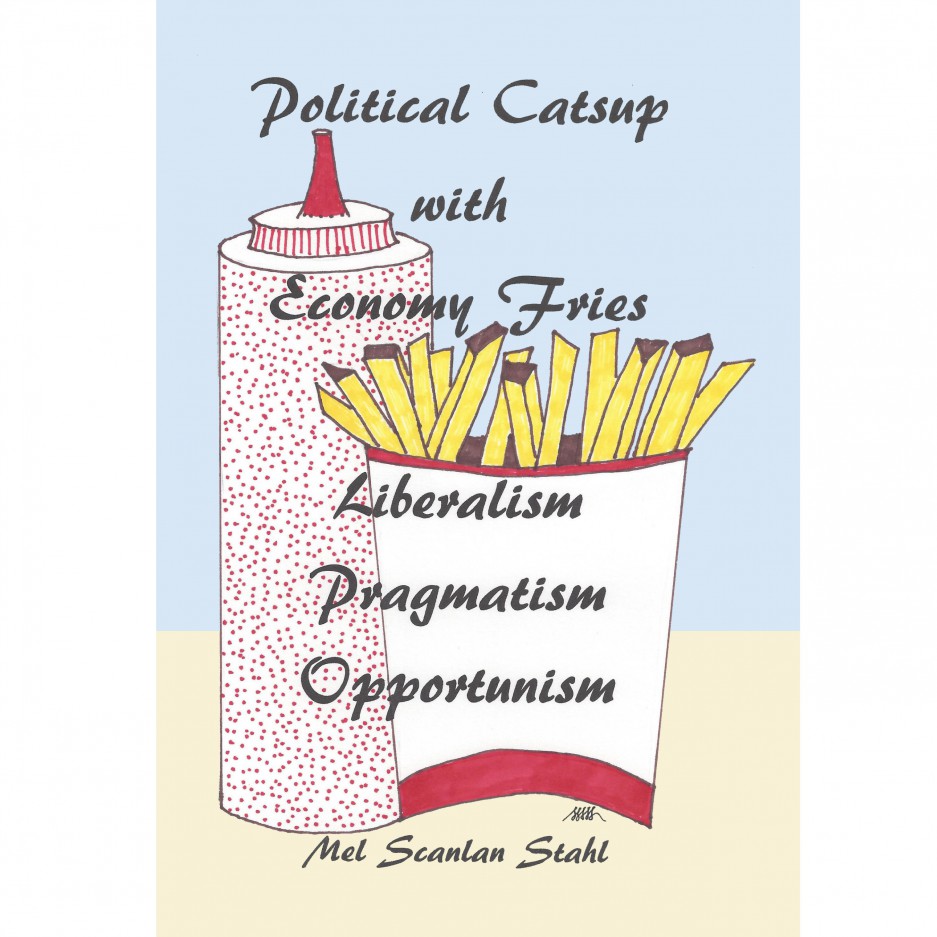
American politics is fraught because of conflicts among 3 political ideologies.

What is all the fighting about?  First of all there are 3 different political ideologies over American history.  People fight about politics from different ideological perspectives without realizing that or understanding how to find common ground.  Big fights are also happening because there are less economic resources for people in the grassroots under the neoliberal ideology.  The economy’s resources are available to corporations in the form of low-interest loans and tax reprieves and regulatory loopholes while big government continues getting deeper into debt even though it is already under trillions of dollars of debt.  “The little people” are being overtaxed and over-regulated.  And this neoliberal system will only demand more of everyday people without offering incentives to win them over.  The biggest economic players are winning access to more economic resources in this corrupt neoliberal system.  The appetite of the government and of corporations to exploit others and gain their own advantage seems limitless.

It’s become harder for Americans to understand American politics because there are so many points of view from different ideologies and from the perspective of conflicting interests.  Meanwhile, real estate has inflated prices, cars have inflated prices, healthcare has inflated prices.   Education has an inflated price both within communities where superintendents make six figure salaries and at universities.  For example, Edward Lee Vargas, the Superintendent for Kent School District in 2014-2015 made $596,212 (1).  A college education has become so unaffordable that education may cease to be the community crossroad that it has been in the past.  Some have noted a decline in college level enrollments (2) (3).  The Federal Reserve continues to create social mayhem with low-interest rates that support mal-investment, and in support of a fiat monetary system that overprints money.  The Federal Reserve pretends to keep track of the consequences of its policies but it is ignoring 94 million working age people out of work, inflation in food, volatility in energy and other bloated price tags mentioned above.  Meanwhile wages aren’t growing to meet new expenses.  This makes people irritable about politics.  And so they fight.

If you would like to understand how these circumstances developed, buy Political Catsup with Economy Fries on Amazon.com.

source information:

(1) Washington State School Salaries: 2014-2015, data.spokesman.com/salaries/schools/2015, accessed June 2016.

(2) Current Term Enrollment Estimates-Spring 2015, Research Center, May 13, 2015, Current Term Enrollment Estimates, Reports, nscresearch.org/current termenrollmentestimate-spring2015/ , accessed June 2016.

(3) Current Term Enrollment Estimates-Spring 2016, Research Center/May 23, 2016/Current Term Enrollment Estimates, Reports, nscresearchcenter.org/currenttermenrollmentestimate-spring2016/, accessed June 2016.

Neoliberals exaggerate tech success in 2016.

I have researched the claims of neoliberals about tech improvements and found their claims to lack a firm foundation in reality.  There are three areas that I will debunk: first, the claim that genetics will cure disease or cancer in the near future is a false claim; second, the claim that AI or artificial intelligence is already here is a gross falsehood; third, the claim that self driving cars are ready for the road is also untrue.

Here’s my first example: the claim that genetic tools will enormously advance medicine is probably not true in the near future.  On April 14th, 2003, the National Human Genome Research Institute announced that the human genome had been fully sequenced (1).  Please notice that it’s already been 13 years since then.  And medicine hasn’t been revolutionized yet.  Our DNA sequence is important knowledge but it’s only part of the picture of how our DNA works within us to become the proteins that we need to build structures in our bodies and to regulate the body’s systems.  Epigenetics is the newest frontier in genetics.

Epigenetics is the process by which our DNA’s genes are regulated.  That means that epigenetic mechanisms can turn genes off and on.  Epigenetics can be affected by our environment.  That explains how DNA containing organisms can genetically adapt to their environment without changing their DNA sequence.  One of my old textbooks (2) says that 50% of disease is caused genetically.  So it would be really great if we could understand how genes cause disease.  But epigenetics makes it enormously more complicated.  Although scientists can show a link between a gene and a health problem, they still don’t know what causes most health problems.  Correlation isn’t causality.  Some genetic testing companies have gotten into trouble recently because they have claimed that they can determine the genetic cause or the genetic risk for diseases when they can’t really do that (3),(4).

Here’s my second example: the claim that AI is here now is a false claim.  According to Wikipedia (5), the discipline of Artificial Intelligence was founded by five men in 1956.  They were John McCarthy, Marvin Minsky, Allen Newell, Arthur Samuel and Herbert Simon.  All of these founders have lived out their lives making enormous advancements in AI and all of them have died without meeting the goal of actually accomplishing AI.  Many people have seen the recent movie, The Imitation Game, which reminded the public of an important figure in computer science named Alan Turing (6).

In order for a computer to be considered intelligent, it has to pass the Turing test.   The Turing Test is conducted by a tester who makes queries on a keyboard and tries to determine if he is interviewing a machine or a person.  If the tester can’t tell that a machine isn’t a person, the machine passes the Turing test.  So far, no machines have passed.  Apparently language is a difficult screen for a computer to get beyond.  What we do have right now is “big data”.  Big data represents the huge amount of data that a computer can process as compared to a person.  But analysing data and sorting it into categories is different from understanding it.  According to Jaron Lanier in his book, Who Owns the Future? big data has caused changes in finance, for example, that have been destabilizing to financial markets (7).  Stephen Hawking, Elon Musk and Bill Gates have issued a statement that they think that AI could become a threat to humanity if it were ever realized.  But for now, AI remains an achievement that waits in the future.

Cars are getting more expensive and part of that expense is regulations that cause cars to evolve into more expensive machines.  A lot of cars don’t sell at the end of every model year.  Whereas China has some cities that are beautiful but mostly empty of residents, the U.S. has car lots full of cars that aren’t ever going to sell.  This is a sign of neoliberal malinvestment.  In order to maintain the high cost of cars which are moving beyond the ability of people to easily afford, some have thought that sharing a car among more people would make it affordable.  And of course, centralizing and controlling the car market with machine driven cars would be a boon to some.

Hence the argument for self-driving cars.  Several computer companies have been working on this goal of making cars that can drive themselves.  In theory, self driving cars would get rid of parking lots.  Some say that a computer would control them perfectly and reduce the number of accidents.  The trouble is that self driving cars don’t do well in bad weather because their sensors stop working.  And if the computer makes an analysis error, there isn’t an easy way to replace the computer quickly with a competent driver.  That’s a problem that has already been studied in planes which use autopilot.  Autopilot ruins the helpful practice that a good pilot would get from flying the plane himself. (8)

Isn’t it time for neoliberals to confess that their policies have made a mess of our current economy?  The policy package that accompanies neoliberalism, globalization and financialization isn’t one that delivers prosperity to most Americans.  Isn’t it time for neoliberals to stop bragging about fantasy accomplishments that aren’t really just around the corner and wouldn’t you like bad neoliberal policies to change?  If you would like to understand how the world has become burdened with the neoliberal model, if you would like to better understand its shortcomings, buy Political Catsup with Economy Fries at Amazon.com.

sources: (1) “Human Genome Project,” Wikipedia, https://en.wikipedia,org/wiki/Human_Genome_Project, accessed, 07-26-2016.

(2) Thomas D. Gelehrter and Francis S. Collins, Principles of Medical Genetics, (Williams and Wilkins, Maryland, 1990), 2.

(3)  Helen Wallace, “Misleading Marketing of Genetic Tests: Will the Genome Become the source of Diagnostic Miracles or Potential Scams?”, http://www.councilforresponsiblegenetics.org/ViewPage.aspx?pageId=88#, accessed 27 July 2016.

(4)  Reed Abelson, Julie Cresell, The New York Times, “Pursuit of Cash Taints Promise of Gene Tests,” June 24, 2015, http://www.nytimes.com/2015/06/25/technology/genetic-testing-case-highlights-the-fields-of-hope-and-hype.html?_r=0, accessed 27 July 2016.

(5)  “Artificial Intelligence,” Wikipedia, enwikipedia.org/wiki/Artificial_intelligence, accessed Mar 2016.

(6)  Reingold, “The Turing Test: Alan Turing and the Imitation Game,” psych.utoronto.ca/users/courses/ai/turing.html, accessed Mar 2016.

(7)  Jaron Lanier, Who Owns the Future?, (Simon and Schuster Paperbacks, NY, 2014).

(8)  Nicholas Carr, The Glass Cage: Automation and Us, (W.W.Norton and Co, NY, 2014).

The Overton Window and the Republican Convention.

According to Wikipedia, the “Overton window is the range of ideas the public will accept.  It is used by media pundits.” (1) The idea of the Overton window comes from a think tank called the Mackinac Center for Public Policy.  Joseph P. Overton (1960-2003), an engineer and lawyer by training, was the Vice President of the Mackinac Center.  He wrote about the Overton window as a “model of public policy change” (2) and it has gained attention since his untimely death in an ultralight plane crash at 41 years.  Joseph Overton believed in free market neoliberal principles.

I became interested in the Overton window because Donald Trump’s bombastic approach to politics moved it.  And I have wanted it to move.  When I wrote Political Catsup with Economy Fries, I also was trying to move the Overton window.  I tried to move the Overton window through non-partison and reasoned analysis.  I had hoped that my stories and analysis from history would bear witness to political changes and show how Americans can change for the better when changes are needed in the face of difficult political and economic problems.  I respect Donald Trump’s ability to change political discourse by moving the Overton window.

When I consider the points that are being discussed because of Donald Trump I would include at least the following:

Trade policy has an affect on the U.S. economy, including a loss of American jobs.  Bad trade deals have hurt Americans.

Immigration policy including the influx of more muslims into the U.S. is a security risk.  Mass immigration can become a risk to the nation’s sovereignty.

There’s another important topic that I would be delighted to hear about: banking re-regulation.  I was glad to hear that the Republican Party has now voiced an interest in adding a renewed Glass-Steagall provision to our banking policy regulating system.  Renewing Glass Steagall could rein in our unregulated banks.  Allowing them to do whatever they want has led to harms that need to be rectified.  Harms such as bubbles in the economy, banking insolvency and malinvestments.

I’m sure that a more polite approach by Donald Trump would have failed to move the Overton window.  And I don’t blame Mr. Trump for doing what was politically necessary to bring attention to problems that confront our nation.  Being polite isn’t more important than bringing attention to harms that have been hurting Americans.  I have to say that I admire Mr. Trump’s ability to make the press respond to issues in this new way–by discussing topics that the press would otherwise have ignored.  When the press makes fun of the Republican convention, as I have noticed that they are doing these days, I think they do so because Donald Trump has made them pay attention to what they would have preferred to ignore.  Many Americans have supported Donald Trump’s candidacy because at least he has recognized that certain harms need to be addressed through policy reform.  The early press coverage of the Republican Convention has been like commentary by court jesters instead of by reporters, in my opinion.

Sources:

“Overton Window”, enwikipedia.org/wiki/Overton_window, accessed 19 July 2016.

Mackinac Center for Public Policy, http://www.mackinac.org/bioaspx?ID=12, accessed 19 July 2016.

If you would like to explore topics regarding American history, globalization, financialization, as well as political ideologies and how they affect the nation’s economy, buy a copy of Political Catsup with Economy Fries at Amazon.com.

Brexit affects global money circulation.

Many people are writing to comment on Brexit or the exit of Britain from the European Union.  Many say that it won’t matter right away, but it does.  To understand the importance of Britain in finance, recall The Big Bang.  In 1986, The Big Bang in London, accelerated the global deregulation of banks.  In 1983 Margaret Thatcher began supporting legal changes that would eventually lead to the Big Bang.  She wanted to make sure that London could compete successfully with Wall Street and other foreign financial markets.  The Big Bang changed the stock market in London from trading by open outcry to electronic trading and that alone was a big change.  It also brought other changes and an overall deregulation of banks that allowed them to trade freely across national borders.  It increased the number of financial transactions in London and brought traders from around the world, including a lot of American traders, to trade there.

In 2010, according to Wikipedia, Nigel Lawson, the Chancellor who had served under  Prime Minister Margaret Thatcher, said that the Big Bang had contributed to the Global Recession from 2007-2012 by making banks more interconnected.  The Great Recession was an unintended consequence.  Later, Lawson supported the Leave campaign that has now voted Britain out of the European Union.  According to Lawson, a longtime Conservative, the European Union has failed to achieve economic success.  He also believes that Britain’s right to self-government indicates that Brexit is the right choice.  Lawson thinks that Britain will negotiate favorable trade agreements with the rest of Europe, much as Switzerland has, without giving up its sovereignty in managing its agreements.  Because Britain is Germany’s largest trading partner, he is confident that Britain will continue to have substantial influence.  What Brexit may indicate is that the interconnectedness of banks has proved unfavorable to maintaining a healthy economy that supports social prosperity.  Deregulation has accommodated too much mal-investment that has wasted economic resources.  Now, change is underway.

Sources:

Wikipedia, “Big Bang (financial markets), enwikipedia.org/wiki/ Big_Bang_(financial_markets), accessed 27 June 2016.

Decca Aitkenhead, The Guardian, “Nigel Lawson on Brexit: ‘I love Europe!  That’s Why I Live in France.  But the EU Has No Purpose.”, Saturday, 2 April, 2016.

Buy Political Catsup with Economy Fries at Amazon.com for more information about the world of finance in the context of modern economics and politics.

Mal-investment destroys worthy ventures.

A government subsidy can negate the influence of a real market loss and make an unprofitable venture last longer.  Subsidy can stand between a loss and a necessary change in strategy, preventing a necessary adjustment.  A loss ordinarily tells a producer that a product change is needed because his product isn’t making any money.  To preserve his business capital, a business person makes the changes that lead to profits.  To do that he has to know what the public wants and what they can afford to pay.  Prolonging the lifespan of an unprofitable venture might save a company from going out of business in the short term and therefore it might also keep some people employed who would otherwise lose their job.  But it also causes prices to be higher.  And it causes harms to the rest of the economy.  Why does it cause harms?

Because mal-investment wastes resources.  There’s only so much economic opportunity and putting money into unprofitable ventures keeps money out of profitable ones where money can circulate virtuously to benefit more people.  By putting money into unprofitable ventures, markets can become fantastically removed from real world feedback.  And a subsidy can make an unprofitable venture look profitable when it is failing to provide services or products that anyone wants.  That warps the market which is supposed to give everyone the opportunity to make mutually beneficial exchanges.  In fact it can undermine the benefit of exchange entirely.  The market should be respected as a negotiated space for free people to exchange products and services that provide real benefits.

Miracle-employee needed!

I have noticed some strange developments in the job market.  The other day, I saw a job advertisement that said with only a high school diploma and a flexible work attitude, someone was needed who could fix a mechanical problem, repair an electrical problem, and do a landscaping job, keep up the budget and do the janitorial work.  I have to say that I think the job sounded like a person who could do the work of 5 employees.

Another job, asked for a person with only a high school diploma to help do all the paperwork on a deadline for a staff of five employees, go out to do field work in inclement weather (and carry up to 45 pounds), be familiar with all the basic anatomy parts of local fauna and take blood or other samples from the same creatures, all on a flexible schedule with extra weekend work-time as needed and while keeping peace in the department and with the public, while taking heed to supervisory advice and being self-motivated.  This job sounded like a person who was expected to do what the overworked staff couldn’t finish doing for themselves in a department strapped for resources.  Why didn’t management take steps to help people keep up with their workload?

Both of these jobs were advertisements along the line of “Need miracle.  Please come and save us.  Be our Miracle worker.”  While I was out shopping for groceries I came to a traffic stop when the light turned red.  I was waiting on the same corner where a veteran’s group often passes the can for donations.  I noticed multiple homemade signs on the grass advertising to fill healthcare positions.  The signs said “We Need RN’s, LPN’s, CMA’s.”  And then there were a couple of phone numbers.  It seemed a desperate move leaving signs like that around.  Apparently any warm bodied RN, LPN or CNA was being sought.  In the not too distant past, positions like these were filled through other means than street side signs.  It seems that either the resources that nurses need to do their job aren’t there, or the workload is too much.  The expectations for nurses are so impossible that they can’t keep going in their career.  Demand is high but the positions remain unfilled.

As our fiscal policies and monetary system has abused most Americans, and ruined some, as our economy has slowed down, as we keep hearing people say that robots are going to take all the jobs, it’s helpful to notice that something has gone wrong with the jobs marketplace and it isn’t robots.  Instead, it is lack of workplace incentive to support workplace excellence or even any kind of stable workplace performance.  It’s the substitution of half-way measures and half-way training for really great effort and ability that was never commonplace but that once could be found because it was once supported with rewards, resources and policies that encouraged solid performance.  Many jobs now have insufficient numbers of employees that can’t meet the demands of the workplace.  Today we see in practice the foolish notion that anyone can do any job, or even any five jobs.  The idea that a special person exists out there who needs no training, who can manage complicated jobs with only a high school education and a flexible work attitude  and do any kind of work is not realistic.   Employees need training, education, resources and support to work well in the complex jobs of today.

The job market has also been harmed low wages, in a rip off economic system of high taxes and expensive regulations.   An employee’s skill and positive attitude will go further in a supportive environment rather than a bullying or computer monitored one.  People can’t constantly improve productivity unless they get more resources like a new technology that really works to help them.  Some work environments have begun to be premised not just on miracles but on a magic technology (that is always just around the corner).  But where’s the magic that will really work?  How about the magic of reasonable rewards and adequate resources for good work?  That once worked for everyone.

If you want to understand how the United States moved from economic liberalism and individual freedom to a regulated and centralized economy with more than one million laws, read Political Catsup with Economy Fries available at Amazon.com.

Health care inflation through securitization.

Securitization was behind the financial problems that erupted during the Great Recession.  And securitization proceeded based on legislative changes approved by Congress.  According to Bethany McLean and Joe Nocera in what may be the best book to explain the 2008 Subprime Mortgage Crisis and subsequent Great Recession, All the Devils Are Here: The Hidden History of the Financial Crisis, securitization was invented during the 1970’s as mortgage-backed securities for FHA and VA loans (1).

Securitization of a mortgage turns it into an asset that can be traded by investors.  Then the mortgage risk of default gets transferred to a third-party—the investor–who is neither the borrower nor the lender.  This destroys the negative consequences of a bad loan that would normally discipline the lender.  That means that a lender can make bad loans without suffering harm.  Meanwhile, if investors suffer a default especially a large market-wide default, the entire market can suffer harm that gets transferred to retirement funds, for example.  It was mortgage-backed securities that inspired the development of other financial innovations like credit default swaps.  These innovations can remove culpability for harms from the people who make bad loans.  Risk, then default and then harms dispersed to people who never benefitted from the loans as either borrowers or lenders.  Society then suffers widespread and terrible wealth destruction.

The American real estate market has not yet recovered from the Great Recession.  Prices for real estate have been volatile and American cities are full of overpriced empty houses that are being devoured by time into distressed properties that no one would want even if they were affordable.  Other homes have been turned into rentals.  Home ownership hasn’t been this low since 1965 (2).  And financial wizards now suggest that the same securitization that undid the housing market should be applied to health care.  What hubris!

The argument being made is that care over time for a chronic health disorder is a lucrative profit center but some curative procedures are either too costly to afford or not incentivized for development because long-term treatment is so much more lucrative than a cure.  Some have suggested that $80,000 hepatitis C treatments are too expensive even when insurance companies can sometimes get a $40,000 reduction in cost.  The treatment is curative but people can’t afford it and many insurance companies refuse to pay the exorbitant cost.  The suggestion being made in the article listed below (3) is to securitize the treatment cost in a mortgage like payment process. Then instead of lowering the price (to what individuals in the market can afford), a payment vehicle (where the risk would fall against investors and perhaps against larger society in the case of a default) would make it possible to maintain the high price.  The argument is that this would incentivize more lifesaving curative treatments that would otherwise eliminate a profit center being maintained by longer term chronic treatments.

When I read about securitizing healthcare, I feel angry.  It makes me understand that securitization has been a mistake for all of us in the grassroots.  It also shows that government intervention into real estate or healthcare has caused an avalanche of price increases.  These increases aren’t affordable except with more legislation that facilitates a new payment vehicle that diffuses consequences over all of society.  But those consequences still hurt as can be seen by the consequences of the subprime mortgage crisis.  And overcharging for treatments that are unaffordable in the real healthcare marketplace where real health problems are found is a bad policy.  Prices are supposed to be bounded by what the market can support–inside an affordable price structure.

For a while, securitization seemed to increase home ownership but only until a huge number of bad loans were defaulted on.  Then everyone lost property value (30%-40% in the short-term).  And many people lost their real estate investment capital in foreclosure and that shrunk the market for home ownership.  After foreclosure, there were a lot of empty properties.  Eight years later, the recovery in home prices is mostly due to investors passing properties between themselves.  Investors don’t want to live in the house.  In some cities there are enough renters to rent the house.  So houses that were treated like capital investments are trapped in limbo as investment properties that are either rented or empty.

Securitization for healthcare could artificially expand the market for overpriced treatments in the short-term.  But how would a healthcare cure be foreclosed upon and who would pay for that when the buyer couldn’t make their payment?  I imagine that we would all pay just as has happened in real estate.  Obamacare could facilitate securitization of healthcare treatments at inflated prices just as Fannie Mae and Freddie Mac facilitated a real estate boom at inflated prices by supplying unqualified buyers that temporarily sustained real estate demand.  Remember that the real estate bubble led to real estate malinvestments and a subsequent collapse of a buyer’s bubble in real estate.  And now we have an oversupply of houses at inflated prices and the lowest rate of home ownership in fifty years.  In these securitization processes we should all beware of the long-term consequences.  You can’t stop harms by spreading them out to more people.  In fact, the state of our economy stuck in the doldrums shows the opposite. Malinvestments waste economic resources and cause economic harms.

Here are references for your follow-up:

(1) Bethany McClean and Joe Nocera, All the Devils Are Here: The Hidden History of the Financial Crisis, (Portfolio, Penguin, New York, 2010, 2011), 5-7.

(2) “The Rise and Fall of the American Homeowner: Current Homeownership Rate Is Back to Where it Was 50 Years Ago”, http://www.doctorhousingbubble.com/rise-and-fall-homeownership-rate-housing-real-estate-ownership-over-time/, accessed 6 April 2016.

(3) Vahid Montazerhodjat, David M. Weinstock and Adrew W. Lo, “Buying Cures Versus Renting Health: Financing Health Care with Consumer Loans, Science Translational Medicine”, stm.sciencemag.org/content/8/327/327ps6.full, accessed 5 April 2016.

(4) Lambert Strether, Corrente, “A Modest Proposal: Securitizing Loans for Large Health Care Expenses, http://www.nakedcapitalism.com/2016/04/a-modest-proposal-securitizing-loans-for-large-health-care-expenses.html, accessed 5 April 2016.

If you are trying to put the pieces together of how we got to our political and economic here and now, I encourage you to purchase a copy of Political Catsup with Economy Fries at Amazon.com.

Crowding out and economic inefficiency cause high unemployment.

Every school of economics embodies different goals that the government has in the economy.  Each shows us a different policy relationship between the government and the economy.  Under classical economics, the government doesn’t tax the economy heavily or interfere with the cost of capital.  Under classical economics, Say’s Law predicts that workers will always get paid for their production and that demand will be sufficient in the marketplace.  And that law held true in an economy that didn’t have a lot of resources being diverted into government projects.  An economy that retains its capital resources can put those resources into economic production.  And that kind of economy has many paying jobs to do.  Anyone who wants to work can work and get paid.

But Say’s Law isn’t what the Keynesians believed.  Keynesianism holds sway when the government taxes so heavily that productive resources that should have been otherwise able to maintain full employment are diverted into government projects.  Under these circumstances, Keynesians formulate a different idea about employment called the “natural rate of unemployment”.  It arises when a growing economy comes to a state of equilibrium and the growth rate slows down.  The natural rate of unemployment represents people who can’t get work because the resources that would have paid them to work have been withdrawn.  Keynesians thought that the natural rate of unemployment could be lowered by increasing the rate of inflation (a hidden tax on yesterday’s already earned capital).   In a heavily taxed economy, some people can’t get work because the resources that would have employed them have been diverted into politics.

But today’s neoliberal economy is much worse.  In this economy, fiat money and high volatility constantly destroy economic resources and mobile capital circulation into diverse markets creates constant instability.  Taxes continue to be high on the grassroots economy.  Low level overall inflation comes from inflation in some parts of the economy and deflation in other parts.  Mobile capital undermines small capital holders at home and abroad.  The value of money becomes uncertain.  Easy money policies exacerbate economic problems by encouraging malinvestments.  Unemployment is high because monopolies form as the big economic fish eat the little economic fish and this destroys jobs.  Monopolies waste economic resources by charging more because they can in the markets that they dominate.  Unemployment is also high because of high taxes that divert capital resources out of the economy.  Markets lose the ability to use resources efficiently and to provide a stable employment marketplace where people can be fairly compensated for their labor.  Market distortions undermine a stable capital marketplace.  Suddenly the circulation of goods to where they are needed has become confused by problems with the value of capital and the value of goods and services.  Surely all of these resources haven’t suddenly become valueless?  Capital itself becomes a tax resource.  Central banks stop paying interest on capital and they threaten to charge fees to hold capital.

These three paragraphs show that the relationship between politics and economics impacts all of us in this interconnected world.  To learn about the relationship between politics and economics and how it has changed over U.S. history buy Political Catsup with Economy Fries at Amazon.com.

Deadly policies should give Americans a reason to consider policy changes.

The U.S. has experienced a spike in deaths that hasn’t been seen in other developed nations.  These deaths amount to about 500,000 people who have died prematurely and spiked mortality rates.  According to Angus Deaton, one of the authors of the study, the deaths may be due to an increase in economic insecurity among white middle-aged Americans.  They seem to have “lost the narrative of their lives,” or experienced a significant loss of economic opportunity.  The increased mortality comes from an increase in suicide which stems perhaps from a “loss of hope”.  And that increase in suicide rate has been seen, according to Deaton, in every education demographic.  Here’s a link from Vox, “Nobel Winner Angus Deaton Talks About the Surprising Study on White Mortality He Just Co-Authored” by Julia Belluz on November 7, 2015.  Here’s another link from The Atlantic, for a similar article entitled: “Middle Aged White Americans Are Dying of Despair,” by Olga Khazan.

Making a list of recent economic harms that have hit this group of Americans would lead a thoughtful person to consider more than a single negative event.  Here are some economic negatives that have increased economic insecurity for middle-aged Americans:

(1) The easy money policy (low interest rates) of the Federal Reserve has led to enormous debt and also the hostile takeovers of businesses and job losses.

(2) The subprime mortgage crisis (which happened because of banking deregulation) caused many people to have foreclosures that meant the loss of their capital investment in a home.  They also lost their home.

(3) This group has also been harmed by Zero Interest Rate Policy that has undermined the interest they could have earned in their savings accounts.

(4) And of course there have been losses of employment in this group after the Great Recession.  According to a recent statement by Carly Fiorina, more small businesses have been closing their doors than new small businesses have been opening.  That means that small businesses can’t contibute to employment the way that they did in the past.

(4) A high tax rate including additional taxes for the ACA has hurt this age group.

(5) Constant inflation undermines the value of money at every moment.  The Federal Reserve has a current policy of constant “low level” inflation but that differs from their earlier policy of no inflation under the Humphrey Hawkins Act (which also sought full employment).  (The Federal Reserve abandoned full employment and no inflation decades ago).

Economic policies have long-term and widespread effects.  A more centralized economy wastes resources because governments can’t use economic resources efficiently.  Desperation has increased to dire levels for some groups who are suffering enough to end their lives.  That loss of life is a warning that shows that government policies are hurting people.  More government intervention in the economy will likely increase harms.  Imagining that more government interventionist policies can fix the harms caused by government intervention is foolhardy.

Americans who want more government programs to ensure that people have (1) free community college (2) free healthcare (3) continuing social security, and medicare don’t look at the 19 trillion dollars of government IOU’s.  Although monetarists have believed that the government has an unlimited power to create money, the recent spike in mortality shows that there are negative consequences.  People who want free programs, of course, just want what they want.  But there isn’t really a “free” education or “free” healthcare.  There are economic consequences when the government passes more and more legislation that increases government spending.  Losses of gainful employment and the failure of people to thrive in our economy shows people being hemmed in by government intervention.  Remember when you vote that people can’t live without economic hope and the government can’t substitute economic intervention for economic opportunity.

If you want to connect the dots between the past and the present, if you want to understand how politics and economics work together to affect your opportunities, buy Political Catsup with Economy Fries at amazon.com and don’t wait another day to understand how we got where we are right now.

Abnormally low interest rates have hurt savers.

If a saver has worked for twenty years to earn $100,000 and they have put that money in the bank at zero interest, how much money have they lost when the usual rate of interest in the United States during its history has been about 5%?  According to www.thecalculatorsite.com, the $100,000 saver has not earned $49,178.38 over eight years of zero interest (compared to 5% interest on their capital compounded monthly).

That’s a really big “tax” that savers have paid to the Federal Reserve over the last seven years.  And it bites into people’s retirement money and undermines the value of the work that they did to earn that money.  It also undermines the practice of saving money in a bank (which can be lent out for productive investments).  It also reduces the person’s economic freedom to earn interest on their capital (capital has a proper cost).  What a crazy economy!

As the government continues to promise more “programs” it is useful at this time to consider saying “no” to all of them.  It is government overspending and government debt that led to the Federal Reserve zero interest rate policies that have been followed since 2008.  More government overspending will not fix the non-productive parasitic economy that Americans are struggling under right now.  If you are curious you can go to the site listed above and see how much money you aren’t making on whatever amount of savings you have in the bank.  Even if you don’t have any savings, it’s bad when other small capital holders that have saved money can’t earn interest.  That’s because no interest policy freezes-up the once ordinary opportunity to earn a fair return for putting money in the bank (and bank deposits offer up capital for community borrowing).

The current Federal interest rate of 0.75% is still woefully poor payment to savers.  Interest payments on $100,000 at 0.75% for a year ($752.81, interest compounded daily) as compared with the more usual 5% interest rate over U.S. history ($5,126.75) would yield a shortage of about $4,373.94.  If you add that to the last several years at zero interest rates, the total money lost to the saver of $100,000 is $53,552.32 since severely low-interest rates were adopted experimentally by the Federal Reserve.  Some people have taken a political position and said that savers should put their money into the stock market instead of into a savings account.  But an artificially sustained stock market under QE isn’t an attractive investment for most savers.

Buy Political Catsup with Economy Fries by Mel Scanlan Stahl at Amazon.com

Note:  This “zero interest” from 2008 until 2016 is only an approximation for Federal Reserve policy which paid 0.25% from 2008 until 2016 when the rate went to 0.5%  (Wikipedia lists zero interest rate policy as having ended in 2015).  In 2016 the rate was increased to 0.75%.  Unfortunately, ordinary earnings at 5% interest haven’t been restored as of nine years since the Great Recession.  This hurts savers, especially the elderly, many of whom can no longer earn money by working.

For information on ZIRP, see: Wikipedia, “Zero Interest-Rate Policy,” accessed 10 Feb 2017.