Strange events continue to unfold across America. I was struck recently by a video that I watched. It was a video of a completely inarticulate group of students at a university in Georgia. In fact, they were so inarticulate that I don’t know what they were complaining about. The video began with a senator that was visiting a class. Students became upset by something that they thought was worth complaining to the senator about. Rudely. But none of them could articulate a single idea of their own. One by one they brought up their phone screen with text that they could read loudly as they exited the classroom. I still don’t know what their beef was. I wonder if they know.
That brings me to ponder the influence of narratives in modern life. Good stories begin with something real. Hemmingway said to all writers everywhere that the way to write well is to write one good sentence that is true, then expand out into narrative from there. What happens if you can’t do that first part? What if you don’t know what’s true?
That may be the terrible conundrum of those Georgia students. In the deluge of information that is pouring out narratives that mostly aren’t true, it can be hard to know anything that is true. And if you have lost a sense of what’s true for you, if you’ve lost even relative truth, you can’t use relative truth to backtrack to absolute truth that you are confident about. Truth matters because reality matters. Parroting what can be found on the internet doesn’t count as having an informed point of view. Instead, that can be just reading propaganda.
I’m sure you’ve heard of the strategy called “divide and conquer.” If you want to destroy social solidarity, one way to do it is to encourage people to pick one of two opposing sides. In war, that’s easy. Pick a side. Rationalize about which side should win. Then yell loudly for the side you want to win. A long time ago, Sun Tsu (544 BC) said that all wars are based on deception. In 1918, in the U.S., Senator Hiram Johnson said that the first casualty of war is truth. I’m sure others have said this. Will wars go on forever if you can’t find a true reason to stop the war (because you can’t witness any part of it or know whether stories you hear about the war are true)?
Do you ever feel tangled in narratives? I’m against censorship because getting untangled from opposing and differing narratives is easier when people can point out where the story doesn’t make sense or isn’t true. What if young people who have a lot of screen time, don’t know where to begin to untangle opposing narratives? What if they don’t feel that they know enough to declare their own personal position? What if they aren’t confident that they can find a truth that will calm their sense of controvery and upheaval? That would make them feel less powerful and more frustrated. Like the students in Georgia.
Truth is powerful. And it’s easier to find truth when it’s right in front of you. That’s one of my complaints about globalization. Distant wars have a lot of tangled narratives but no way to untangle the lies from the truth or even to recognize what may be true or untrue. I’m not in favor of sending money to distant wars.
Buy a copy of Political Catsup with Economy Fries available at Amazon.com.
Narrative is distorted in non-issue politics also. In U.S. party politics, the Democrat Party and Republican Party have evolved into some extreme positions that oppose each other. Issues such as gun contol and abortion for example used to be called non-issues that would strongly engage the electorate and grab their attention. But the idea of non-issues was only to engage not to have consensus.
Non-issues split the electorate 50% on each side. They are hot button issues. As the role of government has become more intrusive in people’s lives, control has become the goal and moving that way instead of toward consensus is where the pursuit of non-issue hot button politics has led us. Unfortunately. Both the Democrat and Republican parties like people to fight over non-issues because those are issues that divide and conquer the American electorate, wasting political energy. In the meantime, both parties are bankrupting the United States Treasury and destroying the monetary system. Would this have happened if people could articulate a political position without taking an extreme viewpoint that strongly opposes the other 50% of the electorate?
If you feel that you can’t articulate your political position except to say yeah what she said or yeah what he said, you can improve by keeping a daily journal where you write down what happened to you each day and what you thought about it. When you have a question, write it in your journal and go research an answer. Later, when someone asks what you think, you’ll be able to tell them.
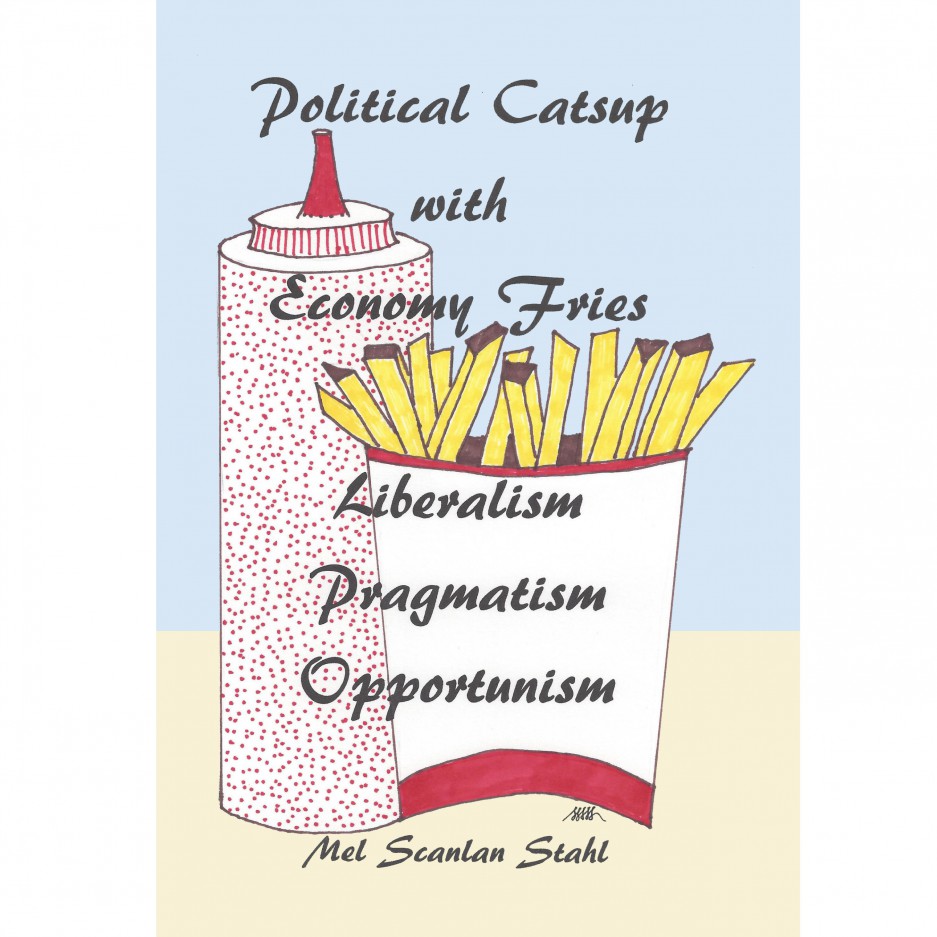
 Political Catsup with Economy Fries: Liberalism, Pragmatism, Opportunism