Can we salvage anything?

Let’s say a big storm comes into town and a tornado sweeps away a whole block of houses. People will rebuild because, we hope, they have insurance to do so. Some insurance policies have loopholes that cover wind damage but not flood damage. Some of policies will have large deductibles. But even if the whole house is lost, usually it will be rebuilt even if not all the costs of the rebuild are covered. Also, people have jobs and a way to begin again by slowly paying off the costs of a catastrophe over time. That’s often true even without insurance.

Bad governance is worse than a tornado. Why? Because all the strengths that a person would bring to build up their life are diminished by taxes, regulations, and policies that undermine an individual’s chance to get ahead during life’s many challenges. The economy itself is harmed by overgrowth of government which takes money out of the economy and uses it for political influence. We have seen that government charges seem to multiply and never end.

A person’s life and their ability to work is finite. Government these days is a constant attack on people’s vitality. It’s not like a tornado that shows up and wrecks things all of a sudden. Instead, it’s a constant drain. What are we getting for those government taxes? I see a government that refuses to account for its spending, refuses to stop spending when the treasury comes up empty…so spending nonexistent money into deficit, a government that is taking tax money and passing it around to NGO’s as a way of defrauding Americans, a well published group of government fraudsters parading their frauds in an unstopping brag of what evil they can do and never be stopped by the common man.

Just look at how things have gone since 2008. The government subsidized failing banks after real estate derivatives caused insolvency. That cash write-off was supposed to save the economy. But prosperity has never returned. A small group benefitted from the 2008 Great Recession. But the new policies that saved the banking sector led to an interruption in the rule of law for bad bankers. That failure of law has proceeded and worsened since then. Derivatives themselves were experimental and even though they have multiplied everyone’s problems, they have widened consequences which has seemed beneficial to the smaller number of people that should have been harmed by the derivatives losses. In any case, derivatives probably are illegal under the Constitution because they lead to money creation. We should stop derivatives trading.

Rule of law fails continue. More negative consequence results from that. Now lawfare in the courts seeks to interrupt any kind of repair to malgovernance. People in government positions continue making one bad decision after another. How do we salvage a mismanaged economy that continues to be mismanaged? Why is the government trying to manage the economy at all? Markets are supposed to do that. What happened to those? Those went away when the government started interfering by promoting some interests over others.

Human beings have never been perfect. We sometimes want to do crazy things. We sometimes want other people to do crazy things with us. Because of that, we need limited government where the government can’t mandate a bunch of crazy. When the nation started, there was a national dedication to limited government power. That was a better way. Limited governance power can get more accomplished along a safer and wiser course than unlimited power which under fascism leads to more bickering and more malinvestements that destroy resources and diminish our national strength.

Public private partnership is a kind of fascism. It is powerful people in positions of power over the less powerful. Rule of law governance is law applied equally to all. Under fascism, powerful people seek to be above the law. This is wrong. Or the law can weaponized to attack political competitors…lawfare. We should stop our fascism. End the partnership between government and corporations. Public private partnerships should end. Government should not decide economic winners and losers.

We need a return to representative voting where real votes aren’t manipulated through digital means. We should return to paper ballots and manual ballot processing. President Trump has signed an executive order to do this, but I’m seeing little change. Electronic voting persists despite its clear threat and past damage to legitimate voting.

We need to repeal bad laws. We need to avoid new laws being written by AI. The flood of bad laws we’ve been experiencing with thousand page legislation bills signed into law by a body of Congress that doesn’t read what it signs should end. Ridiculous legislation should end and we should return to necessary and proper standards.

The idea that government can do anything and the only road to prosperity is through government partnership, government programs, government interference in everyone’s life isn’t working out for America. We should end this overreach.

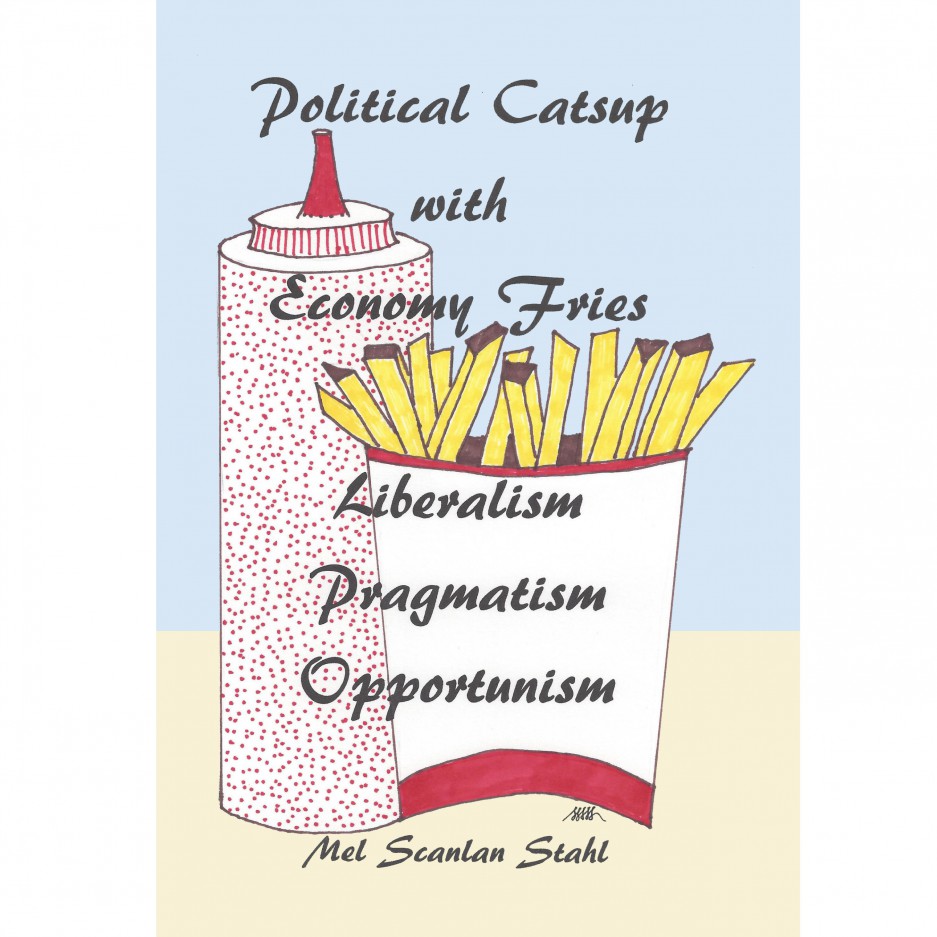
Buy a copy of Political Catsup with Economy Fries available at Amazon.com.

Rebuilding American jobs now requires tarriffs.

All the way back to the earliest period in American history, we used tarriffs to protect infant American industries. It is an old idea but an idea whose time has come again.

The practice of the United States to charge no tarriffs on other nations that do charge us tarriffs for our products pushes against American labor and acts as a subsidy that pays American corporations to hire cheaper labor abroad.

This helped in the earlier part of the neoliberal period to offset some of the risk courted by those who went abroad for cheaper labor resources. During the entire neoliberal period free trade has been a longterm goal. When other nations charged tarriffs on American products we promoted free trade by not charging a reciprocal trade tax and many of our U.S. corporations outsourced their production lines. This reduced the labor marketplace in the U.S.

That no tarriff policy allowed corporations to hire workers abroad, obtain supplies for supply lines located abroad, hire foreign workers and bring the finished product back to the U.S. as a cheaper product to sell to American consumers. Why is it time to change now?

Buy a copy of Political Catsup with Economy Fries available at Amazon.com.

Economies all around the world grew when American and European companies hired and paid foreign laborers. It wasn’t great for already developed economies but it was fantastic for underdeveloped ones. However, after vast economic growth in far away places, labor prices have gone up everywhere. The reason that China sited manufacturers moved to Vietnam was because China labor became more costly because the Chinese economy grew and inflation made the Chinese laborer more costly than before. The idea that labor abroad would always remain cheap was a fallacy.

Now it’s time to charge reciprocal tarriffs again because the United States can’t afford to subsidize outsourcing labor outside of the United States. We need to promote American jobs and bring manufacturing home again. By charging a tarriff, the U.S. encourages corporations to hire American workers. Why do we need manufacturing at home?

There are many reasons to bring our labor home, for example we would have better national security with products we need to run our economy closer to home, better economic performance when laborers at home have more money to spend on American goods, better quality of those goods that are found closer to home with regulatory oversight. American products were once known as robust, easy to repair and easy to supply. Those advantages have been missing from outsourced supply lines lately. It’s time to bring those advantages back.

What about disadvantages? Higher pricing will happen but it is easier for Americans to cope with that when there are more jobs and more homebased opportunities.

People who benefitted by charging a tarriff on American products and who fear reciprocal tarriffs complain that they deserve to continue to be free riders like under the old system where they could tax us and we did not respond in kind. But all such advantages are temporary as they can now see.

Economies are large and complex and flexible. Feedback from new tarriffs will take a while to take effect. Slowly, American industry should recover from it’s long malaise. Investment in new manufacturing will cost something and will have to be paid for. American workers eventually will grow in number as homegrown industries once again employ them to make the things that we all need.

ADDENDUM: April 10th, 2025

It appears now that President Trump’s tarriff stance has changed and moderated. He has relaxed tarriffs for all nations except for China.

Also, his rhetoric regarding tarriffs is somewhat different from what he is doing. It now appears that the straight tarriff description is completely inadequate to describe Trump’s tarriff charges which are mostly aimed at restoring a trade imbalances after years of unbalanced trade. The United States has imported more than it exports for decades.

Nevertheless, the recent tarriff negotiations are aimed at providing new reasons for manufacturing to be relocated from abroad back to the United States where more jobs are desperately needed.

After globalization advanced, it became more difficult to sort out trade imbalances. American companies partially owned a lot of companies performing value added manufacturing in foreign locations but selling finished product at home.

If American companies could avoid tarriff declarations by owning companies manufacturing product abroad and then transferring finished product in-house without a declaration, then how could a straight tarriff policy address that imbalanced trade outcome?

Once banking went international and manufacturing went international, sorting out trade imbalances became perhaps somewhat of an intractable problem.

Hence very strange rhetoric. It’s somewhat hard to see what needs to be done to restore employment at home. The idea of tarriff as a policy to establish fair trade and restore American employment is a place to start but perhaps not a place to finish.

Hoping for better outcomes and forecasts.

What a mess the economy has become and is. I was right to be worried about what the fake election result in 2020 would lead to. Now with an end to the Biden Administration, it’s the perfect time to hope for better. Are there any easy fixes?

According to Trump’s transition team, we can improve American health by revealing and reducing ties between scientific research and big pharma and RFKJr. will see to that. Elon Musk and Vivek Ramaswamy want to make government more efficient by cutting where they can cut out unneccessary government jobs and roles. President Trump himself cut more than 1000 regulations during his first term and according to him, businesses across America thanked him for that, so I’m guessing he will do more of that. President Trump will be deporting a lot of criminal immigrants with criminal records from their home countries and perhaps many other migrants. Our economy’s wages will not be reduced for the long-term as much with fewer illegal immigrants. Dr. Oz says that our current healthcare system is unsustainable and I wonder if Dr. Oz (despite his ties to Oprah Winfrey who supported the would-be Harris administration) would be willing to pitch in to help RFKJr. do even more to make healthcare less about sick care and more about health. Tulsi Gabbard got my support years ago as soon as she suggested Congress could cut the number of pages allowed in legislation to ten maximum. She’s going to be in charge of reordering the Intelligence community which has been doing so many stupid things. Trump’s whole cabinet is forming early with plans to reduce corruption in the military, in healthcare, in our bureaucracy.

Buy a copy of Political Catsup with Economy Fries, available at Amazon.com.

Not to worry (unneccessarily?), but I’m not seeing the level of social unrest that was promised by the media post-election 2024. There were a lot of predictions that no-matter-who-won, blood would flow. Instead there seems to be a new optimism. Of course, with the way people get information now, it could be that something out of sight still threatens us all. I hope that whatever may still lurk and mutter deprecations in the darkness will retreat to the farthest dark corners and lurk there without causing anymore trouble. There’s trouble enough with the economy and too much debt-debt-debt. How can we possibly clear it all away after so many expensive profligacies?

Don’t worry right now. We still have a short wait. In the meantime, there’s still leaves to rake, gutters to clean, snow soon to shovel, turkeys to bake, trees to trim, packages to wrap, gifts to mail or make or buy. Whatever happens, there’s still ordinary life to call us forward to make efforts on behalf of those we love and care about. The new administration starts in January if there is no more drama during the innauguration.

The American nation started with tariffs that were meant to protect infant industry from established European industries. Now, President Trump wants to initiate a new tariff policy. This is against one of the main principles of globalization. If he does tax imports, and inflation continues, everything will get a lot more expensive, I think for a period of time as Americans set up manufacturing here. Right now, almost everything that you buy comes from far away. Changing that will alter almost every offering on the market, from food to clothing to furniture, to craft supplies, to print art to almost everything. Making production more local again or at least more U.S. based will be an expensive transition. Stopping economic interventionism, where the government picks economic winners and losers, is harder but Trump’s cabinet appointments are getting started on that by attacking corruption in Washington D.C. which has been costly to Americans. With reduced corruption, less economic interventionism which has favored fascism, and more local economic industry and manufacturing at home, America might have a chance to prosper. Eventually, Americans will have more jobs, and the economy will start humming again.

I’m still worried about the monetary system. There’s talk about changing to digital currencies, which would not have better discipline than fiat currencies (which have been suffering under overprinting and deficit spending). Deficit spending is an important contributer to our inflation. Other financial innovators want to fractionalize ownership. They see this as a way to multiply asset trading markets sort of like tranches of mortgages allowed partial mortgage trading that migrated into housing markets and derivative bets and caused the CDO mortgage backed security crash in 2008. Banks have been secret movers and shakers that seldom are examined for the harms they are causing. Bankers were the first American exception to prosecution for their law-breaking during the 2008 Great Recession. That’s when we lost rule of law in America. Will President Trump do anything about too-big-to-fail banks? Will he be able to reduce banking shenanigans that undermine private ownership? Will Americans ever have fairer banking that pays interest for savings accounts? Will there ever be a ceiling on credit card interest charges? Will American life ever make sense again with a long term plan for prosperity?