Now we see what happens.

Donald Trump will be the forty-fifth President of the United States and he isn’t what the establishment wants.  There are some establishment tantrums happening today, November 9th.  Long faces peer out from the news-desks.  And there are some doom-sayers who want to frown on the mere possibility of real change.  Change is what neoliberals hate and resist.  Will Washington D.C.’s corruption diminish now?  Here we are waiting to see what will happen.  Will Donald Trump disappoint us or will he be a catalyst for needed change?

Dr. Ben Carson said that change won’t come easy with so much debt everywhere you look. From the federal government to the state governments to the municipal governments, and among corporations, banks and individuals, debt is easy to find.  And debt has been the heavy and large stone that stands in the middle of the road for change that we now embark upon.  Change is needed because neoliberal public private partnerships invite economic inefficiencies that are destroying the nation. A centralized economy is an inefficient one.

As with Brexit, the media ignores the real problems in our economy.  These problems  gathered momentum after banking deregulation.  Wall Street preferred Hilary Clinton because she supported their continuance of business as usual.  Will Donald Trump appreciate that banking deregulation has caused imbalances?  Banking and government can’t create prosperity by using zero interest rate policy.  The usual rate of interest in the U.S. over its history has been about 5%.  Zero interest rate policy punishes savers instead of letting interest rates incentivize more savings.  Savings that can be used for investing, for charity, for taking care of people who are too old to work by letting them live off the interest that grows from money they have saved for their later life.  And deregulation has led to all kinds of mal-investments.

The energy of change will necessarily affect the banking industry because it has been “easy money” that has created our current economic imbalances.  Here it comes again: Federal Reserve Policy Failure.   Federal Reserve policies have failed to protect prosperity.  Government statistics have been misrepresenting economic suffering and disguising the need for change.  But change is on its way.  And change would come even without Donald Trump.  But maybe Mr. Trump can give us an easier road.  I am hoping today for an economic road that takes a turn for the better before a complete economic failure strips away what’s left of America’s hard-won past prosperity and know-how.

Let’s be kind to each other during the stressful changes that await us all.  Let’s hope that change through policy reforms can get us on a better path that leads to economic production instead of speculation.  Let’s put an end to hot money migration.  Lets reform the work environment by incentivizing the good worker to work well.  Let’s improve the economy and end pressure on American labor.  Let an end come to de-skilling the workplace.  Let an end come to bullying American workers with lower wages, layoffs and flexibilization.  It’s been wrong to externalize corporate losses to the poorest and most vulnerable capital holders.  Since 2007, risk has pervaded every American’s economic decisions.  Prosperity has evaded the hardest workers.  People can’t find a way to plug into the merciless neoliberal economy where all the rewards go to the people at the top in a rigged system.  Enough already.

Smear campaign?

I went to NPR to read their article: by Danielle Kurtzleben, “1 More Woman Accuses Trump Of Inappropriate Sexual conduct.  Here’s the Full List.”  (http://www.npr.org/2016/10/13/497799354/a-list-of-donald-trumps-accusers-of-inappropriate-sexual-conduct) to make an inquiry of my own and check it over for distortions or patterns.  Thank you to NPR for publishing the information.

There are 14 present-day accusers who have never pressed charges in court for sexual assault against Donald Trump.  I discovered that one woman, Jill Harth filed a suit for sexual harassment but she withdrew it.  And her sexual harassment lawsuit happened two years after her husband Mr. Houraney had also filed a lawsuit for breach of contract against Donald Trump.  They were pageant promoters.  And the suit settled for only law fees and it demonstrates a time lag.  (The prior lawsuit for breach of contract begs the question as to whether it was the real motivator for the sexual harassment charge.)  Similarly, Ivana Trump’s accusations were part of a divorce proceeding and she later retracted them.

Allegations that are surfacing now include time lags.  If I counted right, most of the allegations that involved unwanted sexual attention go back more than fifteen years.  Newer stories from Pageant contestants that claim that Trump entered their group’s dressing room when he should not have done so are more recent but only one or two contestants have claimed that Trump sexually harassed them.  Trump admitted that he entered the dressing rooms during the pageants on the Howard Stern radio show.

When I looked for conflicting accounts to some of these stories, I found several of them.  Anthony Gillerthorpe, a passenger who was present with Jessica Leeds and Trump in the early 1980’s airline flight claims that she was flirting with him more than he was flirting with her and that nothing inappropriate happened that he witnessed.  A family member said that Rachel Crooks, an accuser who now says that Trump kissed her inappropriately, failed to get help from Trump for her modeling career but that she had praised him in the past when speaking to her relatives because she expected that he would help her.

There have been eleven neutral statements from contestants or statements saying there was no harm done regarding Trump’s visiting the dressing-room behavior.  Carrie Prejean, the former Miss California, was quoted on truth&satire.com as having refused to be interviewed by the New York Times and she said that they mischaracterized what little she told them.  Rowanne Brewer, a former Trump girlfriend, also said that the New York Times lied about what she said.  Both of these women aren’t listed by NPR.  Kristin Anderson, according to heavy.com, was contacted by the Washington Post and she said that she doesn’t clearly recall the incident that was described by the Post.  In fact she doesn’t recall who she was with at the time the events happened, though she was out with friends.  And the Post reporter had to supply the name of the restaurant in order to jog her memory.

Mindy McGillivray changed her mind from describing a nudge to describing a grope–and she admitted that she didn’t see who touched her, saying that Trump was behind her but not looking at her.  Trump’s former butler on gotnews.com, denies that Trump made a pass at Natasha Stoynoff even though she says that he, the butler, had to pull her away from Trump’s sexual advances.  And according to him, she and Trump were in a glass room and he would have seen anything that happened in there.  Summer Zervos who has come out recently as a Trump accuser sent him an e-mail inviting him to her restaurant earlier this year, in March.  So I doubt that she was harmed by him in the past.

None of these fourteen women have accused Trump of sexual assault.  According to the Department of Justice, the definition of sexual assault is: “Sexual assault is any type of sexual contact or behavior that occurs without the explicit consent of the recipient. Falling under the definition of sexual assault are sexual activities such as forced sexual intercourse, forcible sodomy, child molestation, incest, fondling, and attempted rape.”  One accusation is that of sexual harassment in the context of the workplace during pageants.  But because there were so many contradicting testimonies, it may be the case that some women were offended by Trump’s behavior and others weren’t.

Unfortunately, there are just so many categories of sexual behaviors including: unwanted sexual attention, inappropriate sexual attention, sexual harassment and sexual assault.  Different states categorize sexual behaviors differently depending upon issues such as whether a person is able to give consent because of their age and their sobriety and also what kind of sexual activity took place.  Sexual violence is considered a criminal act and no one should be victimized.  Adults can say “no” to unwanted sexual attention. I’m listing resources below to help in clarifying these issues.

To conclude, I have to admit that I possess little certainty about what I read online.  Reporters in the past followed-up their stories with multiple sources that might support more than one viewpoint.  But not now.  I will say that I think these accusations are motivated by politics.   I think that because of the way that the locker-room talk which was recorded in 2005, was held back until the moment when Hillary Clinton was slipping in the election polling.  And because reporters solicited these women’s stories.  And because none of them accused Trump through the courts unless they had an additional coincident legal interest.  And because so much time has passed since many of the events that are being described.  We are watching and hearing a smear campaign.  We can see political utility in defaming Trump in order to give the victory to Hillary Clinton, who is Wall Street’s favorite candidate.  Many of the accusations have been disputed.  I’m sure some women were offended.  What should it mean for American politics?  Perhaps nothing.

A lot is at stake in this election.  Think of the dollars tied up in derivatives right now and how the stock market is being artificially inflated by the Federal Reserve.  Recall that corporations are heavily in debt as are cities, states and the federal government.  There’s both private debt and public debt.  And there isn’t enough money to pay all the debts.  Upsetting the status quo could lead to faster financial ruin for some powerful interests.  But financial ruin has been consuming people’s homes and fortunes on Main Street for many years now.  And many businesses have also failed.  If we continue along our present course, many more Main Street interests will be destroyed.  Money has motivated some underhanded tactics as we have learned through Wikileaks when Bernie Sanders’ campaign was undermined by the DNC. Apparently, the DNC also hired people to disrupt Republican primaries.  And there may have been some election fraud in counting votes during the Democratic primaries.

Here are some resources to help you to sort through it all:

Danielle Kurtzleben, NPR, “1 More Woman Accuses Trump Of Inappropriate Sexual Conduct.  Here’s The Full List.  www.npr.org/10/13/497799354/a-list-of-donald-trumps-accusers-of-inappropriate-sexual-conduct, accessed 20 Oct 2016.

The Definition of Sexual Assault, http://www.justice.gov/ovw/sexualassault.

Factsheets: Sexual Harassment Information for Teens., (what to do and how to get help), http://www.sufreenyc.org/survivors_factsheet_60.html

Marty Klein Ph.D, “Sexual Harassment–Or Unwanted Sexual Attention? Adulthood Requires That We Know When Unexpected Sexual Attention Is Harmless,” http://www.psychologytoday.com/blog/sexualintelligence/ 201206/sexual-harassment-or-unwanted-sexual-attention.

Jim Hoft, HERE IT IS Detailed List of Findings In Wikileaks DNC Document Dump, http://www.thegatewaypundit.com/2016/07/detailed-list-findings-wikileaks-dnc-document-dump/, accessed 20 Oct 2016.

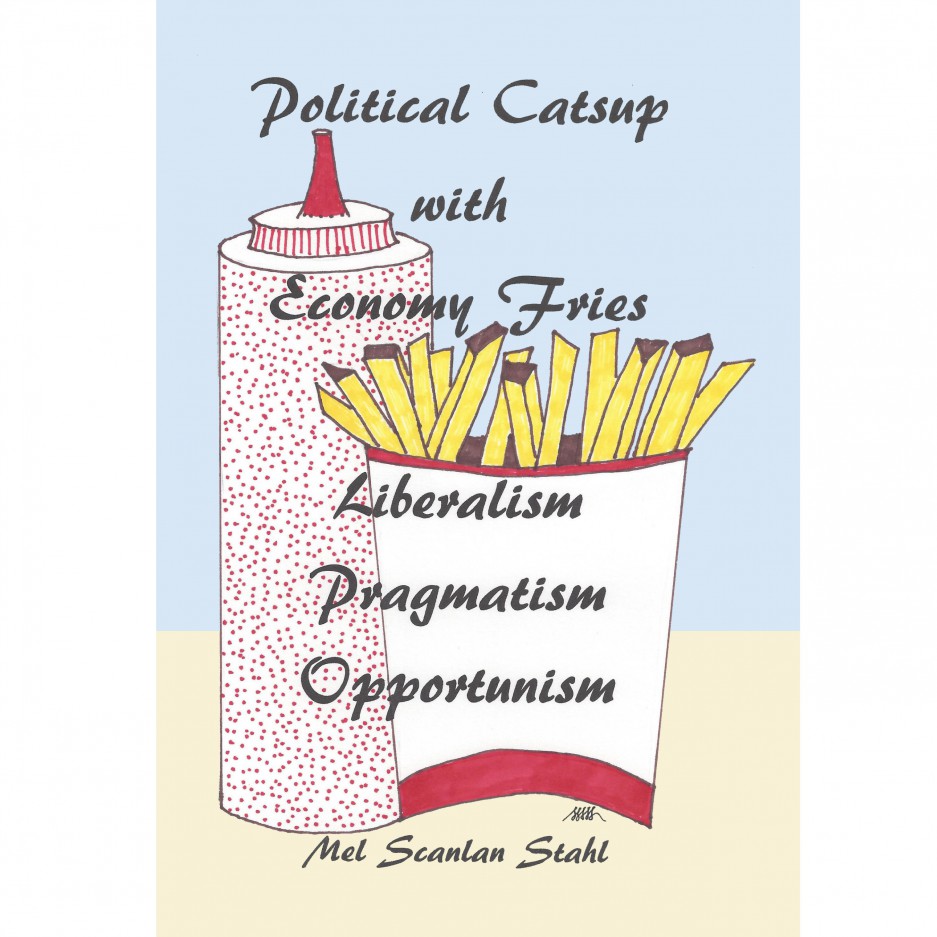
If you would like to understand how we got to the American politics of today, read Political Catsup with Economy Fries, available on Amazon.com.


“Kayfabe” describes election press coverage.

I have been a fan of Joan Didion’s writings for a while now.  I have a collection of some of them including her observations about politics.  She has written about our press’ focus on candidate’s personality instead of on political policies.  During her coverage of election politics, personality characterizations were positive fantasies about candidates, for example their idyllic family history or their business success.  But in Political Fictions, she noticed the emptiness of press coverage (see reference below).  She saw that political press coverage had moved into a space that lacked rationality or any discussion about choices.  Election coverage failed to offer thoughtful analysis of political polices either at home or abroad.  No one then (2001) could imagine what consequences our nation would face because of unintelligent considerations about politics.  Political confabulations about personality and non-issues have now led us to the absurd news coverage we face whenever elections roll around.  The only surprise is how political characterizations by the press have become negative in contrast to the idyllic past.

Today I stumbled upon the perfect word to describe our present-day political coverage.  I found this word at Ann Barnhard’t’s website,  www.barnhardt.biz/2016/10/08/post-american-politics-is-kayfabe-the-word-is-kayfabe/  And the word is “kayfabe.”  The author of this site used wikipedia as a resource and explained kayfabe as follows:

“This comes from the world of… professional wrestling. Here is the definition from wiki…

KAYFABE: kayfabe /ˈkeɪfeɪb/ is the portrayal of staged events within the industry as “real” or “true,” specifically the portrayal of competition, rivalries, and relationships between participants as being genuine and not of a staged or pre-determined nature of any kind. Kayfabe has also evolved to become a code word of sorts for maintaining this “reality” within the direct or indirect presence of the general public.”

And that’s what I see in political coverage today.  And maybe even worse than the make-believe world of kayfabe coverage which is phony, is that it’s a kind of pejorative information that makes us all feel bad.  When we watch it we feel bad about the U.S. and about ourselves.  It’s information that is more likely to discourage people than to inform them.  It does this by showing them a kind of politics that is completely irredeemable by any potential to change anything for the better.  The idea being put out there is that bad policies can’t change.

Let’s ignore this ugliness.  Let’s recognize the disrespect this kind of coverage means for the potential of politics to do better in the United States.   The U.S. can adopt better policies that aren’t corrupt and that don’t permit fraud.  We can reform.  And even though kayfabe coverage means something bad for all of us in America and for our American politics generally, its broadcast doesn’t mean that we can’t turn over a new leaf.

We can identify and abandon policies that are bad and we can adopt a better kind of politics that puts all of us and everything on a better footing to improve still more.  Let’s try to see beyond the negative kayfabe coverage as we try to re-center ourselves on the political issues that concern us most and in the hope that our politics can improve as we move forward.  Politics can offer a rebirth of opportunity.  I’ll be voting in the hope that our mistakes can inform us and help us to choose more wisely as we move forward.

If you’d like to obtain quality information about how we got to our current political landscape, if you’d like to see the big landmarks that will help you to understand our American politics, buy a copy of Political Catsup with Economy Fries at Amazon.com.

Source: In addition to the above reference to Ann Barnhardt’s blog and to wikipedia’s “kayfabe” entry, see:

Joan Didion, We Tell Ourselves Stories In Order to Live: Collected Non-Fiction, Political Fictions, Everyman’s Library, (Alfred A. Knopf, NY, 2001).


In a fiat system the big capital holder wins.

Many economists and people who trade in global markets have been interested in the question of whether parties who trade with each other benefit equally. James Mill (the father of J.S. Mill) thought that by increasing the efficiency of markets both parties would benefit equally in global trade. This was proved later, by J.S. Mill to be inaccurate. J.S. Mill formulated the principle of reciprocal demand. Under this principle, the gains from trade are seen to be unequal.

If vendors/producers in a small market trade with a bigger market, the demand for goods in the smaller market will increase and the small market can raise prices and therefore benefit more from the trade. Also as a benefit, the smaller market expands. And that observation makes it seem that the little guy gets to win. But that only works out for the little guy in a sound money system like that sponsored by Great Britain under the strict gold standard. The strict gold standard was the global monetary system in play during the period from the end of the Napoleonic Wars until about the end of WWI. J. S. Mill lived from 1806-1873, during the period of the strict gold standard. And under sound money the little guy could gain from trade in terms of gaining a higher demand for their product.

But what happens under today’s fiat money with mobile capital? In this case, parties with the largest capital can influence the price and value of currencies and commodities more than the little guy can. Periodic instabilities in markets due to hot money coming into and leaving the marketplace can create conditions that favor the acquisition of the little guy’s hard-won gains by the big capital holder. So under this kind of system the big guy with more capital wins. The lesson here is that the global monetary system matters in determining who benefits more from global trade.

Reference: A History of Thought on Economic Integration, by Fritz Machlup, (Columbia Press, NY, and MacMillan Press, Ltd, printed in Great Britain, 1977, 219)

All text on this blog is copyrighted to Mel Scanlan Stahl. If you should refer to my blog posts or blog pages please acknowledge me as the source.

American politics is fraught because of conflicts among 3 political ideologies.

What is all the fighting about?  First of all there are 3 different political ideologies over American history.  People fight about politics from different ideological perspectives without realizing that or understanding how to find common ground.  Big fights are also happening because there are less economic resources for people in the grassroots under the neoliberal ideology.  The economy’s resources are available to corporations in the form of low-interest loans and tax reprieves and regulatory loopholes while big government continues getting deeper into debt even though it is already under trillions of dollars of debt.  “The little people” are being overtaxed and over-regulated.  And this neoliberal system will only demand more of everyday people without offering incentives to win them over.  The biggest economic players are winning access to more economic resources in this corrupt neoliberal system.  The appetite of the government and of corporations to exploit others and gain their own advantage seems limitless.

It’s become harder for Americans to understand American politics because there are so many points of view from different ideologies and from the perspective of conflicting interests.  Meanwhile, real estate has inflated prices, cars have inflated prices, healthcare has inflated prices.   Education has an inflated price both within communities where superintendents make six figure salaries and at universities.  For example, Edward Lee Vargas, the Superintendent for Kent School District in 2014-2015 made $596,212 (1).  A college education has become so unaffordable that education may cease to be the community crossroad that it has been in the past.  Some have noted a decline in college level enrollments (2) (3).  The Federal Reserve continues to create social mayhem with low-interest rates that support mal-investment, and in support of a fiat monetary system that overprints money.  The Federal Reserve pretends to keep track of the consequences of its policies but it is ignoring 94 million working age people out of work, inflation in food, volatility in energy and other bloated price tags mentioned above.  Meanwhile wages aren’t growing to meet new expenses.  This makes people irritable about politics.  And so they fight.

If you would like to understand how these circumstances developed, buy Political Catsup with Economy Fries on Amazon.com.

source information:

(1) Washington State School Salaries: 2014-2015, data.spokesman.com/salaries/schools/2015, accessed June 2016.

(2) Current Term Enrollment Estimates-Spring 2015, Research Center, May 13, 2015, Current Term Enrollment Estimates, Reports, nscresearch.org/current termenrollmentestimate-spring2015/ , accessed June 2016.

(3) Current Term Enrollment Estimates-Spring 2016, Research Center/May 23, 2016/Current Term Enrollment Estimates, Reports, nscresearchcenter.org/currenttermenrollmentestimate-spring2016/, accessed June 2016.

Neoliberals exaggerate tech success in 2016.

I have researched the claims of neoliberals about tech improvements and found their claims to lack a firm foundation in reality.  There are three areas that I will debunk: first, the claim that genetics will cure disease or cancer in the near future is a false claim; second, the claim that AI or artificial intelligence is already here is a gross falsehood; third, the claim that self driving cars are ready for the road is also untrue.

Here’s my first example: the claim that genetic tools will enormously advance medicine is probably not true in the near future.  On April 14th, 2003, the National Human Genome Research Institute announced that the human genome had been fully sequenced (1).  Please notice that it’s already been 13 years since then.  And medicine hasn’t been revolutionized yet.  Our DNA sequence is important knowledge but it’s only part of the picture of how our DNA works within us to become the proteins that we need to build structures in our bodies and to regulate the body’s systems.  Epigenetics is the newest frontier in genetics.

Epigenetics is the process by which our DNA’s genes are regulated.  That means that epigenetic mechanisms can turn genes off and on.  Epigenetics can be affected by our environment.  That explains how DNA containing organisms can genetically adapt to their environment without changing their DNA sequence.  One of my old textbooks (2) says that 50% of disease is caused genetically.  So it would be really great if we could understand how genes cause disease.  But epigenetics makes it enormously more complicated.  Although scientists can show a link between a gene and a health problem, they still don’t know what causes most health problems.  Correlation isn’t causality.  Some genetic testing companies have gotten into trouble recently because they have claimed that they can determine the genetic cause or the genetic risk for diseases when they can’t really do that (3),(4).

Here’s my second example: the claim that AI is here now is a false claim.  According to Wikipedia (5), the discipline of Artificial Intelligence was founded by five men in 1956.  They were John McCarthy, Marvin Minsky, Allen Newell, Arthur Samuel and Herbert Simon.  All of these founders have lived out their lives making enormous advancements in AI and all of them have died without meeting the goal of actually accomplishing AI.  Many people have seen the recent movie, The Imitation Game, which reminded the public of an important figure in computer science named Alan Turing (6).

In order for a computer to be considered intelligent, it has to pass the Turing test.   The Turing Test is conducted by a tester who makes queries on a keyboard and tries to determine if he is interviewing a machine or a person.  If the tester can’t tell that a machine isn’t a person, the machine passes the Turing test.  So far, no machines have passed.  Apparently language is a difficult screen for a computer to get beyond.  What we do have right now is “big data”.  Big data represents the huge amount of data that a computer can process as compared to a person.  But analysing data and sorting it into categories is different from understanding it.  According to Jaron Lanier in his book, Who Owns the Future? big data has caused changes in finance, for example, that have been destabilizing to financial markets (7).  Stephen Hawking, Elon Musk and Bill Gates have issued a statement that they think that AI could become a threat to humanity if it were ever realized.  But for now, AI remains an achievement that waits in the future.

Cars are getting more expensive and part of that expense is regulations that cause cars to evolve into more expensive machines.  A lot of cars don’t sell at the end of every model year.  Whereas China has some cities that are beautiful but mostly empty of residents, the U.S. has car lots full of cars that aren’t ever going to sell.  This is a sign of neoliberal malinvestment.  In order to maintain the high cost of cars which are moving beyond the ability of people to easily afford, some have thought that sharing a car among more people would make it affordable.  And of course, centralizing and controlling the car market with machine driven cars would be a boon to some.

Hence the argument for self-driving cars.  Several computer companies have been working on this goal of making cars that can drive themselves.  In theory, self driving cars would get rid of parking lots.  Some say that a computer would control them perfectly and reduce the number of accidents.  The trouble is that self driving cars don’t do well in bad weather because their sensors stop working.  And if the computer makes an analysis error, there isn’t an easy way to replace the computer quickly with a competent driver.  That’s a problem that has already been studied in planes which use autopilot.  Autopilot ruins the helpful practice that a good pilot would get from flying the plane himself. (8)

Isn’t it time for neoliberals to confess that their policies have made a mess of our current economy?  The policy package that accompanies neoliberalism, globalization and financialization isn’t one that delivers prosperity to most Americans.  Isn’t it time for neoliberals to stop bragging about fantasy accomplishments that aren’t really just around the corner and wouldn’t you like bad neoliberal policies to change?  If you would like to understand how the world has become burdened with the neoliberal model, if you would like to better understand its shortcomings, buy Political Catsup with Economy Fries at Amazon.com.

sources: (1) “Human Genome Project,” Wikipedia, https://en.wikipedia,org/wiki/Human_Genome_Project, accessed, 07-26-2016.

(2) Thomas D. Gelehrter and Francis S. Collins, Principles of Medical Genetics, (Williams and Wilkins, Maryland, 1990), 2.

(3)  Helen Wallace, “Misleading Marketing of Genetic Tests: Will the Genome Become the source of Diagnostic Miracles or Potential Scams?”, http://www.councilforresponsiblegenetics.org/ViewPage.aspx?pageId=88#, accessed 27 July 2016.

(4)  Reed Abelson, Julie Cresell, The New York Times, “Pursuit of Cash Taints Promise of Gene Tests,” June 24, 2015, http://www.nytimes.com/2015/06/25/technology/genetic-testing-case-highlights-the-fields-of-hope-and-hype.html?_r=0, accessed 27 July 2016.

(5)  “Artificial Intelligence,” Wikipedia, enwikipedia.org/wiki/Artificial_intelligence, accessed Mar 2016.

(6)  Reingold, “The Turing Test: Alan Turing and the Imitation Game,” psych.utoronto.ca/users/courses/ai/turing.html, accessed Mar 2016.

(7)  Jaron Lanier, Who Owns the Future?, (Simon and Schuster Paperbacks, NY, 2014).

(8)  Nicholas Carr, The Glass Cage: Automation and Us, (W.W.Norton and Co, NY, 2014).

The Overton Window and the Republican Convention.

According to Wikipedia, the “Overton window is the range of ideas the public will accept.  It is used by media pundits.” (1) The idea of the Overton window comes from a think tank called the Mackinac Center for Public Policy.  Joseph P. Overton (1960-2003), an engineer and lawyer by training, was the Vice President of the Mackinac Center.  He wrote about the Overton window as a “model of public policy change” (2) and it has gained attention since his untimely death in an ultralight plane crash at 41 years.  Joseph Overton believed in free market neoliberal principles.

I became interested in the Overton window because Donald Trump’s bombastic approach to politics moved it.  And I have wanted it to move.  When I wrote Political Catsup with Economy Fries, I also was trying to move the Overton window.  I tried to move the Overton window through non-partison and reasoned analysis.  I had hoped that my stories and analysis from history would bear witness to political changes and show how Americans can change for the better when changes are needed in the face of difficult political and economic problems.  I respect Donald Trump’s ability to change political discourse by moving the Overton window.

When I consider the points that are being discussed because of Donald Trump I would include at least the following:

Trade policy has an affect on the U.S. economy, including a loss of American jobs.  Bad trade deals have hurt Americans.

Immigration policy including the influx of more muslims into the U.S. is a security risk.  Mass immigration can become a risk to the nation’s sovereignty.

There’s another important topic that I would be delighted to hear about: banking re-regulation.  I was glad to hear that the Republican Party has now voiced an interest in adding a renewed Glass-Steagall provision to our banking policy regulating system.  Renewing Glass Steagall could rein in our unregulated banks.  Allowing them to do whatever they want has led to harms that need to be rectified.  Harms such as bubbles in the economy, banking insolvency and malinvestments.

I’m sure that a more polite approach by Donald Trump would have failed to move the Overton window.  And I don’t blame Mr. Trump for doing what was politically necessary to bring attention to problems that confront our nation.  Being polite isn’t more important than bringing attention to harms that have been hurting Americans.  I have to say that I admire Mr. Trump’s ability to make the press respond to issues in this new way–by discussing topics that the press would otherwise have ignored.  When the press makes fun of the Republican convention, as I have noticed that they are doing these days, I think they do so because Donald Trump has made them pay attention to what they would have preferred to ignore.  Many Americans have supported Donald Trump’s candidacy because at least he has recognized that certain harms need to be addressed through policy reform.  The early press coverage of the Republican Convention has been like commentary by court jesters instead of by reporters, in my opinion.

Sources:

“Overton Window”, enwikipedia.org/wiki/Overton_window, accessed 19 July 2016.

Mackinac Center for Public Policy, http://www.mackinac.org/bioaspx?ID=12, accessed 19 July 2016.

If you would like to explore topics regarding American history, globalization, financialization, as well as political ideologies and how they affect the nation’s economy, buy a copy of Political Catsup with Economy Fries at Amazon.com.

Brexit affects global money circulation.

Many people are writing to comment on Brexit or the exit of Britain from the European Union.  Many say that it won’t matter right away, but it does.  To understand the importance of Britain in finance, recall The Big Bang.  In 1986, The Big Bang in London, accelerated the global deregulation of banks.  In 1983 Margaret Thatcher began supporting legal changes that would eventually lead to the Big Bang.  She wanted to make sure that London could compete successfully with Wall Street and other foreign financial markets.  The Big Bang changed the stock market in London from trading by open outcry to electronic trading and that alone was a big change.  It also brought other changes and an overall deregulation of banks that allowed them to trade freely across national borders.  It increased the number of financial transactions in London and brought traders from around the world, including a lot of American traders, to trade there.

In 2010, according to Wikipedia, Nigel Lawson, the Chancellor who had served under  Prime Minister Margaret Thatcher, said that the Big Bang had contributed to the Global Recession from 2007-2012 by making banks more interconnected.  The Great Recession was an unintended consequence.  Later, Lawson supported the Leave campaign that has now voted Britain out of the European Union.  According to Lawson, a longtime Conservative, the European Union has failed to achieve economic success.  He also believes that Britain’s right to self-government indicates that Brexit is the right choice.  Lawson thinks that Britain will negotiate favorable trade agreements with the rest of Europe, much as Switzerland has, without giving up its sovereignty in managing its agreements.  Because Britain is Germany’s largest trading partner, he is confident that Britain will continue to have substantial influence.  What Brexit may indicate is that the interconnectedness of banks has proved unfavorable to maintaining a healthy economy that supports social prosperity.  Deregulation has accommodated too much mal-investment that has wasted economic resources.  Now, change is underway.

Sources:

Wikipedia, “Big Bang (financial markets), enwikipedia.org/wiki/ Big_Bang_(financial_markets), accessed 27 June 2016.

Decca Aitkenhead, The Guardian, “Nigel Lawson on Brexit: ‘I love Europe!  That’s Why I Live in France.  But the EU Has No Purpose.”, Saturday, 2 April, 2016.

Buy Political Catsup with Economy Fries at Amazon.com for more information about the world of finance in the context of modern economics and politics.

Mal-investment destroys worthy ventures.

A government subsidy can negate the influence of a real market loss and make an unprofitable venture last longer.  Subsidy can stand between a loss and a necessary change in strategy, preventing a necessary adjustment.  A loss ordinarily tells a producer that a product change is needed because his product isn’t making any money.  To preserve his business capital, a business person makes the changes that lead to profits.  To do that he has to know what the public wants and what they can afford to pay.  Prolonging the lifespan of an unprofitable venture might save a company from going out of business in the short term and therefore it might also keep some people employed who would otherwise lose their job.  But it also causes prices to be higher.  And it causes harms to the rest of the economy.  Why does it cause harms?

Because mal-investment wastes resources.  There’s only so much economic opportunity and putting money into unprofitable ventures keeps money out of profitable ones where money can circulate virtuously to benefit more people.  By putting money into unprofitable ventures, markets can become fantastically removed from real world feedback.  And a subsidy can make an unprofitable venture look profitable when it is failing to provide services or products that anyone wants.  That warps the market which is supposed to give everyone the opportunity to make mutually beneficial exchanges.  In fact it can undermine the benefit of exchange entirely.  The market should be respected as a negotiated space for free people to exchange products and services that provide real benefits.

Miracle-employee needed!

I have noticed some strange developments in the job market.  The other day, I saw a job advertisement that said with only a high school diploma and a flexible work attitude, someone was needed who could fix a mechanical problem, repair an electrical problem, and do a landscaping job, keep up the budget and do the janitorial work.  I have to say that I think the job sounded like a person who could do the work of 5 employees.

Another job, asked for a person with only a high school diploma to help do all the paperwork on a deadline for a staff of five employees, go out to do field work in inclement weather (and carry up to 45 pounds), be familiar with all the basic anatomy parts of local fauna and take blood or other samples from the same creatures, all on a flexible schedule with extra weekend work-time as needed and while keeping peace in the department and with the public, while taking heed to supervisory advice and being self-motivated.  This job sounded like a person who was expected to do what the overworked staff couldn’t finish doing for themselves in a department strapped for resources.  Why didn’t management take steps to help people keep up with their workload?

Both of these jobs were advertisements along the line of “Need miracle.  Please come and save us.  Be our Miracle worker.”  While I was out shopping for groceries I came to a traffic stop when the light turned red.  I was waiting on the same corner where a veteran’s group often passes the can for donations.  I noticed multiple homemade signs on the grass advertising to fill healthcare positions.  The signs said “We Need RN’s, LPN’s, CMA’s.”  And then there were a couple of phone numbers.  It seemed a desperate move leaving signs like that around.  Apparently any warm bodied RN, LPN or CNA was being sought.  In the not too distant past, positions like these were filled through other means than street side signs.  It seems that either the resources that nurses need to do their job aren’t there, or the workload is too much.  The expectations for nurses are so impossible that they can’t keep going in their career.  Demand is high but the positions remain unfilled.

As our fiscal policies and monetary system has abused most Americans, and ruined some, as our economy has slowed down, as we keep hearing people say that robots are going to take all the jobs, it’s helpful to notice that something has gone wrong with the jobs marketplace and it isn’t robots.  Instead, it is lack of workplace incentive to support workplace excellence or even any kind of stable workplace performance.  It’s the substitution of half-way measures and half-way training for really great effort and ability that was never commonplace but that once could be found because it was once supported with rewards, resources and policies that encouraged solid performance.  Many jobs now have insufficient numbers of employees that can’t meet the demands of the workplace.  Today we see in practice the foolish notion that anyone can do any job, or even any five jobs.  The idea that a special person exists out there who needs no training, who can manage complicated jobs with only a high school education and a flexible work attitude  and do any kind of work is not realistic.   Employees need training, education, resources and support to work well in the complex jobs of today.

The job market has also been harmed low wages, in a rip off economic system of high taxes and expensive regulations.   An employee’s skill and positive attitude will go further in a supportive environment rather than a bullying or computer monitored one.  People can’t constantly improve productivity unless they get more resources like a new technology that really works to help them.  Some work environments have begun to be premised not just on miracles but on a magic technology (that is always just around the corner).  But where’s the magic that will really work?  How about the magic of reasonable rewards and adequate resources for good work?  That once worked for everyone.

If you want to understand how the United States moved from economic liberalism and individual freedom to a regulated and centralized economy with more than one million laws, read Political Catsup with Economy Fries available at Amazon.com.