I usually turn the radio on to hear the news while I ride my stationary bicycle for exercise, early every morning. There’s a lot of propaganda every day still telling us it’s good that we’re staying in and staying safe. Reporters still are eager to tell you whenever there are some more positive tests that show infections. The infection rate is so small right now that they make it sound scarier by presenting numbers in percentages. If there are only 7 people in the hospital and 2 more with covid-19 come in, how many scary percents is that?
What they aren’t saying is that most people who come in contact with the virus don’t get sick. They also don’t tell you how many people have fully recovered. They have been happy today to talk about dexamethazone’s effectiveness at reducing ventilator fatalities by about 20% but they won’t admit that hydroxychloroquine works well against covid-19 to eliminate the disease and to moderate the immune response. They absolutely won’t admit that it’s safe in careful dosages.
The recent press attacks claiming that hydroxychloroquine doesn’t work were based on a study that was done so poorly that it has been retracted. Too bad that they fail to mention that to you. The strategy to isolate healthy people has wasted a lot of money and destroyed a lot of jobs, but the press is eager to say to people who have lost their work that we are all in this together. That is a meaningless quip. I see a lot of informational efforts to continue economic disruption. Don’t you want to know why that is happening?
It may be happening in order to put more downward pressure on wages. Labor costs abroad are still cheaper and it would delight many employers if Americans got paid a lot less. Some businesses call that being more competitive. Monopoly enterprises that have high prices which don’t reflect market conditions keep causing a demand gap. You’d think employers would recognise that the demand gap is a growing problem. Perhaps the solution to small demand is to force people to buy like Congress tried to make everyone buy Obamacare. I hope not.
Prolonging the economic shut-down may also be happening as a political effort to destroy economic prosperity before the coming election–making President Trump look bad. It may also be happening so that an unnecessary vaccine can be marketed for release this fall.
Blacklistednews.com has a feature titled, “Ron Paul: is the second wave another covid-19 hoax?” According to this feature, covid-19 propaganda has nothing to do with healthcare at this point in time. Other online sources suggest that covid-19 and riots are just a distraction designed to help corrupt money handlers advance a new global money system. The old money system is being destroyed on purpose. This destruction will priviledge a new class of winners and make losers of everyone else.
So much of every day since the 2008 Great Recession seems unlikely—like it doesn’t make sense if you compare it with historical models that worked to advance American prosperity in the past. Why would covid-19 have been exploited in order to print trillions of new dollars unless it is a deliberate effort to wreck the United States monetary system? What do you think?
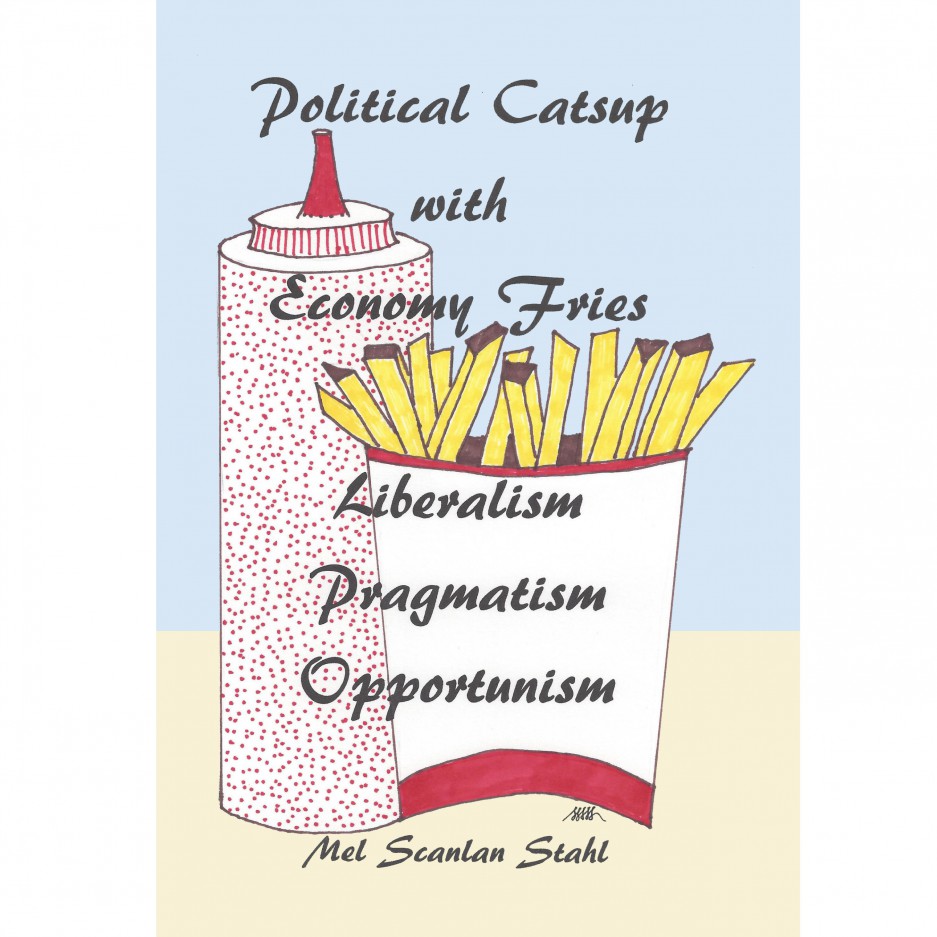
If you’d like to learn more about American history, about the relationship between politics and economics, and even about our current economic and political mess, buy a copy of Political Catsup with Economy Fries available at Amazon.com.
Author: fastcaranalysis
Here are important quotes from founding documents.
Founding documents from the classical liberal period can provide clarity at times like these when people in our government have exceeded their allowed power according to our United States Constitution. The monopoly press will ignore one problem in favor of another and it is now ignoring economic transgressions against people’s livelihoods in response to a virus scare while they turn their spotlight on George Floyd’s death and try to win a good opinion from you by virtue signalling instead of doing real journalism. You can contrast their deceptions with the truth revealing approach of our Founders. The Founders believed that paying attention to the function of government and limiting its power could keep peace in our nation. The Founding documents contain wisdom. This is some of the wisdom that influenced the men that wrote the Constitution.
Quotes from Thomas Hobbes Leviathan published 1651:
“I authorize and give up my right of governing myself, to this man, or to this assembly of men, on this condition, that thou give up thy right to him, and authorize all his actions in like manner. This done, the multitude so united in one person, is called a COMMONWEALTH, in Latin, CIVITAS. This is the generation of that great LEVIATHAN, or rather to speak more reverently, of that mortal god, to which we owe under the immortal God, our peace and defense.”
“LIBERTY, or FREEDOM, signifieth, properly, the absence of opposition….a FREEMAN, is he, that in those things, which by his strength and wit he is able to do, is not hindered to do what he has a will to.”
“The obligation of subjects to the sovereign, is understood to last as long, and no longer, than the power lasteth, by which he is able to protect them.”
“Competition of riches, honour, command, or other power, inclineth to contention, enmity, and war: because the way of one competitor, to the attaining of his desire, is to kill subdue, supplant, or repel the other.”
Quotes from John Locke’s Two Treatises of Government, published in 1690:
“The great and chief end, therefore, of men’s uniting into commonwealths, and putting themselves under government, is the preservation of their property.”
“When any one, or more, shall take upon them to make laws, whom the people have not appointed so to do, they make laws without authority, which the people are not therefore bound to obey;”
“Where-ever law ends, tyranny begins, if the law be transgressed to another’s harm; and whosoever in authority exceeds the power given him by the law, and makes use of the force he has under his command, to compass that upon the subject, which the law allows not, ceases in that to be a magistrate; and acting without authority, may be opposed”
“The legislative cannot transfer the power of making laws to any other hands; for it being but a delgated power from the people, they who have it cannot pass it over to others.”
“But if a long train of abuses, prevarications and artifices, all tending the same way, make the design visible to the people, and they cannot but feel what they lie under, and see wither they are going; it is not to be wondered, that they should then rouze themselves, and endeavour to put the rule into such hands which may secure to them the ends for which government was at first erected;”
Here are some quotes from Charles de Secondant Baron de Montesquieu from his Spirit of the Laws, published 1748:
“Before laws were made, there were relations of possible justice.”
“The united strength of individuals …constitutes what we call the body politic.”
“In republican governments, men are all equal: equal they are also in despotic governments; in the former, because they are everything, in the latter because they are nothing.”
“Political liberty is to be found only in moderate governments; and even in these it is not always found. It is there only when there is no abuse of power. But constant experience shows us that every man invested with power is apt to abuse it, and to carry his authority as far as it will go. Is it not strange, though true, to say that virtue itself has need of limits?…to prevent this abuse, it is necessary from the very nature of things that power should be a check to power. A government may be so constituted, as no man shall be compelled to do things to which the law does not oblige him, nor forced to abstain from things which the law permits.”
“There would be an end of everything, were the same man or the same body, whether of the nobles or of the people, to exercise those three powers, that of enacting laws, that of executing the public resolutions, and of trying the causes of individuals.”
Here are some quotes by Thomas Paine, “Commonsense” was published in 1776:
“Society in every state is a blessing, but Government, even in its best state, is but a necessary evil; in its worst state an intolerable one: for when we suffer, or are exposed to the same miseries by a Government, which we might expect in a country without Government, our calamity is heightened by reflecting that we furnish the means by which we suffer.”
“A government of our own is our natural right: and when a man seriously reflects on the precariousness of human affairs, he will become convinced, that it is infinitely wiser and safer, to form a constitution of our own in a cool deliberate manner, while we have it in our power, than to trust such an interesting event to time and chance.”
We have seen Federal Reserve experiments that are destroying the value of our money. These experiments, ZIRP, QE, unregulated derivatives trading, TARP, damage people’s wealth and property. We have also seen government officials who don’t respect our nation’s Constitution and choose to do whatever they imagine will give them money or power over other’s people’s money and property. We see trouble now on every side. George Floyd’s death happened because of local police using stronger policing tactics. They are the wrong tactics. It’s time for all Americans to reflect on the history of our nation. Consider next steps carefully.
It’s time to hold officials accountable for operating outside of our laws and principles of good government. It’s time for those officials to gather together some humility and admit that they have made mistakes that have hurt other people. It’s time to end abuses of power that exceed the powers allowed in the Constitution. It’s time to address hurts and harms that are being done against ordinary people across America. This isn’t a game where game theory is all-important. This looks like it could be a turning point that requires good care and attention so that our nation ends off better instead of worse.
If you want to buy a copy of Political Catsup with Economy Fries, it’s available now at Amazon.com.
More aggressive state policing is only a piece of the problem.
Recently I read a book called Talking to Strangers by Malcolm Gladwell. The book’s heart isn’t really centered upon achieving better communication. It concerns instead a problem with policing in the United States under neoliberalism. I know that because the author stated that a particular instance of policing in Texas, an incident involving Sandra Bland, inspired him to pick up his pen and write Talking to Strangers. You may wonder what has happened to policing in the United States, and I’ll tell you about that in a few more paragraphs. But first, some background.
Neoliberals have wanted to change the United States in so many ways. Their ambition seems boundless. How police do their jobs is only one example of something they have been changing.
After all, we’ve seen changes in our schools, in financial deregulation, communications deregulation, transportation deregulation, energy deregulation. More recently, in our ailing economy, we’ve now seen a seizure of power in our job markets by officials who have blown covid-19 fears out of all reasonable proportion. First, trillions of dollars bailed out banks again when they couldn’t get paid in the repo market. But this bad response to pay banks for making bad loans wasn’t enough. Local economies were also misdirected. At first, taking their cue from health officials and the President, local governments comandeered a health emergency and responded to it by pretending that isolating healthy people has been a proper response when it isn’t. They shut down large parts of the economy. Private businesses were harmed the most when they were sorted into a category the government called “non-essential.” The closure of independent places of work has been wrong. This has become a terrible economic storm. It has swept millions of people’s livelihoods away. Rent and other debts are due and some can’t pay who could have paid before the covid-19 panic.
Fines have been levied against some businesses for opening outside government guidelines. These fines have also been wrong even though the courts have supported the closures and the fines. Our courts supported the business closures based on the theory that a real epidemic that constitues a health emergency requires a government response. The courts have ignored the fact that covid-19 isn’t a healthcare emergency (because it doesn’t have an unusually high death rate as compared with the seasonal flu). They have ignored the inappropriateness of business closures over the whole span of time since March until June, well after covid-19 has proven to be a non-emergency.
Courts are behaving as though they exist in a land of judicial argument rather than this real world that we all live in. The real world has arguments that are reality based and arguments that are fantasy based. Courts are supposed to be able to tell the difference. By now it’s obvious that the covid-19 emergency is a fantasy. Why isn’t it acknowledged by our courts and politicians? Covid-19 has certainly enabled a power grab and a money grab. The covid-19 power grab and money grab seems to have found it’s own new purpose in power-seizure and money-seizure.
I heard that stacks of bricks have been brought to downtown city-centers. Riot instigators were active in the 2016 election and now I hear that they are back. Bricks are brought in order to provide ammunition to rioters so that they can damage property. With cameras on every corner, why haven’t riot instigators been identified? After all, isn’t that what all those cameras were installed to do? It looks like a group of trouble-makers want to vie for power with all the other power grabbers. It’s enough to make you wonder. Are the riots a further excuse for a power and money grab? Aren’t riots a great excuse for even more policing? Is this social destabilization just the outcome of a larger political and economic failure?
If one of the things you’re wondering about is what happened to policing in the United States, I can now explain what Malcolm Gladwell wrote in his book. Gladwell said that a new book encouraged police to take a more agressive stance whenever they stopped someone for a traffic violation or any other problem that grabbed the police’s attention. This book was published in 1995. It was titled Tactics for Criminal Patrol, and it was written by Charles Remsberg.
Many ordinary people in police and government responded to this book in a way that supported their interests from a certain point of view. That is the logic of neoliberalism: self interest from a narrow perspective.
Police reformers wanted to improve crime control. They wanted to use the book’s methods to patrol areas that are more crime-ridden and to reduce the crime there. If you could only get more agressive policing in those areas, it would reduce crime, they believed. This was a spirit of focusing policing where it would do the most good.
But that’s not what city officials wanted. City officials wanted more revenue. They used the new strengthened policing to get more revenue by encouraging officers to ticket as many offenses as they could discover after any stop. The ordinary person would get multiple citations for any infraction of any law that the officer could cite at the time of the stop.
Police officers wanted something different than what reformers or politicians wanted. Police officers faced enough trouble that couldn’t be avoided and they responded to the new agressive guidelines and higher ticketing requirements by seeking out more docile citizens in more peaceful settings. Police officers wanted to face fewer agressive and problem causing criminals. They wanted to apply more agressive policing to people who would comply. And if those people didn’t comply, police would respond with stronger force, sometimes deadly force.
The Sandra Bland arrest happened in 2015. It was an instance of aggressive policing that ended with the patrol officer’s firing and her suicide. Sandra Bland wasn’t a criminal-type. She was a law student. Her experience of having ten previous police encounters, and 5 tickets that left her $8000 in debt due to fines, made her feel like her life wasn’t hers and she was found hanged in her cell after being arrested for failing to signal after she yielded to a police officer. Her death was determined to have been a suicide. The more recent death of George Floyd was a death by strangulation during a police arrest. It has led to the firing of four police officers and criminal charges laid against the arresting officer who has been accused of killing George Floyd by choking him to death. George Floyd and Sandra Bland were both black Americans. Their deaths resonate strongly with people from the Black Lives Matter group. Prejudiced policing is only part of the problem.
As more people have become jobless in a shrinking economy, there are more opportunities to police. Police agression has grown. Even now, there are lots of power grabbers who want even more power, even more trouble, even more strife, even more violence. What will you do? Can we all demand a different approach to policing–one that is less agressive in stops, arrests and ticketing? It’s time to end this crazy neoliberal power grab. It’s also time for wider economic and political reforms in the United States.
If you want to understand more about our nation in these times of uncertainty, buy a copy of Political Catsup with Economy Fries available at Amazon.com. I will explain all the details that the news agencies aren’t explaining about how we got to our political and economic here and now.
Attacking hydroxychloroquine treatments with a coordinated press.
The press corps doesn’t want you to believe that hydroxychloroquine can help a person who has contracted covid-19. I don’t believe the press corps. I suggest that they are just making this move according to political strategies and goals that might have something to do with game theory.
I have therefore added a book about game theory to my summer reading list. I will continue ignoring their claims against hydroxychloroquine as I go about sussing out some sort of reason why our press corps would make them. I am sorry to see this massive push to ignore a treatment that can save lives. Balderdash.
I have already read reports published by doctors and seen videos of doctors who have worked on the front lines who have been treating covid-sick people and they have said that hydroxychloroquine is safe and effective in careful doses to treat people who have tested positive for covid-19. I believe the doctors. Hydroxychloroquine is by a large margin, their drug of choice for better treatment outcomes.
We have all heard the press corps make up lies to help some political candidates and destroy others. This current launch of a disinformation campaign against hydroxychloroquine fits in well with previous ones like the Russia Hoax. I no longer give such claims against reality any credence.
The American press corps is owned by five or so mega-corporations that have monopoly power in the news world. You and I don’t have a reason to trust these mega-news-monopolists after the 2016 election and the subsequent news distortions that have become all-too-familiar. A great resource to learn about monopoly press in the United States is Manufacturing Consent: The Political Economy of Mass Media, by Edward S. Herman and Noam Chomsky, published by Pantheon Books, New York in 1988 and renewed in 2002. From the copyright date, you can see that monopoly press gained influence decades ago.
To continue, I disagree with politicians who want to continue suggesting that covid-19 is more deadly and dangerous than it is in reality. Deaths by covid-19 are being exaggerated.
The notion that people across America were compelled to wear masks is not true either. They did it out of courtesy to help their neighbors.
The idea that conditions still exist that justify an expansion of government power is also not true. There was never a need to quarantine anyone who was not sick. Continued fines against people who open their businesses against a government mandate after covid-19 has proved to be a lesser threat are unjust and un-American.
If you want to learn more about why your government has become so wrongheaded about so much of what it is doing, buy a copy of Political Catsup with Economy Fries available at Amazon.com., where I will take you through the steps of change that have perverted our nation’s operations and produced the mess that surrounds us all.
Congress has turned the purse inside-out.
According to the U.S. Constitution, Congress is responsible for setting a budget for federal spending. The original idea the Founders had was for Congress to spend what is needed to keep our nation in good repair, to put federal monies to good use and to add federal taxes as needed to do normal federal duties. That was when Congress was limited in the scope of its activities to regulate the U.S. economy. Later, justices in the Supreme Court decided to reinterpret the Commerce Clause to expand it and make it possible for Congress to take an active role in shaping our U.S. economy. The Founders didn’t require Congress to have a balanced budget amendment because the Founders thought that in an emergency, it would be better to overspend, for instance in the time of war, rather than lose a war. In the not too distant past some members of our contemporary Congress proposed a balanced budget amendment but it has never passed into law becuase there are too many Congress members who don’t want one.
Today’s Congress has decided to avoid a limited spending budget altogether. This is fiscal policy abuse and it would alarm the Founders. It alarms me. For years the Congress hasn’t approved a final one year budget for the federal government. Instead they keep adopting temporary spending bills so that they can “keep the government open.” There are hysterical media dramatizations about harms to tourists and government employees whenever an increase in spending isn’t approved immediately after a government shut-down. The pitch of hysteria rises until the government passes another temporary spending bill. You wouldn’t think at first thought that it would even be possible to spend past the money contained in the U.S. Treasury. The Treasury is not only empty now, it owes money that the government doesn’t have. And Congress doesn’t pass more tax bills because most people are against more taxation. The nation’s trajectory endangers every American at this point. Recently passed trillion dollar spending bills show that Congress is abusing its monetary policies to cause inflation…a backdoor tax increase. One that will hurt the poorest Americans the most.
A virus scare has been a convenient excuse to interfere with the American economy and pass large spending bills that benefit large capital holders. The press seems to want to keep the virus scare going. Public announcements prolong virus fearfulness with phrasing that refuses to acknowledge that the rate of infections peaked in March. Even though there are realistic and effective treatments for infection by covid-19, many deny that those treatments exist and work. In fact those treatments can work very well as long as they are implemented early. The call for a vaccine is just a stalling tactic when in fact the world has never developed an effective vaccine against a rhinovirus or a coronavirus. Even if someone claimed to have a vaccine and even if it didn’t work well, there are some who would want people to be required to take it to give the vaccine-maker money for a faulty vaccine. We already see that pattern with flu vaccines.
Congress continues on a spending spree. Some Congress members have recently drafted yet another spending bill in the trillions of dollars. Many political interests are getting special attention from Congress in the name of the covid-19 emergency which has now turned into an excuse to create more debt approved by Congress. This is inflationary and it should not be happening.
Congress has turned the purse of the treasury inside out. They are putting promises into that purse for you to pay money or assets that Congress doesn’t have and can’t tax for. They want you to be the solution in giving over your freedom, your wealth, your life to them in the name of your welfare which the Congress has clearly failed to protect because their current policies promote insolvency.
Shame on Congress. Stop, stop, stop making a mockery of a free republic. “Free” doesn’t mean that Congress can oversee a fantasy government with unlimited power, unlimited spending, unlimited influence and unlimited oversight of everyone and everything. Congress is behaving like everyone’s worst enemy.
If you have come to distrust the American education system and you want another better chance to learn about our two hundred year history in the United States,including changes in politics and economics, including timelines that connect important events in the flow of change, buy a copy of Political Catsup with Economy Fries, available at Amazon.com.
Opportunity and agency.
During the 1970’s novel opportunity was found in music, art, drugs, sex, civil rights, meditation, war, commerce, banking, recycling, energy, science, and conversations that confronted generational change, new workplace opportunities for women and minorities. It was everyone’s chance at reinvention. The idea was that each person could become an agent of their own personal transformation through an exploration of new experiences. Job interviews were more relaxed than now. They didn’t use an algorithm. Hiring was about trying to find someone who wanted to work and had basic qualifications. The 1970’s had stagflation and people were trying to use less and make a little money go farther. Do-it-yourself tables made out of wooden cable spools were popular. President Carter put solar panels on the roof of the White House.
Interest rates went higher under Paul Volker’s leadership in an effort to stem inflation, from 10.5% to 20% in 1980. By 1982 there was a recession. After the 1970’s people had a hangover and the consequences of all that ’70’s exploration were making people a little miserable. They were looking for prosperity and hoping to find some. President Reagan had his “Morning in America” ads about people finding work and making money. Reagon got rid of Carter’s solar panels. Reagan wanted America to know that we weren’t really running out of energy while he paid a lot of attention to the Middle East and its oil resources. Reagan deceived everyone in his national speeches about American involvement in the politics of South America. The idea of outsourcing to get cheaper labor was transforming the world of entrepreneurs. 1986 was the year of Margaret Thatcher’s deregulation of the London Stock exchange in the Big Bang. The Savings and Loan crash happened in 1987.
By the 1990’s times were changing because of the personal computer and the cell phone. Both were starting to transform people’s lives in a small way. London’s Big Bang was affecting global trading as hot money travelled the world bringing newly arrived capital to some nations and then destroying capital and leaving huge piles of debt behind as large capital holders gobbled up assets all around the world. The Gulf War erupted in 1990 and started a spate of wars in the Middle East that would divert capital for decades into its hungry maw. It was still possible to get a college degree and have a long term career. But scientists who worked for corporations or government lost the right to own royalties from their inventions when most of the places where scientists worked put that into their contracts. After that, the money for science inventions went to employers instead of inventors.
The World Trade Center was destroyed in 2001. A recession followed. In the twenty first century, there seemed to be less going on in terms of new kinds of opportunities. Banking was growing. The real estate market was booming. But the world of invention was slowing down. In 2007 and 2008, the sub-prime mortgage crisis led to bank closures and foreclosed properties. President Obama was elected as a president promising hope and change. Homelessness and hunger grew across America. Real estate lost 30% of its value overnight. After a few years, investors started buying properties and flipping them for a profit to drive up the price of housing. Wages continued in a long-term slump and job security evaporated during a frenzy of mergers and acquisitions. Real estate seemed to be worth more but only because houses had become a traded asset by asset investors not by home owners. Many couldn’t find a good enough job to pay for an expensive mortgage and health insurance cost as much as mortgages had cost in the 1990’s. Debt soared. School tuition costs doubled and tripled. Lots of people with college degrees couldn’t get a good job. Several government programs rescued bank investments. There were cross border capital flows at low interest rates. We saw TARP and ZIRP and QE. Banks were too big to fail according to the Federal Reserve.
The Obama Administration brought Obamacare which failed to improve healthcare but cost a lot in terms of healthcare inflation. The Obama era created a lot of minimum wage jobs. Eric Holder failed to prosecute for torture in the Middle East. The economy dragged along.
Now it’s 2020. Where is opportunity in America today? Our quiet resolve to endure economic upheaval has left us with bigger regrets than we had after the 1970’s. And when will these large upheavals end? Only a few years ago the disruptors were bragging about their transformation of our economy but they’ve grown quieter about upheavals lately. What can Americans hope for and what can we actually achieve in this neoliberal reality where government and industry have partnered up and split the economy between them? What can any of us achieve to change the world into one that comforts people with economic security? What is the reward for hard work when disruption undermines every person’s efforts? That is the question that everyone faces today.
If you would like to learn about economic and political change over the span of American history, buy a copy of Political Catsup with Economy Fries at Amazon.com.
Dr. Paul Marik, MD has published his treatment protocol for covid-19.
We can’t stop infections with covid-19, which can cause worrying or dire symptoms in a fifth of our population. Therefore, I have only gratitude for Dr. Paul Marik, MD, Chief of Pulmonary and Critical Care Medicine of the Eastern Virginia Medical School who has published a treatment protocol.
Since much of our nation has chosen to reopen their businesses, we need this protocol right now. Social distancing has done what it could by buying time for doctors to develop a protocol and now this one has been published. You can find it at the source listed below.
Please notice that hydroxycloroquine is a prominent part of the protocol to treat infection and quercetin, a bioflavonoid, is used prophylactically. It acts to strengthen the tissues of the circulatory system. I’m also giving you a reference for an article published by The Lancet about why covid-19 causes cardiovascular complications. Good luck to all who fight against this illness.
Sources:
Dr. Paul Marik, MD, Chief of Pulmonary and Critical Care Medicine Eastern Virginia Medical School, Norfolk VA, EVMS Medical Group EVMS Critical Care Covid-19 Management Protocol, https://www.evms.edu/media/evms_public/departments/internal_medicine/EVMS_Critical_Care_COVID-19_Protocol.pdf, ongoing updated information, 20 April, 2020, accessed 1 May 2020.
Zsuzsanna Varga, Andreas J Flammer, Peter Steiger, Martina Haberecker, Rea Andermatt, Annelies S Zinkernagel, et al, The Lancet, Endothelial cell infection and endothelitis in COVID-19, published ap 20 2020, https://www.thelancet.com/journals/lancet/article/PIIS0140-6736(20)30937-5/fulltext
If you’d like to improve your understanding of our political machinations and our economic situations, buy a copy of Political Catsup with Economy Fries, available at Amazon.com.
Regrets already about social distancing policies.
Looking back at the public policy of social distancing as a mandate, it appears we went too far. For one thing, we didn’t know that much about covid-19 when we undertook the policy. We didn’t really know how to stop it from spreading because we didn’t know how contagious it is. And we didn’t know what it would do to all of us as it filtered through our population. We undertook a public policy change in order to cope with the unknown when it seemed so scary.
Historically, it has made more sense to isolate sick people rather than to isolate healthy people. Why did we isolate healthy people? Maybe because we have seen too many scary movies about epidemic illness. We also probably wanted to believe that we could stop the common or uncommon coronavirus with a large social effort that coordinated our resources. Now it looks like we failed to stop covid-19 because it was too contagious and spread too quickly.
One of the ideas that is a little troubling now that I can look back over the last few months is the idea of non-essential jobs. No job is non-essential. Most jobs that exist in our economy only exist because they are essential and are supported by buyers of the goods or services that they provide. It is interesting that any job would be culled from the economy as though it didn’t perform a function that matters.
The idea of some professions being non-essential is related to economic interventionism by government. That’s when a government picks winners and losers by subsidizing certain parts of the economy more than others. Jobs that are important to achieve certain policy goals get government help instead of allowing markets to prove the worth of each one. But economic interventionism doesn’t work in the economic world to stimulate economic vitality. Economic interventionism serves political goals instead. Over time, companies that get government help can become an economic blight that suck up resources instead of producing goods and services that people want and can afford.
I’ve never seen our economy look worse than it does today, and I think that the mess that we find ourselves in has been caused by economic interventionism, including through taxes and bank deregulation. Maybe social distancing as a mandate is just an extension of the economic hubris and political hubris that has become all too common in the United States. Maybe the time is here now for us to reconsider.
If you want to learn more about politics, economics and history buy a copy of Political Catsup with Economy Fries available at Amazon.com.
Is social distancing the new global warming?
To be sure, some good people have died from covid-19. People die of the flu every year and the most recent guess by our experts regarding the lethality of covid-19 puts it near the kinds of flus that come every year. Some years, the flu is worse and covid-19 is like those flus but not like the Spanish flu. In our history, we haven’t shuttered the economy in response to that kind of flu challenge.
I am troubled to see that some want to discredit effective treatment with hydroxychloroquine and azithromycin. In the face of evidence that it’s an effective treatment, I read recently about a Veteran’s hospital study to debunk it. If you give hydroxychloroquine and azithromycin to someone close to death who seeks treatment for the first time at the extremity of illness, hydroxychloroquine combined with azithromycin can’t always save them. This is unsurprising. The outcome would be similar at death’s door no matter what you tried to do. Claiming that the hydroxychloroquine and azithromycin combination doesn’t work based on that kind of situation is really dodgy. Whose interests are served by debunking an effective treatment?
I’ve been frustrated to see the press campaign to prolong social distancing continue, apparently for as long as possible. “We are all in this together,” say the campaigners. I felt ok about social distancing when we were uncertain about the lethality of covid-19. But the situation has now changed. We know that covid-19 isn’t as scary or as deadly as was feared. Also, graphs are showing that social distancing has failed to stop infections with covid-19; that social distancing failed to lower the rate of infection because the virus had already become established before social distancing started. Public health based social restrictions aren’t supposed to be used except in the case of an emergency. Covid-19 epidemic doesn’t appear to be an emergency now.
In any case, your safety and mine wasn’t the reason that we started social distancing. The purpose of social distancing was to reduce the numbers of acutely infected individuals so that hospitals could cope with them. Even during the peak of covid-19 infections, New York hospitals have not needed overflow treatment areas.
These days, there seems to be a campaign to unite everyone behind social distancing, maybe even more than before even though it won’t reduce the total number of infected people. A study out of Santa Clara California showed more people already have antibodies to covid-19 than was recently thought. They overcame the infection a while ago. With widespread antibody testing, we may learn more about that in many other cities. With many more people infected than what was recently known based on active positive infection testing it appears that covid-19 isn’t killing people at the percentages we’ve been shown. Social distancing controls on healthy people aren’t needed.
The politicization of covid-19 has already included false estimates of how many will die of it, missing descriptions on protocols that show how it should be treated and ignoring treatments that work, and some states prolonging social distancing past its usefulness possibly for political or financial gain. Fantasies involving covid-19 are an excuse for powers in banking to get more money, with inflation that will insure you’ll pay that money. Global warming similarly was fraught with phoniness. Global warming was always meant to increase the tax base. Now similarly, covid-19 appears to be the bugaboo that promises higher taxes and greater advantages to some at a huge cost to most of us.
If you want to keep your distance, you are welcome to. But the social distancing initiative should end now. Meanwhile, buy a copy of Political Catsup with Economy Fries: Liberalism, Pragmatism, Opportunism available now in print or electronic form at Amazon.com.
The Greenspan Put undermines solvency by encouraging banks to embrace more risk.
Along with the end of panic for covid-19, it is time to end the Greenspan Put. Back in the day when Alan Greenspan was in charge of the Federal Reserve, he promised investors that the Federal Reserve would support the stock market if there was a loss of financial liquidity in the age of enhanced risk. That promise is the Greenspan Put. Before that happened, the age of enhanced financial risk was helped when the Federal Reserve ended the policy package of the Banking Act of 1933 which separated commercial and investment bank monies. Most people have called that separation Glass Steagall. Cross border capital flows became normal after the London Stock Exchange deregulated and opened its financial markets to foreign investors in the London Big Bang. Hot money began to look for bargains as it circled the world snapping up cheap assets. As hot money entered and left nations, it created imbalances that also provided investment adavantages to people who held large amounts of secure capital. These changes were processes that led to global bank deregulation.
We can see that since the Greenspan Put was applied to the banking sector, it provides a subsidy whenever banks run into problems. Uncle Sam steps in like an enabler that helps an alcoholic to continue abusing whiskey. It’s time to stop enabling banking hubris. When derivatives created imbalances in the stock market during the subprime mortgage crisis, collaboration between the Treasury and Federal Reserve subsidized the losses of large banks. Some, like Timothy Geithner, claimed that this saved the economy but even more than ten years afterwards, many people experienced life in an economy that had a lot less opportunity for them. And banks have continued dominating the economy in an unhealthy way.
Banks have also profited from the covid-19 panic. They were having trouble with collecting loan debts in the repo market and the Federal Reserve was already providing them with more liquidity. Now ever more liquidity has been made available for failing ventures large and small but the economy continues behaving like a fragile invalid with debts that can’t be paid. The whole world is sick from bad banking. The world needs better banking policies. That would include an end to the Greenspan Put, an end to derivatives, an end to ZIRP and an end to cross border capital flows. Solvency is better than risk.
Buy a copy of Political Catsup with Economy Fries at Amazon.com.

