Cheating in the 2020 election.

I’m amazed to read several eyewitness accounts of ballot cheating. Cheating in elections has been noticed before over the span of American history but never before has cheating been so brazen in the method and in the quantity of fake ballots. One example of cheating that I heard from a woman poll watcher in Detroit was her observation of a white van, a Chrysler 300 and a red ferrari dropping off over 100,000 ballots at 4 am. That wasn’t the only irregularity she saw. There was also a state health worker ordering Republican poll watchers to leave the room at that time even though that order was not within the scope of his authority. Such shenanigans make me wonder why anyone would be so obvious in fraudulent election tampering except in order to deliberately create social unrest.

This election mess was organized for a reason and that reason may not be merely to cheat the election.

Guard yourself from accepting the simplest explanation: look deeper for the real motivation behind this kind of tampering. Why did it happen in this way?

Can we reasonably expect a re-election schedule to fix this 2020 tampering? Is a do-over necessary or can the fraud be identified and eliminated?

If we eliminate these middle of the night 100,000 in quantity ballot drops, has President Trump won the election? How can our nation restore fairness to the process of election 2020?

Here’s a great summary from another blog written by a former auditor, that lists several red flags that clearly indicate that this election has been illegally tampered with:

Larry Correia, The 2020 Election: Fuckery Is Afoot, monsterhunternation.com/2020/11/05/the-2020-election-fuckery-is-afoot, accessed 05 Nov 2020.

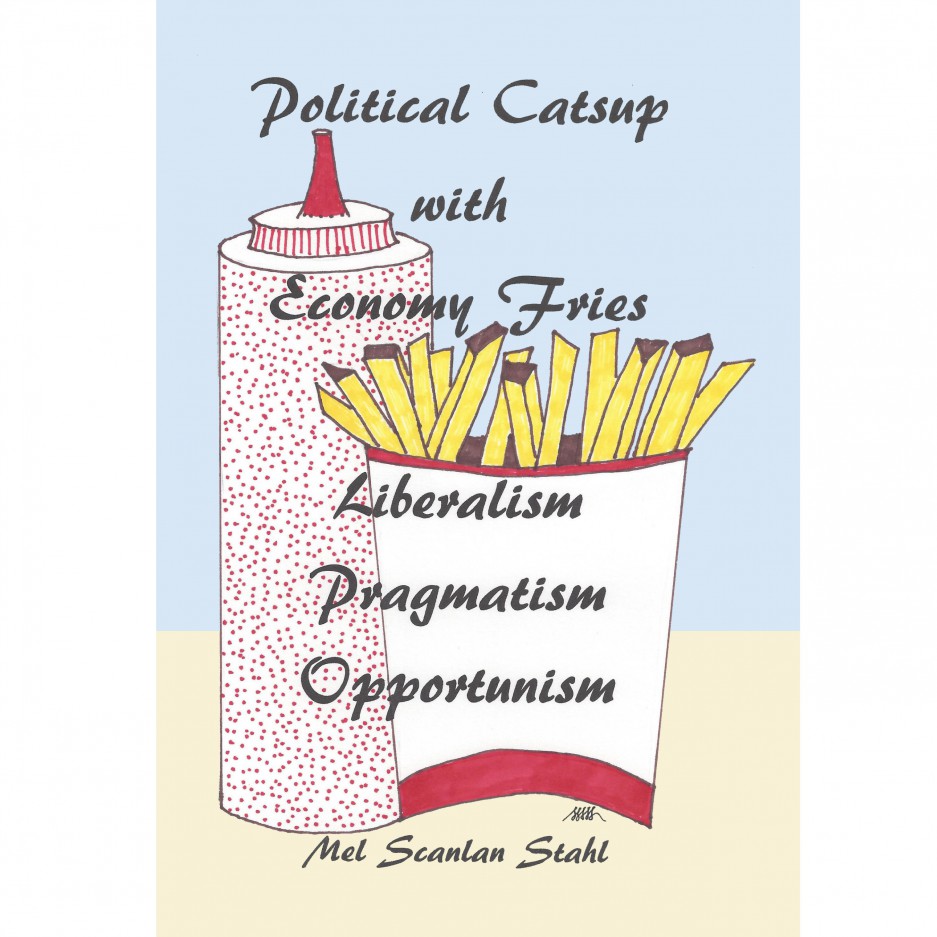
Visit amazon.com to purchase a copy of Political Catsup with Economy Fries.

Different kinds of arguments for different kinds of ideologies.

When a political argument is being made to sway you to accept a belief or a political policy, listen carefully and pay attention to how the argument is meant to appeal to you.

Are you given a rational argument? That’s how political arguments were presented to the public in the earliest period of the American founding when classical liberalism was our ideology. You can read these kinds of arguments in the Federalist Papers. Rationalism was our modus operandi back then. There were also emotional appeals but an argument had to make sense. People wanted to accept policies that would work to make politics run smoothly–like a well oiled machine. Limited government would stop tyranny, they hoped. Natural rights were valued. People also wanted the government to protect private property. Americans expected the government to have a sound monetary system. They wanted freedom and tolerance in a low tax environment before income taxation and countless regulations. It was thought then that political freedom requires economic freedom.

Perhaps you are instead provided a purely emotional appeal, one based on faith without proof. Belief without proof became a political tool of argument and persuasion after Freud wrote about the unconscious mind. Hidden processes became a new way of looking at worldly events during the modern liberal period from the Civil War until the end of WWII. Marx wrote about historical materialism and inevitable processes. Governments were thought to progress through stages of growth, change and eventually decay. Income taxation helped the North win the Civil War. New transportation and communication connected people to a larger world of talk and travel. Darwin wrote about natural selection and small changes over long time periods suggested a world changing on a scale that is longer than a person could appreciate in a single lifetime or generation, with unknown potentials in the far future. Government was presented as an expanding bureaucratic service providing jobs to caring and newly empowered individuals that hoped to combine public resources and public power to shape a bright future. Modern liberals used public monies and built museums and schools and libraries and train stations. Modern liberals wanted to borrow from the future whenever there was an economic shortfall like a recession. They wanted to manage the economy with government regulations. They stopped giving much thought to having a sound money system. Government money was supposed to be made available in the hard times. In the good times, it was hoped that debt could be paid down.

Are you instead being fed a fantasy of fear or riches or endless entertainment or infinite power? That’s the kind of appeal that you get under neoliberalism. Neoliberals put together globalization with financialization. They have imagined that you can have whatever you want with easy money and global trade. They have increased the kinds and amounts of money in circulation. They imagine no end to government’s ability to create more money with the printing press or with transnational banking, uniting the whole world’s assets in trade. Everyone is encouraged to borrow more and more money. The government is imagined as being staffed by experts that have endless strategies, knowledge and tools to keep the wheels of government and the intensively managed economy in motion. The government is so powerful that it can pick economic winners and losers. There is no need to account for failures in policies because the future is always brighter than the present and we must hurry to embrace it. Externalizing costs to the public has been the easiest way to deal with problems as can be clearly seen during the 2008 Great Recession.

If you look at arguments about the covid scare, you can see that they are fantasy based. We live in the neoliberal era and fantasy based arguments are par for the course. But there are problems with relying on these arguments to make decisions that affect public health. The pcr testing used to detect covid infection doesn’t work. The inventor of pcr says that you can’t use it the way that public health officials are using it to detect covid becuase it causes inaccuracies. Public statements about covid infections aren’t based on a reliable standard. Sick or well, alive or dead, a positive covid test means nothing consistent. More hysteria is constantly spewed at you. Public service announcements about covid are meaninglessly telling you to stay at home, to wear a mask and wash your hands. You can see that covid restrictions limit your freedoms and enhance on-line shopping.

You can see that the economy isn’t healthy. On-line shopping has grown while the brick and mortars have been shut. Was this a growth strategy for one part of the economy at the expense of millions of jobs? You hear about mandatory vaccines (“an idea so good that it’s mandatory” used to be a joke). Maybe you are without employment because of covid restrictions. Even people with jobs are worried about jobless Americans and you hope that they can get enough to eat and some worthy shelter. You wonder when economic opportunities might improve. If you get covid you wonder if you can get effective drugs to treat it soon after diagnosis. You have lost confidence in doctors and hospitals that seem to be prohibited from giving the cheapest and most effective care quickly.

You worry when you hear about a mandatory vaccine because that isn’t informed consent. And our other mandatory vaccines might be causing serious problems already, at least according to some who worry about massive increases in auto-immune disorders since 1989 when more children’s vaccines became mandatory. You may wonder why our Courts have let this kind of tyranny continue. Some courts have ruled that covid restrictions are unconstitutional while others have ruled that a state of quarantine allows for a temporary suspension of some freedoms. But a policy of quarantine is by definition completely inappropriate for an agent that can’t be contained by a quarantine. Covid can’t be contained by quarantine as the world can clearly see. You wonder when this tyranny will end.

If you want to learn more about politics and economics in America, buy a copy of Political Catsup with Economy Fries, available at Amazon.com.

Worker shortage worsens.

My neighbors had a problem with their house siding. Some of it had rotted and needed to be replaced. They couldn’t find a contractor to do the work. They did it themselves even though they are senior citizens. Thank goodness they knew what to do and had the tools and time to do it. I noticed that they also took out a balcony staircase while they were at it. Perhaps it was a consideration to benefit their home security by reducing egress. I haven’t had a chance to ask them.
All the U.S. outsourcing and hiring of imported labor through Visa tricks has reduced the pay that American laborers get compensated. The pace of Mergers and Acquisitions has never let up and under the Federal Reserve’s easy money policies it is expected to continue at a steady rate. The rate of M&A erodes the job market and puts people in the U.S. out of a job pretty often. The unavailability of good jobs for college graduates has also put a dent in the pay that people who want to work can collect for doing work. And now, with people staying at home more under covid restrictions, there’s a shortage of workers who can do needed repair work in the home environment.
My neighbor and I live in Spokane which is pretty far from South Carolina. A friend of ours in South Carolina who does construction contracting told us that there’s a shortage of labor for repairs there too. Panicky people have been trying desperately to hire help him to get needed repairs or remodeling accomplished. There aren’t enough people trained in that to do the work that is needed right now. What a surprising development–construction labor shortages in this economy of 2020.
Most of the on-line complaints that I’ve heard about worker shortages have been complaints in technical fields. But when I check the Bureau of Labor Statistics for growth in computer related jobs, I see modest ups and downs routinely of about 1%. The demand for repair work must be in excess of that, I would think.
I wonder if many people will have to fix their own leaky faucets, or repair their own siding, or remodel their kitchen with DIY. How many skills do we Americans need to learn with the price of wages and labor falling in an economy that is primed for inflation?
What will you learn how to do so that you can take care of your house, your clothes, your cooking, yourself?
As our economy has become hollowed out with cheap money at low interest rates, and as money printing has harmed the actual power of currency, as people have lost trust in organizations and institutions that have become more and more desperate for money in a system where money can do less all the time, the complexity of our economy and the number of professions that are supported by money exchanges is in decline.
This is something to notice and plan for. Now instead of specializing, we all need to learn how to do whatever needs doing for ourselves by ourselves. Skill building will only help you.
If you want to learn our historical path to the place of now, if you want to learn how politics in the U.S. became as corrupt as it is, now, if you want to learn about politics and economics and how they affect your opportunities, buy a copy of Political Catsup with Economy Fries, available at Amazon.com.

Take a few minutes to appreciate Ruth Bader Ginsburg.

On September 18th, 2020, Ruth Bader Ginsburg died of pancreatic cancer that had spread throughout her body. She stubbornly fought that cancer for many years before it ended her life. Several summaries of Ruth Bader Ginsburg are available in print on-line and elsewhere. I encourage you to read at least one of them.

What I have felt as I read about her life is that she was an important contributor to our legal system by fighting to protect economic opportunities in the age of neoliberalism. She fought for equality under the Equal Protection Clause of the 14th Amendment of the U.S. Constitution. She fought to protect the opportunity for fathers after their spouse dies to get benefits in support of the family, for women as they seek employment and for disabled people whom Justice Ginsburg believed should have opportunities too. There are many other examples.

She believed that the government shouldn’t be able to restrict a woman’s right to chose an abortion if a woman wanted one. This opinion has angered some people, and some connect Ruth Bader Ginsburg to the Supreme Court’s continued support for Roe v. Wade (1973). Some blame her with others for the number of abortions that have happened in the U.S. since Roe v. Wade (1973). I don’t think that she deserves to be blamed for what some people have chosen to do because they had liberty to do what they wanted to do. Free choice has been a part of American tolerance since the founding of our nation. Perhaps instead of blaming Ruth Bader Ginsburg it would be better to examine changes in our economic and political system that have created new obstacles to family formation and to family prosperity.

My husband read aloud a couple of paragraphs that the Justice wrote about the end of WWII when she was only 13 years old (https://democraticunderground.com/100214102557). When I listened to the words that Justice Ginsburg wrote as a young child, I was amazed at her wish that everyone in our society should be connected by bonds of affection. Inclusiveness is so needed in our society today.

Some will complain about this or that when they see what Justice Ginsburg did. She continued all the way to the end of her life in a long legal career that gave generously and lovingly to whatever Ruth Bader Ginsburg believed would be the right thing to do under the law. She was a great writer and couldn’t have influenced our legal system so well without knowing the law very well. So few examples are there for us to see nowadays of that kind of generosity: generosity in learning and applying knowledge and sharing that knowledge to make a huge difference over a lifetime career. She must have been both tired and ill during her treatments for 5 bouts of cancer but she found a way to contribute throughout her life in a way that shined a caring light on issues involving individual opportunity. I don’t expect more than that from anyone.

As we go forward without her it is fitting that we remember her as a champion of fairness in people’s lives under the law. She battled for all of us in a way that made a difference for how Americans live their day-to-day lives, now. She concentrated on one area under the law and fought individual cases where her written legal opinions could carve new standards into our nation’s practice of the law. Ruth Bader Ginsburg didn’t contribute to every area of the law. She couldn’t make our system perfect. But she made it better according to what she believed was fair. She supported liberty.

Buy a copy of Political Catsup with Economy Fries available at Amazon.com to discover more about political ideologies over U.S. history and how they have shaped our nation.

According to Mish Shedlock, the Federal Reserve owns one third of U.S. mortgages.

Did Fascist dreamers ever imagine our government owning 1/3 of the U.S. mortgage market?

Two trillion dollars of mortgage backed securities are now owned by the Federal Reserve.

I’ve been using the internet to keep an eye on real estate prices all across our nation since about 2016. After the Great Recession, U.S. real estate lost around 30% of its value. To stem that deflation, investors started buying and trading properties, increasing the property price each time. Since then, some markets have tripled their prices. Real estate values are inflated more than anyone would expect if you consider the declining number of Americans who can afford to buy a house because of insecure employment and falling wages.

The absence of bargains and the missing deflation after numerous foreclosures in real estate assets has happened because investors have purchased properties with low interest loans, treating America’s home portfolio as just another capital asset. They’ve done cosmetic improvements and resold that property at an inflated price: often double the price before improvements were made. The whole real estate market has been inflated into a bubble.

If you look at foreclosure real estate online, there’s a suggested price that is usually significantly higher than what should be expected for properties that sometimes need significant repairs. How can “As is” properties be sold at such a high price?

This seems like a crime to me. How can the American monetary system be used for low interest loans to investors AND be cycled into real estate mortgage backed securities in order to maintain those same high prices? Is it any wonder that there are so many homeless Americans? Property taxes are kept at higher rates because of this. Americans can’t get an affordable real estate price in this rigged market that ignores the market mechanisms of supply and demand. A real market, unlike our current real estate market, is affected by what people want and by what they can afford.

Shame on the Federal Reserve. It’s time to close it down. It’s time to make derivatives like mortgage backed securities illegal. It’s time to restore interest rates to around 5%, their historical average. Higher interest rates would end casino stock market gambling and allow people to save for retirement.

If you want to understand more about out-of-bounds actions by our government and how they have come about including banking deregulation, monetarism, corruption in the federal government, and how politics and economics act together to influence our opportunities in the United States, buy a copy of Political Catsup with Economy Fries available at Amazon.com.

Here’s the source citation on mortgage backed securities owned by the Federal Reserve: Mish Shedlock, The Street, http://www.thestreet.com/mishtalk/economics/the-fed-now-owns-nearly-one-third-of-all-us-mortgages, accessed 14 September 2020.

What stands between you and getting ahead with a good job?

This is a longer post because what I’m talking about is complicated. I hope that you will stay with me to the end.

What stands between you and getting ahead with a good job? Here’s a list that may seem familiar to you:

(1) The U.S. has a tax structure that undermines small businesses as compared with large corporations.
(2) An expiration date has now been added to your college degree. If you got it ten years ago, it’s expired.
(3) Covid-19 mandates now elevate on-line buying over in-person shopping.
(4) HR algorithms can disqualify you for an unknown reason.
(5) There’s an economic demand gap so that people have less disposable income to buy a product if you should try to sell them one.
(6) Long-term unemployed people need not apply because they are disqualified; a small business owner may be seen as similar to the long-term unemployed.
(7) Universities in the U.S. have expensive inflated tuition as compared with your last degree’s cost and some people with new degrees also can’t get work.
(8) Volatility in the workplace means that mergers and acquisitions can displace you after you find a job–getting another one is your problem.
(9) Unfair labor discrimination can happen because employers don’t have to tell you why they don’t want to hire you when they post an overly specific job description.
(10) Real earnings continue to fall in the atmosphere of dollar overprinting by the Federal Reserve.

During my life so far, I’ve watched computers become more important. Every business has to use them from a mechanic that fixes your car and his diagnostic tool to a computer data base that holds medical records or criminal records. Computers have changed the way stocks are traded and how banking transactions happen from automatic check readers to digital transfers of money. Computers have affected how pilots fly their planes. Computers are essential to communications that happen in e-mails, in text messaging and now having a cell phone is becoming an essential requirement “for security reasons” when you apply for a job.

But somehow, with all these computer aids, people are losing their ability to trust each other. They are also losing their ability to get ahead by finding a good job. The whole job application process has been changed with computers so that you don’t get to meet anyone at the company where you apply, and you may never hear from them after you apply for a job. Sometimes it looks like unfair decisions are being made that affect your employment. The person who made an algorithm that is excluding you is someone you will never meet. If you can’t get work, you are just invisible in the job hunting process and your desire for work is easy to ignore. There’s no appeal or any kind of a remedy as your opportunities are going from bad to worse.

Some say that the long-term unemployed will never work again. What a waste. And now, the economy has come to a mandated stop. Why is that?

Back in the 1990’s when people told me that computers were taking over and becoming essential, I had doubts that it was possible for computers to do that. Why? Because of Moore’s Law. According to Moore’s Law, computer processing capacity and processing speed had been and would continue to double every two years. This is an exponential rate of growth. But human beings are not capable of sustaining prolonged exponenial growth. Even when you can hire the cheapest labor in the world.

A while ago, the rate of processing speed growth started to slow down. Some say that because of physics-based processor limitations computers are now reaching their processing expansion limit. But I think that our society went past our biological and societal limits a while ago.

If you look at my list of obstacles to finding a good job some of them are related to computers causing an increase in complexity. Politicians have been willing to embrace that growing complexity. The idea of limitlessness was once so appealing.

Global trading policies that once provided more generous tax advantages for doing business abroad are still hurting American workers who can’t find a job at home because our labor landscape has been so altered by outsourcing policies. President Trump changed our global trading policies in order to help American workers during his first term in office, but corporations have grown accustomed to large profits from low labor costs abroad; they don’t want to invest in American labor. There’s a lot of complexity in global trade and knowing how Americans will come out in the end is and has always been pretty impossible to do. Potential profits in the short-term motivated Congress’s policies to enhance global trade opportunities. The long-term consequences haven’t been and aren’t being addressed.

What about the talk that all of us have heard about the value of an on-going education? When your degree is disqualified after 10 years, it undermines its value and your value as an employee and this devaluation of you makes computers seem more valuable in comparison. Wages keep falling. New algorithms have come into play for your job applications, “Apply on-line, it’s easy,” we heard, and now there’s new cell phone security protocols. Doesn’t all of that ease of application make you blame yourself as you face day after day without the prospect of a gainful job? But who is really to blame for the number of unemployed Americans? There certainly aren’t enough good jobs in the U.S. for the number of people who want a good job. And there are obstacles to “pulling yourself up by your own bootstraps.”

Why did media and governments around the world engineer a global panic over covid-19 when we have effective drugs to treat it? Was the purpose to transfer more money to a centralized global banking system and simultaneously stimulate on-line purchasing while people stay at home with not enough to do? Who is winning from that strategy and where will it lead us? We should find out.

Why is it ok to replace an HR person with an algorithm? Is it to save the salary you would otherwise pay to a person while also circumventing the rules of hiring? I think that long-term unemployed people shouldn’t be blamed for being unemployed in an atmosphere where people are commonly displaced from employment by mergers and acquisitions. And job descriptions list so many qualifications that even well educated people can’t qualify. Someone with two university degrees, suddenly isn’t qualified to be a shop keeper at a manufacturing facility. Are they really unqualified? Has it become possible only to hire people for exactly the same job over and again or nothing? What exclusion protocols are in play? Is there no prospect for a worker to try a new challenge of their abilities in a brand new area? I hear that credentials are less important, but job descriptions don’t show that.

If computers are too expensive for society to afford their constant need for processor evolution and they’ve now reached their processing limit it doesn’t prove that people are worthless. I’m sick of hearing that people’s jobs are all going to be replaced by a robot. Maybe the computer revolution has just hit the wall and its constant improvements in processing have stopped for now.

Recently, I was trying to discern if there are any new manufacturing jobs coming our way. For a long time, I’ve hoped that fusion energy could revolutionize our economy by providing cheaper energy. When I checked on government expenditures for fusion energy research, it was seriously outpaced by government research into artificial intelligence. I wonder, has our government decided to let the computer finally save our economy? With a room temperature superconductor, processing speeds could increase and actually, LENR fusion technology may be able to create a room temperature superconductor. Is LENR providing the change needed for a faster processor? Shhh….if that’s happening, it’s probably a big secret. Even if there were a super-processor, I’m not sure that computers can save us. Maybe we have to save ourselves with more accountability in politics. Vote. We also need more accountability in hiring and transparency in the use of hiring algorithms. It’s easier sometimes to see what isn’t working and stop that before you know what else to try. Computers have circumvented oversight and that’s damaging the people who make up our society.

If you want to learn more about how the economy and our political system are entertwined, buy a copy of Political Catsup with Economy Fries at Amazon.com.

Corporations scared each other in 1933 under the National Recovery Administration.

I’ve been enjoying some summer reading of Hard Times by Studs Terkel. I came across an interview he did with Gardiner C. Means, who was a member of the Consumer Advisory Board of the NRA (National Recovery Administration) in 1933 during the Great Depression. He was enthusiastic about the work that he did on the Consumer Advisory Board, the National Resources Planning Board, and the Budget Bureau. There had been a consequential storm of deflation in wages and prices that scared people and the NRA tried to bring wages back up and bring prices up by acting as a bridge between consumers, workers and corporations. Gardiner thought that the NRA served to make an essential improvement but he acknowledged that it was necessary to abolish it after a short time. Why?

” Things had been going downgrade–worse, worse, worse. More than anything else, the NRA changed the climate. It served its purpose. Had it lasted longer, it would not have worked in the public interest…Had the NRA continued, it would have meant dangerously diminishing the role of the market in limiting prices. You see, there was little Government regulation of the NRA. The Government handed industry over to industry to run, and offered some minor protection to others in the form of Labor and Consumer Advisory Boards. Industry became scared of its own people. Too much power was being delegated to the code authorities. It was business’ fear of business rather than business’ fear of Government…You might say, NRA’s greatest contribution to our society is that it proved that self-regulation by industry doesn’t work.” (1)

The New Deal was when neoliberal partnerships between the federal government and businesses were being tried out in the United States. Today we live with neoliberalism in a later stage after eighty four years of neoliberalism in the United States if you count the beginning of neoliberalism here as starting with the end of WWII.

The same problems erupt today in government partnerships with corporations as what Gardiner commented on under the NRA. Today, there are problems with prices not matching market demand. The market can’t limit costs because the market mechanism has been ignored by the powerful. This is true in the real estate market, in the cost of a university education, in the cost of automobiles, in the cost of pharmaceuticals and medical treatments, in the inflated stock market. There are also now added problems with tyranny growing as can be seen with covid-19 mandates and Obamacare mandates. We see fewer jobs. We see more monopolies. We see lower wages. We see falling demand for products but a huge effort by the Federal Reserve to prevent deflation that would correct higher prices than the market can support. Now we see more monetary malfeasance with printing dollars not supported by production which is leading to a lower dollar value–an effort to create inflation. We see an added problem of endless pointless bickering among politicians and an appearance of corruption. Corporations are becoming scared of each other, scared of government, scared of their own employees.

Neoliberalism is failing us. Again. If you want to learn more about political ideologies over American history and if you want to understand the way our economy is affected by political policies buy a copy of Political Catsup with Economy Fries available at Amazon.com.

(1) Studs Terkel, Hard Times: An Oral History of the Great Depression, The New Press, New York, London, copyright 1971, 1986, 247-250.

Unplug and empower yourself.

Every moment of your life belongs to you to invest whatever effort you wish whether to help yourself or another person. You have power to order your free time.

For a whole day, or a whole week, or a whole year, or even perhaps for seven years (I did that a long time ago), unplug your television. What will you do with your time?

Television is full of anxiety producing jeopardy that drive the plots in police stories, medical examiner investigations, reality shows, remodeling shows and many others. Instead of passively watching stories about what tv characters are doing, you could create and write a story with characters that you may begin to care about. There’s no deadline when you take pleasure in creating a story all on your own. What will your story show you about your own experiences and opinions? Will you learn a new way to appreciate your own creativity? Will you learn to appreciate the knack of story-telling that others have entertained you with for most of your life?

Maybe instead, you will want to investigate a topic of interest like symmetry in physics, or art or some other branch of learning. You could look into emergent properties in complex adaptive systems. Our economy is a complex adaptive system. So is the politic. And social networks. Would you like to avoid being manipulated by social networks? Stop visiting them and start investigating them by learning how more social networking isn’t the same as a little bit of it. How can a social network create crowd effects? How can it affect your opinions and beliefs?

You could instead design and build a new piece of furniture or sew a new duvet cover or make (really) almost anything. Paint a picture. Write a poem. Write a letter.
Your pent up potential is wanting to be set free. Grab some courage and face your world of open possibilities. There’s no telling where it may take you if you make something, learn something, or do something new.

If you want to learn about how our political and economic system works to create or limit new opportunities for you, get a copy of Political Catsup with Economy Fries: Liberalism, Pragmatism, Opportunism, available at Amazon.com. Learn all about political ideologies and the people who invented them. Learn about the policies that affect American outcomes over history.

The Lion, the Tin Man and the Scarecrow personify how we feel.

I’ve been watching reporting about the Federal Reserve that tells me that it’s printing trillions of dollars and not telling us in any kind of audit where all that fake fiat money is going as it robs us of our savings by devaluing our currency. It was once considered treason to debase the currency and it still should be. There is no excuse for overprinting currency in the way that is happening everyday now in billions of dollars. In fact it is an attack on the monetary system that we all rely upon. It’s an attack against savers… people who put money away for when they were old and can’t work anymore (and what will happen to them with no money when they are too old to work?). It’s an attack on all of us in our family and in our community.

It’s time to shut down the Federal Reserve. It’s time to end the experiments of the Federal Reserve and to stop experimenting with the monetary system.

Some don’t want to shut down the Federal Reserve because they imagine that it has solutions to economic problems. They pretend the Federal Reserve can fix the economy. Pretending that the Federal Reserve is fixing anything ignores the fact that the fix is already in, everywhere you care to look.

Look at the shut down economy–that’s part of the fix. Look at the requirement to have a cell phone in order to get a job through a text alert…that’s part of the fix. The ongoing destruction of social security and medicare through government debt and fiscal abuse, that’s part of the fix. Social media rage, that’s part of the fix. Algorithms that exclude people from employment and never explain why they can’t have a job, that’s part of the fix. The spread of despair as people face overwhelming economic poverty, that’s part of the fix. On-line tele-medicine to destroy doctor’s private practices and close down their offices during the covid-19 scare, that’s part of the fix. Leveraging people’s retirement stocks in the stock market along with Federal Reserve stock purchases that allow night-time stock selling and daytime buying, that’s part of the fix (it’s the magic money machine). People in the news crow about 5G being a good invention while others worry that it may harm all living things, but 5G is also part of the fix. Mergers and acquisitions that displace American workers combined with importing foreign workers, that’s part of the fix. Overly specific job description and absurd claims that American workers aren’t the best candidate for all kinds of jobs, that’s part of the fix. The requirement to wear a mask and stay away from other people may be nothing more or less than just another part of the fix.

Is another Great Depression also part of the Federal Reserve’s fix? It looks like it is.

The Wizard of Oz was written in response to the Great Depression. A good resource to read about how people experienced the Great Depression is Hard Times by Studs Terkel. This book explores people’s recollections about the Great Depression in interviews conducted well after it was part of the past. Interviews show that the Great Depression affected groups of people in different ways depending upon their class and their economic resources. Some people had to struggle into a new profession by actually inventing it. Some just gave up. Some starved to death. People felt all kinds of different ways. Some felt afraid like the Lion who believed that if he could just find some courage, if he were only brave enough everything would be ok. Some felt broken-hearted, like the Tin Man, not knowing how to help anyone in order to prevent suffering, or how to find a way to love again towards happiness. Some felt, like the Scarecrow, that if only they were smart enough to understand the whole world they could fix it and life would somehow make sense again.

How are you feeling? Do you feel like the Lion, the Tin-Man and the Scarecrow? Do you want to let the Federal Reserve keep fixing us? If you want to learn more about the specific policies that our government has been following to get us into this fix, get a copy of Political Catsup with Economy Fries and Amazon.com.

Are you happy enough with the response to SARS2 to do this again with SARS3?

I’m taking a survey. What do you think? Was it the right choice to isolate healthy people and close businesses in response to SARS2 (covid-19)? If there were another novel coronavirus of unknown infectious potential, say SARS3, should we follow this policy set again? Send me a comment and tell me what you think.

Addendum: See this source about false positive test results discovered in Conneticut testing for covid-19. The test that tested with so many false positives is one that has been widely used across the U.S.:

Conneticut State Department of Public Health, Press Release, July 20th, 2020 https://portal.ct.gov/DPH/Press-Room/Press-Releases—2020/Connecticut-State-Public-Health-Lab-Discovers-False-Positive-COVID-19-Test-Results, accessed 22nd July 2020.

Political Catsup with Economy Fries can help you to understand our complicated world of politics and economics while providing a well researched and carefully cited history of our nation to help you understand what’s happening now. Get your copy of Political Catsup with Economy Fries available at Amazon.com.