Trump represents nationalism instead of post-nationalism.

I’ve been trying to discover why there has been so much controversy regarding Donald Trump’s candidacy for the Republican nomination of President.  Although some would have you believe that the controversy settles around his personality, a personality issue wouldn’t cause this level of opposition that amounts to millions of dollars of Anti-Trump ads.  In my life, I’ve never seen opposition within a party against its own candidate as we are seeing in the Republican Party.  And suddenly, protestors are disrupting Trump rallies–so why would they do that?  What do they seek politically (what do they want to get for themselves)?  And the morning news is painting Trump as a racist based on his slow response to people who expected him to more quickly denounce a KKK supporter, which he eventually did denounce.  I’m a person who looks for the real nuts and bolts so what is the issue that brings establishment opposition to Donald Trump?

When I mentioned Donald Trump and political power earlier, I listed a link to another site that suggested that Trump is a populist (The Economic Populist, “A Strategic Case for Donald Trump,” by Dan Phillips (link is listed again below).  Another site that I visited said that populism has historical roots that go back to Andrew Jackson, the president that shut down the Second Bank of the United States.  But the most pertinent controversy is probably nationalism vs. post-nationalism (which was also mentioned in the aforementioned article).  U.S. citizens have rights under the U.S. Constitution, where the U.S. government has limited powers in the context of the U.S. being a nation.  But citizens have no enforceable rights under international law and a post-national system doesn’t protect natural rights because there’s no consequences for harming natural rights in a post-national system.  If the public realized that their Constitutional rights might be endangered by post-nationalism, it might lead to the build-up of a wave of support from U.S. citizens for protecting national politics.  And that could help Donald Trump to win the Presidency.  Donald Trump’s support for controlling national borders and having protective tariffs to defend American jobs is a nationalist approach which rubs post-nationalists the wrong way.  All the other candidates are post-nationalists.

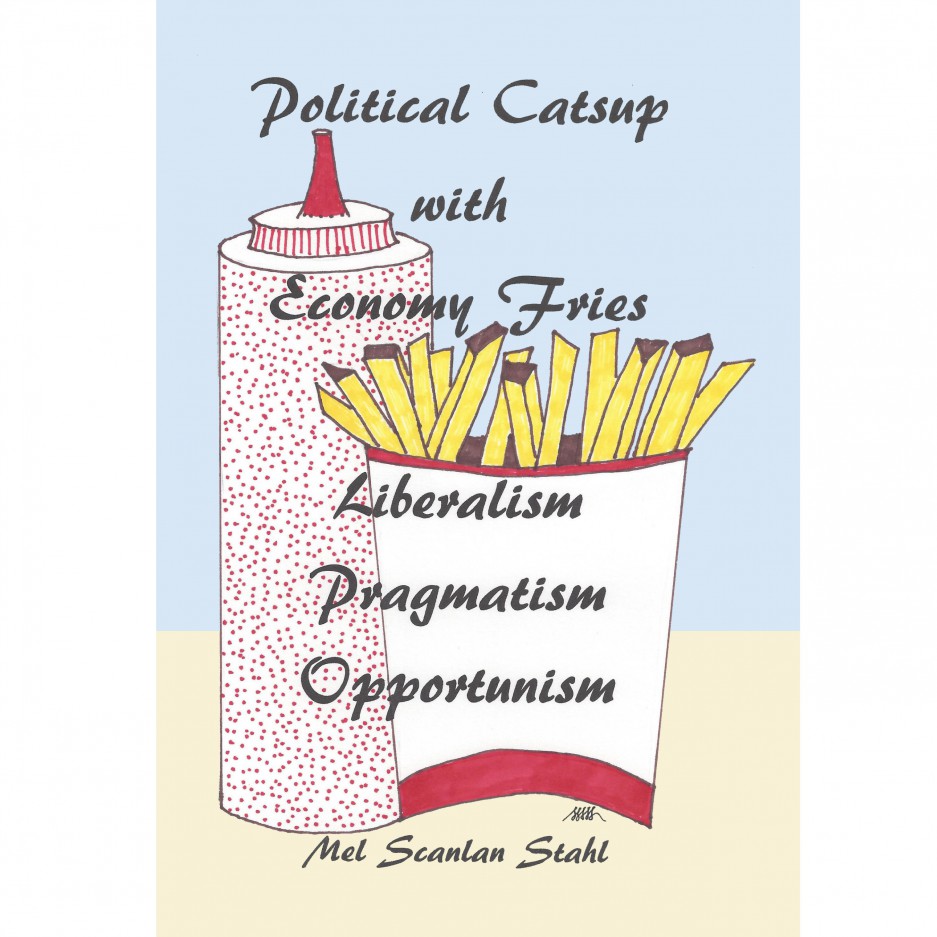
What all of this tension illuminates is that America has conflicts between multiple political ideologies.  We’ve had three different political ideologies that have operated over American history.  These different ideologies have been coming to the rally floor at Trump rallies because he’s the only candidate that’s offering any kind of alternative.  These groups go to Trump rallies in order to compete for political advantages.  And each group wants something different and each according to a different set of cultural values and a different context of political and economic partnership.  So are you a person that has confidence in classical liberalism, modern liberalism or neoliberalism?  Do you understand American political history well enough to imagine a new political ideology if these three others have failed America already?  Read Political Catsup with Economy Fries to find out where your political convictions are best placed.  See what the consequences are for the operation of each ideology.  Discover where you want to make your political stand.

The Economic Populist, “A Strategic Case for Donald Trump”

Also here’s a great and rational article using information to explain trade agreements on Thad Beversdorf’s site, First Rebuttal: A Search for Truth Among the Madness, www.firstrebuttal.com “Let Mee Show You Why Trump is Right on Trade Agreements”

Buy Political Catsup with Economy Fries on Amazon.com


Many U.S. jobs have gone from the “win/win” to “golden handcuffs”.

Peter Drucker has been known as the “father of management.”  Drucker’s management strategies recognized talent and rewarded it.  He saw workers as assets and as part of a workplace community that deserved capital resources in order to accomplish ambitious goals that would reward employees and the company that they worked for with bigger profits that would enable bigger outcomes for everyone.  The company could win and so could the worker.  In The Practice of Management, Drucker wrote, “professional people should be given the incentive and recognition of professional status.” (1)

Drucker (1909-2005) lived a long life and in the 1990’s he noticed the importance of knowledge workers in a technology influenced economy.  The idea of the knowledge worker went along with his earlier appreciation for talented workers.  They were more specialized workers as technologies came to be a larger part of innovation in an information economy.  He imagined that knowledge workers would gain more influence in the workplace in deciding how work would be done.  They would gain more influence because only a knowledge worker would have the training, experience and know-how to accomplish the company’s goals.  But in the twenty-first century, as production has been eclipsed by speculation in the financialized economy, knowledge workers have lost professional influence.

Jobs in America have been deskilling since the 1980’s.  And many knowledge workers have lost their professional influence.  There’s been deskilling in a variety of professions.  For example, mandatory testing in public schools has led to deskilling in the profession of teaching.  Instead of teachers structuring their curriculum to empower knowledge workers of the future in analysis and independent thinking, teachers have been expected to teach for tests that demonstrate proficiency in producing good test results.  Students are supposed to excel in test taking (conforming to an external standard) instead of independent thinking.  Doctors are expected to follow a diagnosis tree that proves that they follow along with standards of care set by diagnostic trees (or risk a mal-practice lawsuit) instead of basing their diagnosis on their own experience with patients.  This can increase the number of billable tests and it can decrease the amount of time doctors spend with patients.  Linking patient care with more federal programs may lead to further reduction of a doctor’s opportunity to act professionally by using his/her own judgement.

According to one source, deskilling has happened because of a surplus of workers and also because of new technologies.  And deskilling shows a lack of coordination and cooperation between managers, workers and owners.  Some industries with less cooperation between owners and workers have included jobs in public education, the Postal Service, the insurance industry, jobs in air traffic control, longshoring, and newspaper printing.  Mobile capital also played a role, “The absence of national legislation which regulates capital mobility within and out of the United States has led to plant shutdowns and union membership losses.”(2)

“Golden handcuffs” express the idea that a person can get trapped in a job because starting over has too high a penalty.  For example, too high a cost in retraining education or in health insurance fees or in the loss of pay, all happening under an economic system with high taxes.  Economic instability can also make starting over too risky because demand can fall in any profession which was recently in greater demand.  A small capital holder has finite resources for educational retraining.

Yet according to Peter Drucker, “You are responsible for allocating your life.  Nobody else will do it for you….Effective self development must proceed along two parallel streams.  One is improvement–to do better what you already do reasonably well.  The second is change–to do something different.  Both are essential.”(3)  And the idea of “golden handcuffs,” doesn’t leave much room for doing something different.  According to Hannah Arendt in The Human Condition, people’s jobs are an opportunity for self discovery.  Inside our skills and accomplishments we discover new abilities and demonstrate our competency.  We as doers are delighted by what we can achieve (4).  Delighted accomplishment and self discovery are far from the idea of “golden handcuffs”!  The recent increase in U.S. worker non-participation and recent losses in productivity may indicate too little incentive in the workplace to retain workers and incentivize the best work.  Drucker would probably agree with the idea that a person’s delight in their work combined with capital rewards for excellence provide workers with performance incentives which can lead to better outcomes for everyone.  And “golden handcuffs” just aren’t any kind of incentive that can encourage good work and the best outcomes.

(1)  Peter F. Drucker, The Practice of Management, (Harper and Row, Publishers, U.S.A., 1954, first copyright), 154.

(2) Daniel B. Cornfield, ed., Workers, Managers, and Technological Change: Emerging Patterns of Labor Relations, (Plenum Press, New York, 1987), 346, 352.

(3)  Peter F. Drucker, Managing the Non-Profit Organization: Principles and Practices, (Harper Business, Harper Collins Publishers, New York, 1990, 222, 223.

(4)  Hannah Arendt, The Human Condition, (The University of Chicago Press, Chicago, 1958), 175 translation from Latin: “For in every action what is primarily intended by the doer, whether he acts from natural necessity or out of free will, is the disclosure of his own image.  Hence it comes about that every doer, in so far as he does, takes delight in doing…”

Buy a copy of Political Catsup with Economy Fries at Amazon. 

Writings here are protected by fair use standards and copyrighted to Mel Scanlan Stahl.  Please acknowledge me as the source whenever you use information in this blog.  And please leave a comment.

Here’s a link to another person’s commentary regarding her job (an open letter she wrote to her CEO).  It got her fired.  It shows that the price structures in her life are completely out of line with what she can afford.  It also shows an economy out of balance with supply and demand market forces.  Zerohedge criticizes her for being unsympathetic to the corporation’s need to make a profit.  When I read the letter it sounds to me like an episode from the Twilight Zone.  But instead of the Twilight Zone, its just another day in the real American economy.  I invite you to read Talia Jane’s open letter to her CEO.  Here’s the Zerohedge link where I found the letter.

3 Groups use money in 3 different ways.

Money has three different purposes according to Barron’s Dictionary of Banking Terms:  (1) as a unit of exchange between government, businesses and people (2) as a unit of account that allows you to compare the value of different things and (3) as a store of value that lets you compare the value of an asset over time:  “Did it gain or lose value?”

There are three different groups that use money in three different ways: (1) governments use money as influence both abroad in diplomacy and at home to influence your vote or the outcome of an election; governments always want more money to give them greater influence (2) banks use money to make a profit on money exchanges that they facilitate; banks like an active money system with lots of kinds of money exchanges that happen all the time in ever greater quantities (3) individuals and small businesses use money to capture the value of their labor and production in the productive stream; these money users are the most vulnerable.  The purpose of banking regulations is to balance these three money interests; all three groups benefit from keeping a solvent banking system.

Monetary systems are the set of policies that establish the volatility or stability of currency and commodity values;  some examples include the U.K. sponsored strict gold standard (1819-1919), the U.S. sponsored Bretton Woods managed gold system (from 1944-1971), and the U.S. sponsored fiat monetary system (from 1971-present).  Imagine that all possible monetary systems utilize policies that create a continuum of risk and volatility.  On one end of the risk continuum is the least volatile and most stable monetary system that has sound money and stable currency and commodity values (like the strict gold standard); on the other end is the most volatile and least stable monetary system that has high government and private debt, and unstable currency and commodity values (like the current system).

Fiscal policy is how much debt the government carries and whether it tries to pay down the debt; also known as “tax and spend” policies.  During the classical liberal period (1776-1861) the U.S. federal government paid debts for the Revolutionary War by contibuting to the founding of the First Bank of the United States; to pay war debts from the War of 1812, the federal government helped to establish the Second Bank of the United States.  Both banks were dissolved after their charters expired.  During the modern liberal period (1861-1944), the Union side used income taxes to help pay for the Civil War (and the Sixteenth Amendment, ratified on Feb 3, 1913, established income taxes across the whole nation) and the Federal Reserve was established to oversee the banking system but it failed to prevent the Great Depression; Keynesian policies encouraged greater government debt without a formal plan for paying off the debt.  During the neoliberal period (1944-present), the monetarists imagined an infinite timeline for paying off debt by constantly increasing the money supply; monetarist economists encouraged an era of high government debt and high private debt.  The current national debt according to the debt clock at http://www.debtclock.org, is greater than 19 trillion dollars (thanks to Keynesian policies, that’s more than $57,000 per U.S. citizen) and the current private debt is close to 17 trillion dollars (thanks to the Monetarism, and that’s close to $52,000 per person).

Sources: Thomas Fitch, ed., Barrons Dictionary of Banking Terms, (Barron’s Educational Series, Inc. Huappauge, NY, 1990), 391.

Anat Admati and Martin Hellwig, The Banker’s New Clothes: What’s Wrong with Banking and What to Do About It, (Princeton University Press, New Jersey, 2013).

The Debt Clock, http://www.debtclock.org, accessed Sept 2015 and Feb 2016.

Buy Political Catsup with Economy Fries: Liberalism, Pragmatism, Opportunism at Amazon.com

Taking exception to American Exceptionalism.

It turns out that I have a different view of American exceptionalism as compared with some other reliable sources.  I went to Wikipedia.org to look at their entry on American exceptionalism.  And I looked at Andrew Bacevich’s book, The Limits of Power: The End of American Exceptionalism.  I also pulled up a variety of quotes about “American exceptionalism” which probably added extra flavor to this essay.

Wikipedia sees American exceptionalism as erupting from three attitudes.  The first attitude is about “Americanism,” and that comes from “liberty, egalitarianism, individualism, republicanism, democracy and laissez-faire for business.”  The second and third attitudes imagine a providential role for the United States.  The U.S. is to act both as a beacon and a leader of other nations.  The U.S. will be a political force that can transform other nations into the American ideal of government.  American exceptionalism also means having faith that the American system can withstand the erosion of power that has happened throughout history to other nations.

Both Bacevich and Wikipedia mention Alexis de Tocqueville in their discussion of American exceptionalism because de Tocqueville noticed the American preoccupation with “purely practical objects” and “commercial habits.”   He considered the American example to be unlike that of other democratic nations because even though each person was trying to get more economic success, they remained civilized.  He said that “the position of Americans is therefore quite exceptional.”  It may be that de Tocqueville invented the term American exceptionalism or that he used a term that was already familiar.

Andrew Bacevich believed that the American preoccupation with getting and having has become an obsession centered upon maintaining material wealth.  And the desire to always have “more” has caused harms.  He traced the expansion of the American military with the consumer culture of the twentieth century.  He noticed that CIA operations weren’t about setting a moral example but about obtaining a strategic or a material advantage.  Bacevich believes that American exceptionalism now has led America to political and economic profligacy.  It has led us into unjust wars, into enormous sacrifices of wealth and human lives.  “Cheap oil and cheap credit” have sustained a consumer economy that has led us into political entanglements in the Middle East.

I didn’t always give much credence to the idea of American exceptionalism.  But when I researched my book, Political Catsup with Economy Fries, I eventually found a political and economic relationship that was exceptional in the early Republic.  Here’s the arc of my reasoning:

No one knows the future.  History is made up of a series of contingent events that no one could have predicted.  Sometimes a new idea that seems insignificant at first can make a huge difference over time.  The invention of double entry bookkeeping in Italy in the thirteenth century was an idea like that because it was a crucial step in the birth of capitalism.  And the invention of capitalism and its combination with liberalism changed European economic fortunes away from feudalism.  As feudalism was displaced, a dynamic new relationship between the power of politics and the power of economics was born from fractional lending and capital investments.  The political dynamic of city states was swept away and nation states grew into something that the world had never seen before through improved diplomacy and banking.

Classical liberalism (1776-1861) was the first American political ideology.  And the other American political ideologies, modern liberalism (1861-1944) and neoliberalism (1944-present) weren’t really liberal at all.  Classical liberalism had roots in the Enlightenment and respected both rationalism and humanism.  Modern liberalism was pragmatic instead of rational and it was a mild form of socialism that used income taxation and regulation but didn’t nationalize industries.  Neoliberalism wasn’t rational either but opportunistic instead; it has been government sponsored corporatism and it has expanded taxation and regulation on small capital holders to provide advantages to global industries that cross national boundaries.

The origin of American exceptionalism comes from the classical liberal idea that political freedom requires economic freedom.  By doing that–keeping government from stealing the economy’s power, a revolution in the relationship between politics and economics occurs such that each becomes an independent center of power.  And that power creates a synergistic partnership that fueled American invention during the first and second half of the Industrial Revolution.  Allowing people to keep their economic wealth fuels innovation and spreads prosperity.  And that’s where American exceptionalism comes from–it comes from freedom.  Freedom from taxes and freedom from regulation under a limited government.  Unfortunately, in the twentieth and twenty-first century, neoliberals have been taxing and regulating small capital holders like crazy.  They want to destroy American exceptionalism and reduce the perturbations of technological change in markets.  For neoliberals, only the largest corporations should be free from taxation and regulation.

Wikipedia and I both put the origin of American exceptionalism in the early Republic.  But I emphasize free markets differently than the idea of laissez-faire which is sometimes interpreted to mean economic freedom for business only instead of for individuals and businesses.  Like Bacevich, I think that Middle East military operations have been a failure.  And I don’t believe that the U.S. should expect other nations to be like us.  But unlike Bacevich, I put little credence in the idea that ordinary Americans who wanted economic prosperity led us down the path of financialization.  Financialization probably got going in order to stimulate an economy harmed by fiscal debt in a political atmosphere that permitted even more fiscal debt.  People outside of government and banking didn’t have the power to influence Federal Reserve policies that led to financialization.

I don’t believe that heavy taxation and more than a million regulations are good for America in an atmosphere of unlimited fiscal debt.  And I believe that national debt approaching 19 trillion dollars harms the nation’s political and economic security.  And I don’t think that the neoliberal plan for expanding corporations across national borders is working to increase prosperity.  Foreign operations have increased global financial instability because of hot money flows.  There’s a lot of capital growth but declining wealth in the easy credit system of debt and malinvestment.  Isn’t it time to reconsider the ill-conceived neoliberal plan to globalize, financialize and neoliberalize the whole world?  What is the incentive to continue?

Sources: Andrew Bacevich, The Limits of Power: The End of American Exceptionalism, (Metropolitan Books, Henry Holt and Co., New York, 2008) 15-66.

Wikipedia, “American Exceptionalism,” enwikipedia.org/wiki/ American_exceptionalism, accessed 11 Feb 2016.

Buy Political Catsup with Economy Fries.

The First Neoliberal Tax Legislation Was the Revenue Act of 1942.

Understanding how corporations got so many tax loopholes might seem like an impossible task, but really it’s just a matter of checking the public record and the events of history.  Major General Smedley Butler (1881-1940) complained loudly about WWI profits in his pamphlet War Is a Racket.  He wrote that 21,000 new billionaires and millionaires got their wealth from the Great War while ordinary soldiers bought Liberty Bonds to help pay for the huge costs.  And Major General Smedley Butler’s complaints didn’t fall on deaf ears.  Many Americans wanted to reign in war profits during WWII.  During WWII, as most American corporations contributed to the war effort, there was an “excess profits tax” that was meant to reduce war profiteering.

But the Revenue Act of 1942, starting as a tax on corporate profits during the war, changed into a tax haven after the war.  It had carry-forward and carry-back provisions that averaged out losses and gains so that many corporations were able to get huge tax rebates from the U.S. Treasury after WWII.  It allowed corporations to escape taxation for post war profits on the one hand and on the other hand the Revenue Act of 1942 taxed individual Americans more than ever before.  Instead of four million Americans paying income taxes, forty million, or ten times more, paid income taxes after the war.

The Revenue Act of 1942 was also an example of a lengthy and complex law that was so cumbersome that most of the politicians who signed it into existence couldn’t fully understand it.  The bill filled 320 pages.  Lawyers and accountants that were hired by corporations discussed the bill favorably and they wanted those tax savings.  And like other neoliberal tax bills, The Revenue Act of 1942 provided a corporate tax subsidy and taxed the public more heavily in order to compensate.  The bill saved corporations about half the taxes they would have paid and it doubled the taxes on individuals.

The Revenue Act of 1945, a later iteration, cancelled the excess profits tax but extended the carry-back tax provision for another year.  It turned out that “The carryback of net operating losses continued indefinitely”.  There was a 15% reduction in corporation taxes paid to the federal government in the late twentieth century from carry-back and carry-forward provisions in the tax code.  WWII left this legacy to help corporations evade income taxes in peacetime, while income taxes on individuals have remained higher ever since the war.

Sources:  Brigadier General Smedley Butler, War Is a Racket, (Port Townsend, WA, Feral Publishing, 2003.)

Mark Wilson, “The Advantages of Obscurity: World War II Tax Carryback Provisions and the Normalization of Corporate Welfare,” Kim Phillips-Fein and Julian Zelizer, eds., What’s Good for Business: Business and American Politics Since World War II, (Oxford University Press, New York,  2012), 16-44.

Thank you to Danielle Kaschmitter for making me aware of the Revenue Act of 1942 in a speech she gave at the Spokane Falls Toastmasters Club.

Buy Political Catsup with Economy Fries on Amazon.com

This text is copyrighted to Mel Scanlan Stahl and is protected by fair use standards.  If you use any part of it please acknowledge me as the source.  If you would like to leave a comment, I would enjoy hearing from you.

Financialization changed the American economy.

Remember the 1990’s?  Remember how CEO salaries bloomed ever larger while the ordinary working class guy got paid less in an inflationary economy?  Remember the CEO golden parachutes with million dollar severance packages for departing CEO’s even when they left under a black cloud?  Remember the “hostile takeovers”, what we now more euphemistically call “mergers and acquisitions” that liquidated so many American enterprises?  Remember the outsourcing and increasing job insecurity?  These events are connected to a process of change in the financial world called “financialization.”

In 2005, a sociologist named Greta Krippner wrote an essay in the Socio-Economic Review, entitled, “The Financialization of the American Economy.”  She wrote, “I define financialization as a pattern of accumulation in which profits accrue primarily through financial channels rather than through trade and commodity production…’Financialization’ here refers to activities relating to the provision (or transfer) of liquid capital in expectation of future interest, dividends, or capital gains.”

Here are some of the policy changes in the U.S. that accelerated  financialization here:

(1) The Nixon Shock (1971): when the U.S. abandoned the managed gold system and adopted a floating fiat monetary system where capital valuations would be determined by capital trades on the forex market; this change increased the money supply and expanded the potential for more debt.

(2) Securitization started with VA loans in the 1970’s.  Securitization is when a loan is turned into a tradable commodity.  That removes the risk of default from the lender and means that lenders can make riskier loans.

(3) Securitization led to the further innovation of derivative trading where a bet can be made on a change in value of an asset without owning the asset.  Derivatives have increased market risk.  The Commodities Futures Modernization Trading Act (2000) prevented the regulation of derivatives.

(4) Easy money policies of the Federal Reserve made capital loans cheap and enabled the hostile takeover environment.

(5) Government tax reprieves for debt encouraged greater debt.

(6) Finance grew; according to Terrence Casey, finance grew from making 15% of corporate profits in 1980 to making 27% of corporate profits in 2006.

(7) As finance grew, the influence of bankers on corporate boards grew and that led to even more emphasis on short-term gains in capital.

(8) The emphasis on capital growth through investment instead of through production undermined the ability of labor to negotiate for desirable outcomes like better salaries and benefits and along with hostile takeovers and outsourcing led to job losses.

(9) Financial industry deregulation led to the repeal of the Glass Steagall provision of the Banking Act of 1933 (the final step in a gradual repeal process  was The Graham Leach Bliley Act of 1999).  The repeal of Glass Steagall ended the separation between commercial and investment banks.  Re-combining investment and commercial banks led to fewer larger banks that became too big to fail and highly risk prone.

(10) The Greenspan Put (from Alan Greenspan, chairman of the Federal Reserve) promised Wall Street that the Federal Reserve would help in the case of an emergency.

(11) These changes and even lower interest rates (easy money) led to enormous corporate and bank debts and a fragile economy that produces mal-investment bubbles routinely, wasting economic resources.

Sources: Greta Krippner, The Socio-Economic Review (2005) 3, 173-208, “The Financialization of the American Economy,” Sociology Department, University of California, Los Angeles, cad.wnkc.edu/econ/economics/faculty/ wray/631Wray/Week%207/Krippner.pdf, accessed 2013.

Terrence Casey, “Financialization and the Future of the Neoliberal Growth Model,” Rose-Hulman Institute of Technology, Paper presented at the Political Studies Association Annual Conference, April 2011, http//www.psa.ac.uk/journals/pdf/5/2011/6_5.pdf, accessed 2013.

Bethany McLean and Joe Nocera, All the Devils Are Here: the Hidden History of the Financial Crisis, (Penguin Books Ltd., New York, 2010), 5, 109.

Other references cited can be found in: Mel Scanlan Stahl, Political Catsup with Economy Fries: Liberalism, Pragmatism, Opportunism, (Fast Car Publishing, Spokane, 2015).

All text on this blog is copyrighted to Mel Scanlan Stahl and it is subject to fair use standards. If you should refer to my blog posts or blog pages please acknowledge me as the source.  Please leave a comment if you find that the writing here interests you.

Buy Political Catsup with Economy Fries at Amazon.com

Political power rests firmly upon declarations about life that are true.

A lot of negative press coverage has failed to dislodge Donald Trump from his political ascent.  How does he succeed so well in politics while other more experienced politicians fail to garner the public’s interest?  Here’s a quote from Hannah Arendt’s book published in 1958 entitled The Human Condition, “Where power is not actualized, it passes away, and history is full of examples that the greatest material riches cannot compensate for this loss.  Power is actualized only where word and deed have not parted company, where words are not empty and deeds not brutal, where words are not used to veil intentions but to disclose realities, and deeds are not used to violate and destroy but to establish relations and create new realities.”

Her discussion began by recognizing how important words and actions are to the power that resides in politics.  An establishment politician that tailors his political rhetoric to suit political views or political propaganda nested in the past can’t gain the power needed to do anything new and a politician can’t recruit new supporters without being ready to acknowledge changes and to suggest a game plan that deals with change.

The neoliberal economy isn’t providing opportunities for small capital holders, the working class, even the middle class.  When President Obama said that, “Anyone claiming that America’s economy is in decline is peddling fiction,” it didn’t sound true to the long-term unemployed that have been ignored in the frequently cited 5.5% unemployment statistic .  It worries Americans that there aren’t enough jobs and there’s fewer good jobs.  President Obama knows that there’s a lot of unemployed working age people.  When President Obama failed in his speech to pair his mention of a squeeze on labor with a plan of action, he destroyed his opportunity to suggest a way to improve a domestic economy that once had enough jobs.  Mr. Obama’s nod to those being squeezed didn’t mention particulars and his declarations denying economic decline didn’t convince anyone that opportunity or prosperity is growing in America.

Donald Trump’s secret political sauce is just saying that he sees an economy that’s falling short of its potential for greatness.  And he says that he sees an opportunity to get the economy moving again.  We all see that the economy is not providing opportunities for most Americans.  Recognizing economic problems and advocating policy changes is where Trump’s political power comes from.  You or I may not agree with some of his political positions but he gains power whenever he acknowledges economic harms and worries in the United States.  Economic insecurity grows bigger everyday because the economy is shrinking.  Policy reform could change that.  Right now, there are economic policy threats to each American’s economic security.  For example, under Dodd Frank, banks can use a “bail in” to steal deposits if there’s another financial emergency that would cause a bank failure; so much for FDIC.  And banks that are too big have monopoly effects in how they use money; this warps prices and values for goods and services.  Deregulated banks don’t protect their own solvency by keeping an adequate equity backstop compared to the risks that they take, and Wall Street gambles with derivatives instead of following a more prudent course by investing in production.

It turns out that political power comes from recognizing harms.  And political action starts with a conversation about harms.  A politician who wants more power should try to address harms that have happened because of bad policies.  He should identify which policies are bad and say why we should change them.  And he can offer suggestions about how to strengthen our economy with better policies for the benefit of more people.

Source: Hannah Arendt, The Human Condition, Second Edition, (The University of Chicago Press, Chicago, 1958), 200.

All text on this blog is copyrighted to Mel Scanlan Stahl. It is subject to fair use standards.  If you should refer to my blog posts or blog pages please acknowledge me as the source.  And please leave a comment to let me know what you think about what you read here.

Buy Political Catsup with Economy Fries at Amazon.com

Time has passed since I wrote the content above.  Since then, Donald Trump scored more delegates on Super Tuesday (Mar 1st, 2016) than any other Republican frontrunner.  I have been amazed at the intensity of attacks against Donald Trump from the Republican leadership (even though he’s their leading Republican candidate).  And I wondered why the Republican establishment would oppose his candidacy for President when he is in the lead.  To discover more, I found this article on The Economic Populist.  It explains strategic reasons that the author would vote for Donald Trump.  He sees Donald Trump as genuinely Conservative in his nationalist trade agenda (as compared to a post-nationalist neoliberal trade agenda) and in his desire to restrict immigration (a desire to protect national security).  See what you think about these arguments.

Lengthy legislation reflects problems in the legislature.

According to a famous historian from the Roman Empire, Tacitus (56-117 AD), “The more corrupt the state, the more numerous the laws.”  (1) (2)

Some recent laws passed by the U.S. Congress have been really lengthy.  For example the Affordable Care Act was 2,400 pages (381,517 words)(3).  Follow-up expansion of regulations having to do with enforcing the ACA ran to 11,588,500 words (4).  That’s thirty times longer than the ACA itself.  Whew!  The No Child Left Behind bill of 2001 had more than 1,000 pages and 274,559 words.

According to one source, complexity aids those who know how to navigate complex and convoluted pages of legislation (5).  And that can help special interests as they become experts at how to get around a law.  It may also help Congress members to be less accountable for all of the diffuse information in a bill.  A Congress member can say that they didn’t read the bill because there wasn’t enough time to read it before a vote was required after months of negotiations.  We have heard this excuse many times in the recent past.  Or a Congress member can claim that they would never agree to all of the provisions except that they were a necessary part of political compromise.

One thing’s for sure.  Simpler and shorter laws could be better for our nation.  Shorter laws would reduce special interest influence.  And also could reduce confusions regarding enforcement.  Confusing laws might lead to selective enforcement or other enforcement problems.  Laws should be easy to understand and making them impossible to understand because they are too long and complicated is a bad strategy if we want the nation to be strong politically and economically.  Not all of the laws being passed are so very long.  But laws having to do with how money will be spent or how people will be taxed seem to have become too long indeed.

Perhaps it’s time for the legislature to look at this problem and limit the length of text allowed in new legislation.  And of course there are more than a million laws that already exist and some of them should probably go away to streamline our body of legislation and make it less costly and more enforceable.  Do you think that our Congress members would ever reduce the length and the number of laws?  Should they?

Sources: (1) Wikipedia, enwikipedia.org/wiki/Tacitus, accessed 29 Dec 2015.

(2) Brainyquote, http://www.brainyquote.com/quotes/t/tacitus169570.html, accessed 29 Dec 2015.

(3) The Economist, 23 Nov 2013, from the print edition, http://www.economist.com/news/united-states/21590368-why-congress-writes-such-long-laws-outrageous-bills, accessed 29 Dec 2015.

(4) 11,588,500 Words: Obamacare Regs.30x as Long as Law, Penny Starr, Oct 14, 2013, cnsnews.com/news/article/penny-starr/1158500-words-obamacare-regs-x30-long-law, accessed 29 Dec 2015.

(5) “For Bills in Congress, How Long is Long?, 24 Nov, 2009, http://www.opencongress.org/articles/view/1375-For-Bills-in-Congress-How-Long-is-Long, accessed 29 Dec 2015.

All text on this blog is copyrighted to Mel Scanlan Stahl. If you should refer to my blog posts or blog pages please acknowledge me as the source.
War leads eventually to economic collapse and political disorder.


Andrew Bacevich related a quote from one of the nation’s Founders.  It was written early in American history but has bearing on today’s events.  According to Bacevich, in 1795, James Madison wrote: “war is perhaps the most to be dreaded, because it comprises and develops the germ of every other.  War is the parent of armies.  From these proceed debts and taxes.  And armies, debts and taxes are the known instruments for bringing the many under dominion of the few…No nation could preserve its freedom in the midst of continual warfare.”

Here’s a reminder of how many U.S. dollar-funded (debts still owed) Middle Eastern Wars have been ongoing: Persian Gulf War: 1990-1991, Iraq War, 2003-2010,  Afghanistan/Other 2001-2010,   and of course our advisors and Special Forces are still active in the Middle East.  According to one source, Iraq and Afghanistan Wars cost more than 4 trillion dollars.

President Obama in his speech on 6th Dec, 2015, called for more military action: “Finally, if Congress believes, as I do, that we are at war with ISIL, it should go ahead and vote to authorize the continued use of military force against these terrorists.  For over a year, I have ordered our military to take thousands of airstrikes against ISIL targets.  I think it’s time for Congress to vote to demonstrate that the American people are united, and committed to this fight.”  Never at any point in his speech did President Obama voice doubts about whether military actions in the Middle East should continue.  And he should have doubts because disorder there has only increased since the United States started making war in the Middle East.

Deepak Lal wrote a book that discussed American empire aspirations that have affected American foreign policy since the neoliberal era began after WWII.  Most Americans, according to Lal, by contrast, advocate for strategies under the Wilsonian doctrine of supporting equally sovereign nations.  Most ordinary Americans don’t have an empire sized ambition to control world politics.  But during the neoliberal era, many politicians in American government have sought to influence global politics through military actions.  The U.S. military has been used to enforce U.S. hegemony in far away places by establishing hundreds of military bases.  Here’s Lal’s quote,

As most of the failed or failing states in Africa and the Middle East are rich in the natural resources whose rents have been misused by their predatory elites, a depoliticization of these rents is required to restore order.  An INRF (International Natural Resources Fund) maybe the answer.”  Has the level of disorder in Syria risen to the level of depoliticization?  Political order in Syria seems to have fled and Vladmir Putin criticized U.S. military actions in the Middle East for causing more political disorder there.

Recently, Russia has pushed back against the U.S.’s continuing ambition to influence politics in the Middle East by utilizing military force.  What everyone can see is that military conflicts are on the rise.  And U.S. debt has far surpassed numbers that are easy for Americans to understand (almost 19 trillion dollars).  And continued warfare will continue to rob prosperity from the American economy.  Our government’s empire project has surpassed what is affordable and its lingering debt has become oppressive.  But that’s not all.

The War on Terror has also been used to justify curtailing the rights of ordinary law-abiding Americans.  Constant surveillance of meta-data, although ruled in American courts as unconstitutional  has continued.  Restriction of Second Amendment rights and First Amendment rights, Fourth Amendment rights, Fifth Amendment rights and other rights that belong to all Americans have been called for repeatedly and the spoken urgency for restricting freedoms seems to be increasing as politicians call for further restricting everyone’s rights .  The purpose of the U.S. Constitution is to limit the power of government and to protect natural rights (as only partially listed in the Bill of Rights).  This creates political interests in common and prevents some forms of political predation against less powerful Americans.

Although some politicians would ignore the U.S. Constitution they should not do so because ignoring the U.S. Constitution is political aggression against political order.  So even though President Obama calls for more Second Amendment restrictions and more warfare, it’s important to respect the U.S. Constitution’s protections which serve to prevent political predators from harming law-abiders.  As for the San Bernardino shooters, they are both dead.  And if they weren’t dead, they would have been arrested and prevented from causing further harms.  The goal of law enforcement is to protect Americans from violence by penalizing the violent.  Law enforcement can act as a deterrent to violence but preventing violence isn’t a goal that can work for us.  That’s because preventing violence isn’t possible.  And further curtailing American freedoms is only a form of tyranny.  The U.S. Constitution is meant to create political order by preventing the political abuses of tyranny by limiting the power of government.  Increasing the government’s power won’t protect anyone.

Finally, the United Kingdom was the last empire class nation and it had a global monetary system that worked to stabilize currency and commodity values.  It was the strict gold standard.  Part of the unrest in the world today, is being caused by the failure of a fiat monetary system to stabilize economic prices and values.  Instead, monetary instability continues.  This instability harms businesses and stimulates global political aggression.  Rather than reaching for a political solution based on bombs, soldiers or advisors, a better solution would be to address stability problems in the global monetary system.

To get more even more connections between politics and economics, buy Political Catsup with Economy Fries at Amazon.com

Sources: James Madison quote in, Andrew J. Bacevich, The New American Militarism: How Americans Are Seduced by War, (Oxford University Press, New York, 2005), 7.

Deepak, Lal, In Praise of Empires: Globalization and Order, (Palgrave MacMillan, New York, 2004), 104.

Stephen Daggett, “Cost of Major U.S. Wars, Congressional Research Service, 7-5700, June 29, 2010, http://www.crs.gov, fas.org/sgp/crs/natsec/RS22926.pdf accessed 2014.

Pierce Nahigyan, NationofChange/News Report, 18 Feb. 2014, “Wars In Afghanistan, Iraq to Cost U.S. Over $4 Trillion”, http://www.nationofchange.org/wars-afghanistan-iraq-cost-us-over-4-trillion-1392732855/, accessed 2015.

All text on this blog is copyrighted to Mel Scanlan Stahl. If you should refer to my blog posts or blog pages please acknowledge me as the source.

Power and language partner-up in politics.


According to Alexis de Tocqueville, writing in about 1835, Americans would “talk politics” at the slightest opportunity.  “The cares of politics engross a prominent place in the occupations of a citizen in the United States; and almost the only pleasure which an American knows is to take a part in the government, and to discuss its measures.  This feeling pervades the most trifling habits of life…”  This contrasts sharply with today’s American political involvement.

Special interests have become so powerful that individuals can’t discuss politics outside of special interest topics.  Inside families, one generation may even disagree with another.  Seldom do people consider U.S. politics on the basis of clear information or political history, where people could perhaps share a common American heritage.  The twenty-first century finds political discussions happening in think tanks and lobby groups in America where big money provides bigger political access.  But think tanks and lobbies don’t relate well to American political values at the grassroots.

In 1958, Hannah Arendt wrote about the specialized jargon being used in the sciences and she saw jargon as making a discussion of politics harder–maybe even impossible.  She wrote “Wherever the relevance of speech is at stake, matters become political by definition, for speech is what makes man a political being.”  As Americans begin to realize that “talking politics” and finding common political ground is harder, as we realize that many recent graduates never studied civics or never read the Declaration of Independence or the U.S. Constitution, the missing language that would aid us all in political discourse seems important–even necessary.

Making the connections between our American political past and present is something that Political Catsup with Economy Fries can help you to achieve.  And understanding political changes can help you to understand economic changes too.  Americans from Alexis de Tocqueville’s time shared a passion for politics in part because they were united in seeking political policies that would aid American prosperity at home.  Wouldn’t it be great to engage in the old American past-time of “talking politics” at the kitchen table over the meat and potatoes or at the market shopping with your friend or during a weekend baseball game?

Buy Political Catsup with Economy Fries at Amazon.com

Sources: Alexis de Tocqueville, Democracy in America, Richard Heffner, ed., (Signet Classics, New American Library, Inc., New York, 1956), original publication 1835, 109.

Hannah Arendt, The Human Condition, with Margaret Canovan, (University of Chicago Press, Chicago, 1958), 3.

All text on this blog is copyrighted to Mel Scanlan Stahl. If you should refer to my blog posts or blog pages please acknowledge me as the source.