The U.S. is expanding its avenues of treatment to save lives.

President Trump today briefed the press. He said that chloroquine would be available to fight acute infections with the novel coronavirus. Chloroquine has been found to be effective in Australia and South Korea according to anecdotal stories about coronavirus. He also said that Gilead’s remdesivir may be used for compassionate intervention to save the life of any person who might otherwise die of acute infection. Remdesivir was developed to fight ebola virus and it has some effectiveness as an antiviral for use in coronavirus infections. In anecdotes from abroad, remdesivir has been described as a drug that has initiated a quick turnaround of acute pneumonia and high fever. It seems to allow the body to fight the virus by holding back viral amplification and attack of the body’s systems giving the body’s defenses a chance to win out against an otherwise faster attack.

President Trump looked weary as he addressed the press corp and he commented that they were all sitting too close together and endangering each other. After all the meetings he’s attended, he deserves a good meal and a long nap. Likewise, the press corp deserves a rest from all of the hullabaloo. From empty toilet paper shelves to kids staying home from school, everyone has been stirred up by the virus pandemic. Taking a rest from it is essential from time to time.

No one knows the future. As we face uncertainties, it was encouraging to hear progress against the novel coronavirus in the drug treatment arena. Nations are collaborating on beating back this deadly foe. They are sharing their insights to help all of humanity. Let’s hope for more progress as we continue to implement social distancing, testing when symptoms appear, quarantine and isolation as necessary. Remember that if you feel overwhelmed by the fear of this new virus you can pause and take a breath, take a few minutes to drink a glass of water, or go for a walk. We are moving towards better days eventually as we endure today’s upheavals and uncertainties.

If you want to learn more about neoliberalism and American history, get a copy of Political Catsup with Economy Fries available at Amazon.com.

Social distancing a worthy strategy to reduce viral transmission.

President Trump spoke to America at a press briefing on St. Patrick’s Day. He asked a variety of experts in health, economics and government to speak. The most important strategy to prevent transmission is social distancing. With social distancing, people are asked to stay home as much as they can and to avoid groups of people larger than 10. The idea behind social distancing is to slow down the rate of transmission so that our hospitals can cope with people who need medical help to defeat the virus and survive it. Social distancing may also reduce the number of people who become infected, especially among the elderly. Dr. Debbie Birx specifically adressed the importance of social distancing.
In support of enhancing survival, mobile hospitals may be deployed and the Army Corp of Engineers may remodel some buildings to provide more care areas. Peter Navarro and others in Congress are considering fund grants or loans for increasing phamaceutical production here in the U.S. in support of enhancing supplies of products that have formerly been manufactured abroad. This will provide more pharmaceutical security to those that depend upon medicines that may be less available from foreign sources.
Steve Mnuchin talked about funds that may be available to people who can’t work because, for example, restaurants and bars have closed. He suggested that a government check to provide some living expenses to people who can’t work may be made available to people in need. This is to speed up providing a tax relief aid instead of reducing payroll taxes or having a tax rebate which would take longer to become available cash.
President Trump said in response to a reporter’s question about how to support cases of severe pneumonia that the nation’s manufacturers may be ramping up production of machines that support respiration for people with pneumonia. He also said that some grocery stores are trying to have designated time periods where only the elderly shop to avoid exposing elderly people who need groceries to younger people who may inadvertently transmit the novel coronavirus. President Trump mentioned that both political parties want to support policies that enhance the survival of Americans as we all face the novel coronavirus this year. It is hoped that August may see a lessening of viral threat, but it remains to be seen what will happen. Encouraging loved ones, mobilizing resources to where they are needed, avoiding unnecessary contacts and helping where help is needed will see Americans through.
If you would like to learn more about U.S. history, economics and politics, buy a copy of Political Catsup with Economy Fries at Amazon.com.

Don’t allocate any more spending on this new coronavirus.

Congress has oversight of the Federal Reserve, so Federal Reserve mistakes are Congress’s mistakes. Our Federal Reserve has made errors of policy under Congressional oversight that have made the stock market less connected with real world production and real world markets. The process of change from production to investment has been called Financialization.
These Federal Reserve errors have allowed the stock market and our larger economy to develop a reckless independence from market forces and a growing fragility. Easy money, or capital available at very low interest rates, has provided a playing field for large capital holders to recklessly risk large loans in a variety of investments, many that aren’t good investments. If an investment fails, there’s more money to borrow. Zero Interest Rate Policy was supposed to be a temporary measure after 2008 that allowed the Federal Reserve to borrow money and bail out the Too-Big-to-Fail Banks. But we have all noticed that ZIRP has been destructive to our middle class, especially old retired people who saved money that now doesn’t pay any interest income to them. Yet the Federal Reserve has already done ZIRP again, they declared over the weekend.
The Federal Reserve should stop that! The Federal Reserve isn’t helping.

Imbalances in our markets are being caused by reckless investing. Malinvestments hurt the economy because they waste economic resources. The Federal Reserve’s experiments have obscured price discovery and kept unsound companies in business. Congressional tolerance of monopolies has artificially raised the cost of tuition, cars, housing and healthcare. During the Great Depression, The Banking Act of 1933 initiated a separation of commercial and investment banks and the part of the Act that did that is called Glass Steagall. That part of the Act kept people’s savings from being used by risk hungry investors who might destroy people’s savings if their investment failed. Federal Reserve policy mistakes ended the Glass Steagall separation between commercial and investment banks during bank deregulation. Policies to undo the separation between investment and commercial banking started slowly during the Carter Administration and continued to completion during the Clinton Administration. Because Glass Steagall was repealed, banks bet everything on the subprime housing market. When the subprime housing market failed, a lot of banks failed too. If Glass Stegall had been still in force, there would have been a cushion to soften the losses. Instead, bank bail-outs during the Great Recession provided a government subsidy for bad banking practices that have only continued.

Don’t be fooled into believing that our nation’s concerns over a new coronavirus have provided investors a reason to crash the Stock Market. Because of bad Federal Reserve policies, investors knew that our markets have become less resilient and they were obviously waiting to cash out as they are doing now. Derivatives have allowed a casino-like environment in global trading and investing under a regime of cross border capital flows. Derivatives have allowed investors to create dollars out of bets that they now want to trade for dollars built from people’s hard work that have been invested in the stock market to get a retirement fund. After Glass Steagall protections were removed, and after ZIRP policy, retirees were driven to invest in the stock market. I know that people who actively invest in the stock market see money invested there as being all the same. But obviously the money earned over a lifetime is more dear to the earner of that money than money earned by betting derivatives. Glass Steagall protected saver’s money. We need that protection again as can be seen by today’s stock trading. Retirees can’t afford to lose their retirement funds. As money hungry investors cash out, people’s retirement dollars are evaporating. What will older people who cannot work now do when their retirement evaporates?
Global trade has hit a speed bump but that’s not a reason to crash the market. There’s no indication that global trade is ending for all time.

The nCoV 2019 virus shouldn’t become an excuse to crash every part of the U.S. economy. It also isn’t an excuse for Congress to allocate more dollars that aren’t accounted for to fight people’s fears or to raise confidence.
I don’t applaud when our Congress suggests an unlimited budget to fight a new virus. We should all ask Congress where exactly will they put the money that has already been allocated and who will benefit? Why do they need more money? Do they want the whole economy to become nationalized, or what?
If you want to learn more about our nation’s history, the relationship between the economy and politics, ideological change over time, banking problems, government corruption, buy a copy of Political Catsup with Economy Fries available at Amazon.com.

Trying to blame the CDC or WHO or the President for a pandemic is silly.

Not that long ago, people would often say, “There’s no cure for the common cold.” That quip was supposed to remind us that people and organizations have limited power. It isn’t surprising that a highly contagious and somewhat deadly flu-like illness can’t be stopped. Many examples from history show us that this outcome isn’t something new. Airplanes in the context of global trade have just made the spread of such a virus much faster.

It isn’t that we took a misstep somewhere in the line of contagion. Please don’t blame the CDC, the WHO or the President. There just isn’t a procedure to stop the spread of nCoV coronavirus 2019 once it’s in the population. That’s because it’s an airborne contagion that people can transmit before they have symptoms of any illness. It is an invisible menace that we will all have to face up to with steady courage.

We can only try to slow it down. How can we slow its spread? Make some washable masks (see previous posting). Stock up your pantry and eat at home. Reduce unnecessary public outings. Buy extra toilet paper and other supplies to enhance your resilience in the face of this challenge in case you become ill. Get some gatoraide. Make sure you have analgesic medicine (aspirin, ibuprofen, acetominophen) to lower a fever. Stay home when you can…read a book, watch a movie, make some art, play your guitar or listen to music, read your favorite on-line posts, talk with your family.

As this virus makes its way through our cities remember to be kind to the sick and grateful if you remain well. Human beings have limited powers and so do human organizations and they still can’t cure the common cold or even the uncommon new cold. You can cope.

If you want to learn about politics and economics in the context of American history, if you want to grow more know-how about how we got to our current place in history, buy a copy of Political Catsup with Economy Fries, available on Amazon.com.

Instructions to make a washable mask to evade a deadly foe.

Circumstances in China look bad right now because of nCoV or novel coronavirus 2019. People are dying of this virus in China. It’s called novel because it’s new and people have less immunity to new viruses. The index case, I have read, was probably in early December. The doctor who warned about deadly pneumonia cases being caused by nCoV was censored and now he has died of the virus. China suffers with illness and fear right now. Let’s have a moment of compassion for the suffering of the people in China.
Elsewhere in other nations, because we were warned, the virus may not have gotten loose into the population of our largest cities. Thank you to China for warning us and thank you Dr. Li Wenliang the doctor who warned China.

This virus is extremely contagious according to several reports. It is much more contagious than ordinary flu. In order to give our disposable face masks to healthcare workers, it’s important not to hand them over to those outside of healthcare.

But don’t worry, you can make your own washable masks just in case this virus ever becomes a danger for you or your family. If you make several, you can wash the ones that need it without going without one.

You will need polyester thread, a yard of ordinary cotton fabric that most craft stores sell to quilters, a yard of cotton flannel that will touch your face and feel soft and some narrow quarter inch wide elastic for the straps that go over your ears. In making masks for my family, I found a breathable liner product called Insul-Bright that has a metal and plastic center which could give you some extra protection if you put it into the center of the cotton sandwich. It’s an insulating product made to line potholders.

I cut both of the cottons into 6 inch by 6 1/2 inch rectangles. I cut the liner into a 5 inch by 5 1/2 inch rectangle. The bottom and top of the rectangle are the long side and the sides are one half inch shorter. I laid the cottons on both sides of the liner fabric and I turned the liner fabric 45 degrees to make a diamond. The corners of the diamond will stick out of the top, bottom and sides (but you will cut off these small triangles later). This makes the mask less rigid so that you can add pleats near the corners later to make the mask more 3-dimensional to make room for a person’s nose inside the mask.

Making the mask longer along the top than the sides, I sewed one inch in from the shorter sides of the mask rectangle, sewing a line an inch from each edge using the running stitch. I cut off the triangles sticking out of the sandwich from the liner. I made 2 elastic straps for holding the mask on by cutting 2 elastic ribbons into a length 14 and one quarter inches long and I overlapped the ends a quarter of an inch and sewed them together. I took each elastic strap and placed it into the narrow rectangle at the seam just sewed on the sides of the sandwich of cottons and liner. I pinned the elastic strap out of the way inside the skinny rectangle so that I could sew another seam along the edge of the sides. Then I sewed up the sides of the skinny rectangle with the elastic strap inside using the blanket stitch. Then I sewed closed the top and the bottom of the mask using the blanket stitch. The elastic will help cinch up the sides of the mask when it is worn. The straps can be adjusted for size by tying a loop you put in the middle of the straps. The elastic loops make it easy to pull the mask over your ears.

To finish, I located a point one inch from the top and one inch from the side. That is, I came down one inch from the top edge (along the first seam sewed) of my almost finished mask and folded over a small amount of the cotton fabric sandwich on both sides (one inch from the top and one inch from the side along the seam) facing the center. This location of fabric was outside the liner diamond, an ideal location to make a pleat or pucker. I did this on both sides one inch from the top edge securing the fold by sewing it in place in one spot twice through. I did this for the bottom part of the mask also, turning it upsidedown so the pleat would fold towards the center. Now there are 4 pleats. The middle of the mask rectangle was left puckered by these folded portions one inch from each edge near the corners.

The purpose of a mask is to make transmission of a microorganism or virus less likely. If you are infected it protects others from your sneezes and sniffles which will make the mask dirty and in need of a wash. A mask can also help you if you are caring for a loved one who is sick. The most important thing that a mask does is to keep you from touching germs and then touching your face. Make your own washable mask. Leave the disposable ones to healthcare professionals. You should also wash before you eat and after you go to the bathroom. Even if you aren’t wearing a mask, don’t touch your face unless you have washed first.

I hope that this nCoV virus won’t come here, but just in case, in addition to making masks, you might want to stock up some extra supplies for a possible quarantine. Food staples, medicine, various essentials like bleach, just-in-case. If you want some reading to keep your mind occupied with the issues of American politics, economics and history, buy a copy of Political Catsup with Economy Fries available at Amazon.com.
Wells Fargo and economic violence.

A few years ago, eight bad guys at Wells Fargo in positions of authority set up false accounts at the bank or had their employees do that. John Stupf was one of them. He made bonus money in the millions. These eight executives helped to set up thousands of frauds that operated by charging people fees for fake accounts, a kind of fraud that strikes down trust and confidence in banking. And now these same bad guys are being fined but not jailed. This is an example of white collar crimes in banking not being criminally prosecuted. Those bad guys probably have money stashed in off shore accounts. Why aren’t they in jail? What about all the economic and social damage that they caused? What about harms to employees and customers? This is an example of economic violence. I’m disgusted that this is happening. It makes it hard to put money in the bank at all. What a shame.
Financialization, ZIRP, TARP, QE, massive borrowing, Derivatives are all destroying the value of our money. A failure to prosecute financial crimes strikes a blow against our society’s order and its ability to reward those that create value. Without a working monetary system, there’s no way to trade or share opportunity. There’s only fraud. If you want to find out more about this kind of travesty and the policies that have caused it, buy a copy of Political Catsup with Economy Fries available at Amazon.com.

Monetary policy eclipses all other issues.

Here we are smack dab in the middle of January. I still hear loud squawks about Trump’s impeachment as the press tries to engage us on that topic. The fever pitched press efforts at dramatizing impeachment don’t engage the public when there isn’t a basis to the charges. Most people don’t care about it anymore. After the Russia Hoax there’s little press credibility on Trump matters.
In Virginia, there are clashes of desperados devoted to stopping or enhancing gun regulations but many Americans aren’t really tuning in to that either. Despite Virginia’s Governor’s passionate denial of his voter’s rights according to Virginia statutes and constitutional prerogative, all he deserves is removal from office. The drama of a Civil War isn’t needed now. Natural rights still matter as much as always and the Constitution still offers it’s political wisdom to any who wish to appreciate the document and its guidelines to having a prosperous polity.
These issues pale in comparison to our banking problems. Banking is where politics and economics are bending our reality into its mishapen mess right now. Our monetary policy is failing us.
I would like Americans to pay attention to abuse of our monetary system by the Federal Reserve with all of its ill fated experimentation using derivatives, financialization and cross border capital flows. Also notice off the books expenses by the Pentagon and by private military forces in the Middle East. Notice rampant monetary fraud in Obamacare, Medicare, Medicaid and their attendant price increases in a monopoly market that undermines reasonable price discovery. Notice that despite whatever experts such as Timothy Geithner tell us all to the contrary, TARP, zero interest rate policy and QE failed our nation’s economy and sowed fresh seeds of distrust. American distrust of political organizations and institutions is the rot at the core of our nation’s center. A distrustful nation can’t do as much as a nation that is solvent and accountable.
I would like all Americans to see where capital has been injected into the stock market in order to elevate stock market prices. These injections are undermining real market trading with capital injections and computer trading. I would like all Americans to notice the effects both now and in history to monetary abuses involving graft, involving over-printing capital, involving debt. Look at myriad easy-money disasters that have followed banking deregulation…buyouts, long-term unemployment. Let’s come together in a universal vigil and acknowledge that our leaders are failing us when they make decisions involving our monetary system.
Reform of our monetary system must be undertaken in order to restore a prosperous America. We can start by ending the existence of holding companies. Holding companies were FDR’s honey to assuage the vinegar of the SEC. They were the escape trap door and tunnel out of bankruptcy and financial regulation. The SEC is mostly powerless now, so what do we need holding companies for? They hide the capital holdings of people who abuse their opportunities and allow them to escape bankruptcy with hidden cash reserves. This is cheating. We can also acknowledge that derivatives have to go away. They aren’t really constitutional because they lead to imbalances in the market and cash creation after insolvencies that they cause. We can reduce the size of giant Too-Big-To-Fail banks. We can go back to the earlier regime of Glass Steagall separation of investment and commercial bank holdings. We can start paying interest on bank accounts that encourage savings instead of ripping off savers. We can close the borders of nations to free capital flows which hurt people who have smaller amounts of assets. This greedy dance of wild capital hasn’t freed people as many imagined that it would. It only misallocates resources which are wasted. It destroys opportunities that we all need. If you want to learn more about these topics, buy a copy of Political Catsup with Economy Fries from Amazon.com.

A positive approach for New Year’s.

Happy New Year! The overall economy hasn’t recovered since the 2007-2008 Great Recession but here’s some practical approaches to gaining a foundational education in essential information that can help you and all of us to extricate ourselves from political and economic challenges that we face:

* Learn about the subject of economics. A great reference is: Basic Economics: A Common Sense Guide to the Economy, Third Edition, by Thomas Sowell, Published by Basic Books in 2007. A careful reading of this dry book will reward you at the very least about such topics as “Profit vs. Loss”, and “What is an Economic Market?” Our public schools and universities have neglected the broad topic of economics even though everyone is affected by our economy. You should try to learn something about economics because our divisive politics that has become so full of combative subjects has become that way due to economic conflicts. When you don’t understand anything about economics, it makes you more vulnerable to economic exploitation.

*In addition you should make an effort to learn about financialization and derivatives from a variety of online sources. A really fantastic resource on financialization is an article by Greta R. Krippner, “The Financialization of the American Economy” by Socio-Economic Review, (2005)3, 173-208, http:cas.umkc.edu/econ/economics/faculty/Wray/ 631/Week%207/Krippner.pdf

* Read about the Great Recession and discover its causes with this useful book: All The Devils Are Here: The Hidden History of the Financial Crisis, by Bethany McLean and Joe Nocera, copyright 2008 published by The Penguin Group. This book will tell you the deregulation steps that led to the rise of derivatives. It will help you to understand where Congress went wrong and how the Federal Reserve gained too much power over our economic opportunities. Our economy today continues to be vulnerable to imbalances like the ones that caused the Great Recession.

* Read Confessions of an Economic Hitman by John Perkins, the Plume Group, copyright 2004 to see more about the shaping of a global system and the use of debt as an opportunity to gain power over people. Most of us fail to know as much about globalization as we need to know. This book will get you started.

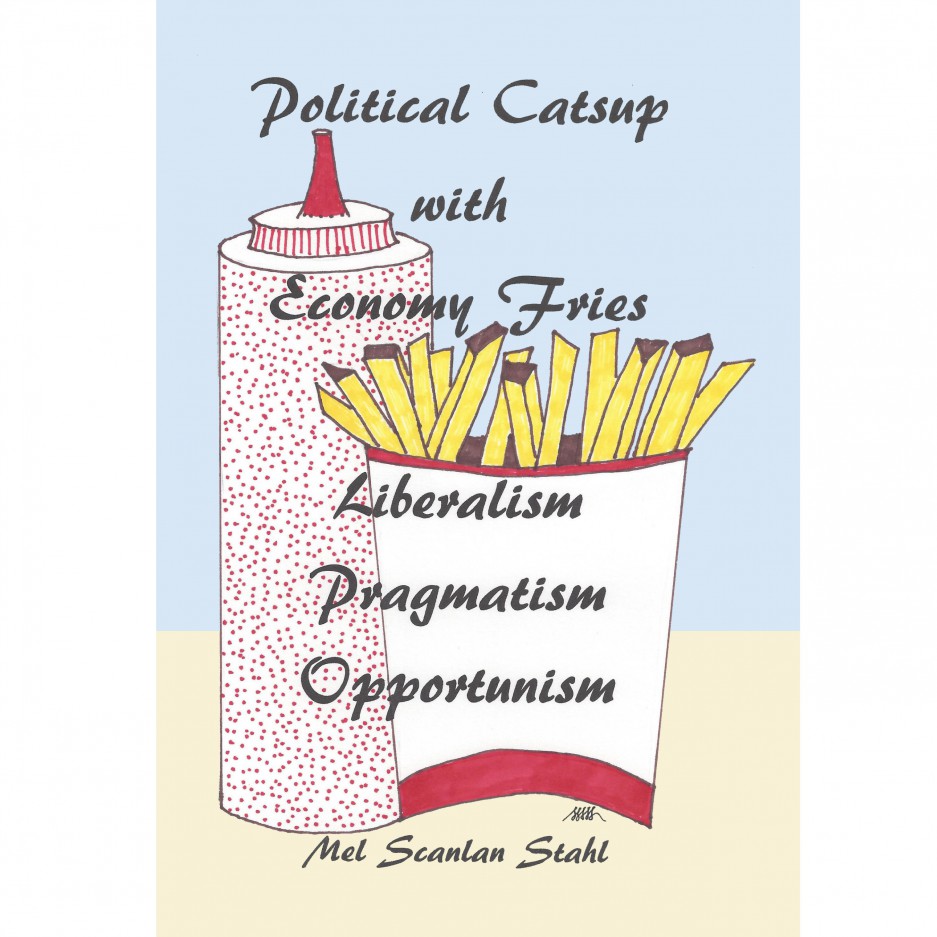
* Read Political Catsup with Economy Fries: Liberalism, Pragmatism, Opportunism, by Mel Scanlan Stahl, published by Fast Car Publishing, 2015, to put all of these resources plus a lot of historical ones into a big picture that will help you to understand how we got into our economic and political predicaments as we enter 2020. Get your copy today at Amazon.com.

If you are facing 2020 with misgivings about your future, take a moment to read these few references to give yourself some solid ground to stand on as you face a new year full of challenges.

Power hungry politicians undermine the power of politics.

The desire for infinite power has destroyed characters in fiction many times. There is Ahab in Moby Dick, there is Voldemort in the Harry Potter series. You probably remember others in examples from literature that go back centuries from Shakespeare to ancient Greek plays. Megalomania ends badly for most everyone who is drawn into the appetites of a power-hungry person who can’t be satisfied. The endless hunger and reckless pursuit of coveted power ends badly.
When the Nixon era happened there was a concerted effort to undermine Nixon’s power base in press coverage both on television and in newspapers. Press coverage was unrelenting for months. I wondered at the disparagement of Nixon. Some said that Nixon was a power hungry and paranoid person and we Americans were all better off without him. Some said that opening China to trade and political negotiation was important and beneficial to foreign policy. Some liked Nixon’s War on Cancer using federal dollars. Some said that Nixon wasn’t worse than most other politicians that gradually had started using audio tape to record themselves and others. I was just a kid so I couldn’t understand much about it.
Later, as an adult, I noticed the Clarence Thomas controversy. During the Clarence Thomas hearings, I thought Anita Hill believed what she testified. But I wondered if she was overly sensitive and overly imaginative about events that she described. Recently we’ve seen Judge Kavanagh and Donald Trump attacked with invented stories dramatized by emotion. There is a pattern here. At this point, I can’t help but view  Trump controversies as an artifact of the power hungry neoliberal era.  It’s an example of Congress vs. the President.

Neoliberal American politicians and bureaucrats are aspiring to evade the real work of good governance. They have become corrupted by the increased power that the American government embraced and sanctioned after WWII in a response to global trade and political networks in the age of atomic weapons.
In today’s American government we see megalomania. We recognize players in the Military Industrial Complex who have the goal of exercising global military hegemony at huge cost and with terrible consequences. They seem to want military exercises to never end.  Global economic and political negotiations are being backed up with military force.  But this isn’t a solution to political and economic malfeasance. We see abuses of the U.S. monetary system leading to insolvency and inflation. We see monopolies abusing the public.  We see disasters of deregulation in banking, communications, energy and transportation. We hear cheering for the computer information technology disruption of our economy, an economy that is measurably less prosperous. We observe a disastrous deconstruction of American small businesses in buy-outs leading to fewer jobs. There are lies being told about the success of self driving cars and the existence of artificial intelligence. There are absurd stories that suggest that American companies should replace people with expensive robots. There’s 23 trillion dollars of government debt and plans and promises to create more debt. Regulations such as the ACA make running a new business more expensive, forestalling small business formation. Algorithms are keeping people out of work.
There’s a bad moon rising and more trouble’s on the way.
Our neoliberal politics is so aggressive that each side is trying to have the other side arrested. Meanwhile, Congress doesn’t address problems facing most of  us in America. If you look in the American Constitution the power of the executive and Congress are spelled out and so is how we elect them. That’s your power.  You and I elect a president every 4 years, the House of Representatives members are elected every 2 years and Senate members are elected every 6 years. If everyone would agree to do it, we could sweep this disfunctional Congress right out of office by voting them out.

It would only take six years to vote out all the incumbents in Congress and it might gradually lead to better governance. Think how voting would be simpler if we voted out of office all congressional incumbents every election for as long as it takes to get rid of government malfeasance like what we see today.  At least we could stop Congress members from negotiating for their own profit for years on end without caring about 90% of their American constituency.
We need a functional Congress with appropriate powers. Not a disfunctional Congress with bloated powers and aspirations that lead to corruption and mismanagement of our country. If you want to learn about ideological periods in American history, or changes in American politics that affect you buy a copy of Political Catsup with Economy Fries available at Amazon.com.

Deregulation of utilities leads down to darkness.

Deregulation is a huge goal of neoliberals. Freeing corporations from oversight was always a neoliberal goal during the neoliberal ideological period which started after WWII and continues today. Neoliberalism has advanced gradually since then. Richard A. Posner in 1999, wrote about four industries where deregulation happened in “The Effects of Regulation on Competition: the Experience of the United States.” At first, after deregulation, it seemed that business was improved because profits seemed to grow. According to Posner, we have seen the deregulation of 4 industries including banking, transportation, communication, and energy. After deregulation, PG&E made huge payouts to executives and to stock holders and they neglected to maintain the utility itself. And this pattern can be seen in all of the industries affected by deregulation. Privatize gains and push the inevitable costs and consequences of failure onto the public; that’s the goal of these policies.
Not maintaining the PG&E utility is not predicted by neoliberal theory under the “Efficient Market Hypothesis,” which imagines that a CEO would do the opposite–that he or she would protect the company’s resources instead of converting them to capital that is soon spent. By way of contrast, the “Principle Agent Problem” says that CEOs can and do choose to maximize their own financial rewards instead of putting financial resources back into keeping a company healthy.
In PG&E there has been less utility maintenance, or utility improvement. Fires have happened because there has been an absence of landscape maintenance at the power lines. PG&E’s solution hasn’t been the costly one of returning to proper maintenance or improving the landscape and power lines but instead PG&E cut people’s power. California, a technology rich state, the state that once got American innovations before any other state did, has surprised everyone with its many darkened homes and people living without power for days at a time. And California’s electricity costs more than it used to. Californians have paid huge increases in the price of electricity and yet they are living under blackouts. Fires are consuming their homes.
Where did the money go and can Californians get it back? Can they get the utility’s reliability that they once enjoyed in the current policy environment of deregulation? I think that they can’t. They are experiencing a system-wide problem because of deregulation.
Even though PG&E has been fined and has declared bankruptcy, PG&E’s goal isn’t protecting or improving the public resource. Instead, PG&E’s resources have been frittered away. Why should Californians pay even more now? Because the neoliberal plan is to privatize gains and make the public pay for losses. If you don’t like this way of running the country, then you should understand that as long as neoliberalism continues, it will often go exactly this way. The partnership between government and industry is corrupt and empowers the most powerful while giving the costs to the least powerful people who are being robbed. The deregulation of industries that matter a great deal to everyone leaves most Americans in the cold and in the dark.
If you care about these issues, the issues of harm that confront all of us, buy a copy of Political Catsup with Economy Fries, for sale now at Amazon.com.